
 E-Paper



Planners must stop treating pedestrians as secondary consumers
Mumbai's pedestrian infrastructure is lacking, with many footpaths poorly maintained or encroached upon by hawkers or squatters, leading to an increase in pedestrian deaths. The city's focus on car infrastructure has led to a lack of dedicated bus lanes and regulations against roadside parking. Urban planners and designers need to shift their focus to pedestrian movement and design safer road junctions and nodes.


A quote from German philosopher Friedrich Nietzsche declares, ‘Only thoughts conceived while walking have the value’, but lately, have you tried walking on the streets of Mumbai?
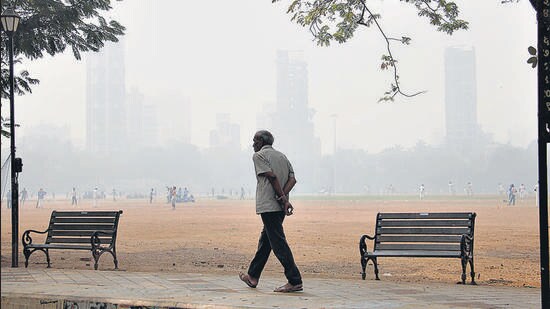
One would be lying if one did not admit to meditatively rather compulsively thinking of making to their location of interest: alive! Many recent deaths have brought to the fore, yet again, its relationship with walking and the safety of citizens, given that a majority of footpaths are out of bounds as the city is reinventing itself.
Speaking of reinvention, the number of vehicles on city roads has grown by more than 5 lakh since March 2020. The vehicular population crossed 43 lakh this month compared to around 38 lakh in pre-Covid February 2020, transport statistics reveal. This rapid increase is often explained as the result of population growth, rising discretionary incomes, and suburbanisation.
Every day, Mumbai pavements host around 15 million walking trips. Many are en route to buses or trains, or both. Yet nearly a third of these trips are completed on foot. For most of the many households earning less than ₹8,000 a month, walking is the sole means of travel. Still, the city’s pedestrian infrastructure has been cruel to its citizens.
But Mumbai continues to prioritise the car: Since 1999, to ease congestion, the city has built more than 60 flyovers and several high-speed freeways. On the other hand, the city has no dedicated bus lanes, no regulations against roadside parking on arterial roads or in business districts. It lacks basic provisions for pedestrians, like footpaths and speed limits.
Mumbai is a testament to understanding that “flyovers aren’t fixes”; if anything, they only increase the number of private vehicles leading to motorised vehicles being the largest pool of consumers in the largest public domain: streets and roads. This leaves pedestrians as secondary consumers and their mode of travel, pathways, as secondary provisions.
Most pedestrians involved in road accidents get harmed in collisions with motorised vehicles, especially with passenger cars. A total of 4,514 people died in road accidents in Mumbai between 2013 and 2021. What is shocking, however, is that 2,326 (51%) victims were pedestrians. Over the weekend, three pedestrians were killed in three separate road accidents in Ghatkopar and Mulund.
The richest municipal corporation in India has failed miserably to build and maintain the footpaths in most of the suburbs. Either they do not exist, or even if they do exist, they are poorly maintained or encroached upon by hawkers or squatters. In several places, the footpaths are badly planned and built, which makes it impossible for people to walk.
Now, city planners and designers must shift their perspective from the ease of automobile to the ease of pedestrian movement.
To begin with, the municipal corporation, along with the city engineers department, must rope in urban designers to help design better road junctions and nodes because as roads widen, junctions get bigger and vehicular speeds increase; they gradually become unsafe for pedestrians unless the roads are carefully designed with well-spaced zebra crossings, strategic pedestrian signals and well-lit turns.
The other major shift we need to take is to ask whether we need active walkways running parallel to vehicular roads? The answer is NO!
It is time everything happened by design, not by accident!
Chaarvi Mathur is an urban designer, academician and principal architect at Studio Archarrette

Stay updated with all the Breaking News and Latest News from Mumbai. Click here for comprehensive coverage of top Cities including Bengaluru, Delhi, Hyderabad, and more across India along with Stay informed on the latest happenings in World News.


