
 E-Paper



BJP secretly worked against ally Shiv Sena to destroy it, says Pawar in autobiography
NCP chief Sharad Pawar, who is considered the architect of the three-party Maharashtra Vikas Aghadi (MVA) coalition, comprising the Shiv Sena, Congress and NCP, has claimed that the BJP was out to finish its once ally, the Shiv Sena, in the 2019 assembly elections

 Prefer HTon Google


Mumbai: NCP chief Sharad Pawar, who is considered the architect of the three-party Maharashtra Vikas Aghadi (MVA) coalition, comprising the Shiv Sena, Congress and NCP, has claimed that the BJP was out to finish its once ally, the Shiv Sena, in the 2019 assembly elections. The reason for this, claimed Pawar, was that the BJP believed that it could not attain undisputed supremacy in the state without eliminating the Sena.
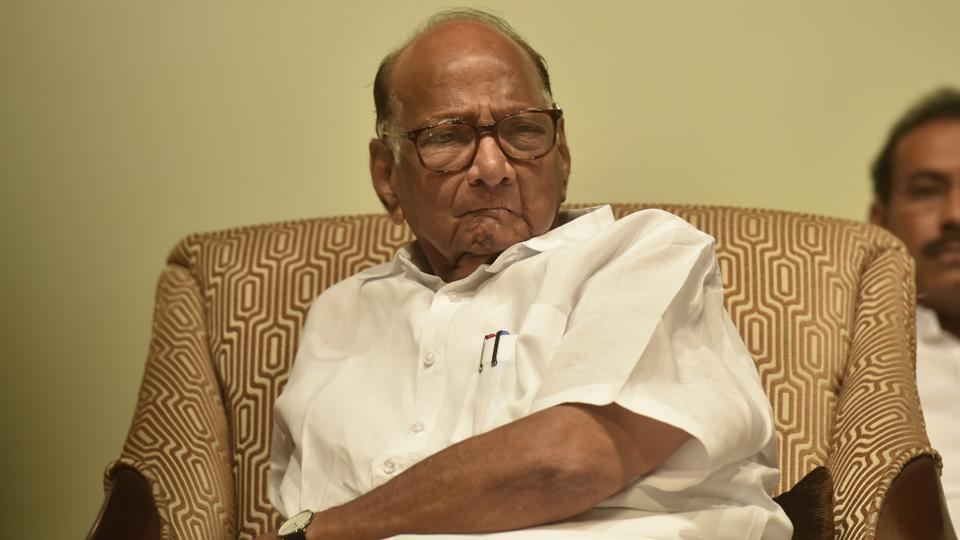
The NCP supremo says that this led to uneasiness between the two allies, which deepened after the BJP tried to weaken the Sena’s position by secretly supporting rebel candidates in around 50 seats in the assembly elections. Before that, he says, the 2017 BMC election, which the BJP fought independently against the Shiv Sena for the first time in their three-decade-old alliance, was a way to eliminate the Sena.
These claims have been made in the second edition of Pawar’s autobiography, ‘Lok Maze Sangati’, to be published on May 2. The autobiography is slated to come out at a time where there are widespread speculations that his nephew, senior NCP leader Ajit Pawar, will join hands with the BJP along with a group of MLAs if the Supreme Court gives an adverse verdict on the Eknath Shinde-Devendra Fadnavis government.
The second edition covers the period from 2015 till the present day, and may throw light on Ajit’s rebellion in November 2019 when he formed a short-lived coalition government along with Devendra Fadnavis. Pawar also stresses that when the ruling alliance abandoned democratic principles to finish political opponents any which way, moderate struggle was no longer an option for the opposition.
“The BJP’s political calculation was clear: without finishing the Shiv Sena, which had a strong presence in urban areas, it would not be able to establish undisputed supremacy in the state. The BJP entered the poll fray to eliminate the Shiv Sena from Mumbai (in 2017). The picture was similar in the Thane, Kalyan-Dombivali, Mira-Bhayander, Vasai-Virar and Navi Mumbai municipal corporations,” writes Pawar in the autobiography, an extract of which was published in Sakal newspaper, a publication run by the Pawar family.
The NCP supremo further writes that there was a plot to destroy the Shiv Sena’s self-respect. Recording that there was a time when the Sena contested in 171 assembly seats in Maharashtra and the BJP in 117 seats, he says that in 2019, the BJP took as many as 164 seats, leaving 124 seats to the Sena, as it was overconfident about getting a full majority on its own.
Pawar also points out that ex-Shiv Sainik Narayan Rane was a traitor for the Shiv Sena, and the BJP’s merging with his party was akin to rubbing salt in the Sena’s wounds. BJP leaders, writes Pawar, were under the illusion that the assembly elections would be a cakewalk.
“The Shiv Sena dominates Kolhapur district but it was clearly visible that the Jansurajya party candidates were fighting against the Shiv Sena with the hidden support of the BJP,” he writes, adding, “In 50 assembly constituencies, the Shiv Sena-BJP alliance faced a challenge from rebels. We noticed that most of them had the blessings of the (BJP) leaders and the support of the party. The widening gap in the alliance was a good sign for us.”
“Moderate struggle is not an option when the ruling alliance decided to finish opponents by going against democratic principles,” Pawar points out. “All that is left to do is to set foot in the field and keep a close eye on the weak links of the ruling alliance.”


