
 E-Paper



New bird species in MMR may hold key to understanding changing landscape in Uran
Known by its taxonomic name -- Ortygornis pondicerianus -- and colloquially referred to as the “chicken bird”, grey francolins belong to the pheasant family and are commonly seen in the arid landscape of peninsular India

 Prefer HTon Google


Mumbai: In the past month, the Mumbai Metropolitan Region (MMR) has played host to new entrants in the city’s avian population: city birders have documented four to five grey francolins in the wetlands of Uran and the Belapur-Kharghar belt in Navi Mumbai for the first time.
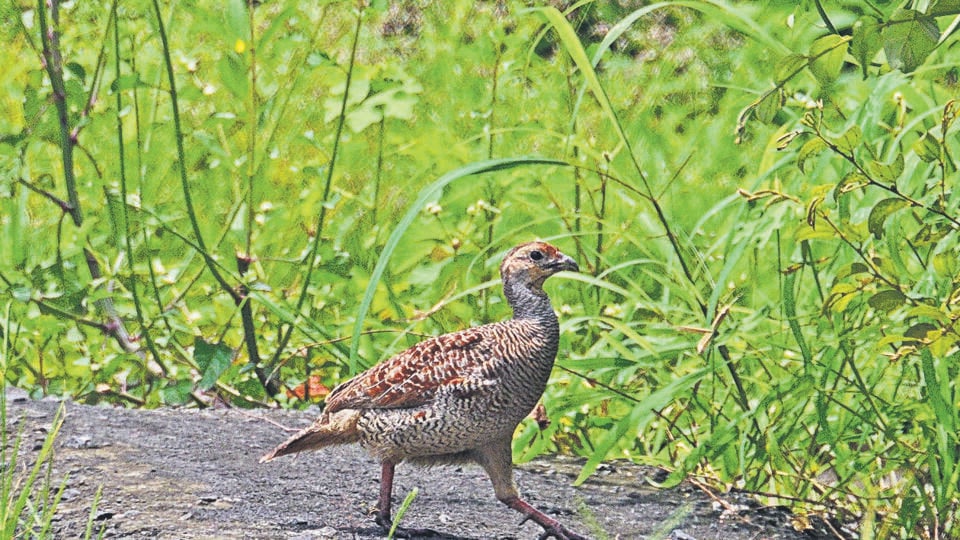
Known by its taxonomic name -- Ortygornis pondicerianus -- and colloquially referred to as the “chicken bird”, grey francolins belong to the pheasant family and are commonly seen in the arid landscape of peninsular India, where they forage in sparse grasslands, scrublands and open country. Though sporadic sightings of this species have been reported from the Western Ghats, it is rarely seen in the moist, coastal belt between Gujarat and Kerala, which makes this particular sighting significant.
“We have just a couple of sporadic reports of the grey francolin around Datiwere, about 100 km north of Mumbai, dating back to the late-1990s. It has been sighted on the plateau above the Sahyadri Hills, in the open terrain east of Malshej Ghat and Lonavala-Khandala, but never this close to Mumbai. A small population seems to be living here, and may have settled quite recently,” said an avid birdwatcher Seema Tania, who together with naturalist Sunjoy Monga, made multiple sightings since mid-August.
“We have observed over the past few years that the loss of vast extents of wetlands in the Navi Mumbai – Uran region and the resultant emergence of grass and scrub terrain has been slowly altering the ecological dynamics, with several terrestrial species having been sighted more frequently than they had been. It is quite possible the Grey Francolin too may have shifted for this reason in very recent times though numbers seem to be low at present,” Monga said.
In recent years, other species of terrestrial birds have also been seen in increasing numbers and frequency in and around Uran’s wetlands, including the red-wattled lapwings, the short-eared owl, munias, shrikes, and several varieties of raptors. “It requires further study, of course, but these are the early, tell-tale signs of environmental change. We should be paying close attention to them,” Monga added.
Hindustan Times has reported multiple instances of wetland reclamation for infra developments, such as the Navi Mumbai Airport and Mumbai Trans Harbour Link.


