
 E-Paper



NMMC plans to convert all civic Marathi schools to English medium
The proposal is aimed at providing underprivileged children opportunities on par with those studying in elite private institutions

 Prefer HTon Google


Navi Mumbai: The Navi Mumbai Municipal Corporation (NMMC) has proposed an ambitious plan to transition all its civic-run Marathi-medium schools to English-medium instruction, aiming to break the private sector’s “monopoly” on English proficiency and prepare students for the global job market.
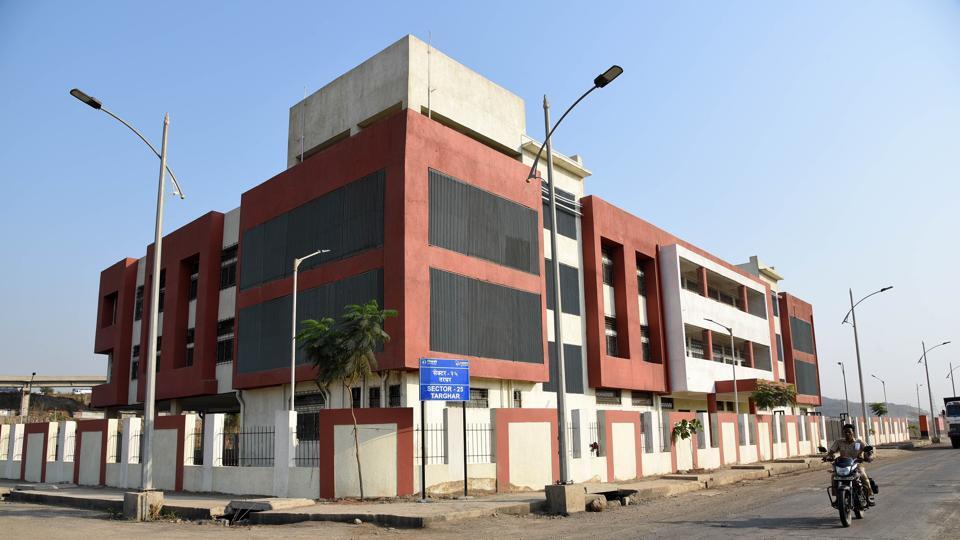
Tabling the Navi Mumbai Municipal Education Transformation Policy 2026 during the general body session on Thursday, house leader Sagar Naik said, “English-medium education is not the monopoly of the rich; it is the right and entitlement of the poor as well. While our children go to English schools, the common man’s children are left behind. We are changing that.”
While the proposal is aimed at providing underprivileged children opportunities on par with those studying in elite private institutions, critics argued that the civic body must prioritise basic infrastructure and teacher training before attempting a massive academic overhaul.
Councillors also raised concerns that the move would effectively phase out Marathi-medium schooling. In response, Naik clarified that Marathi will remain a compulsory subject in the English-medium schools. “This is not about replacing Marathi, but expanding opportunities through English,” the BJP leader said.
The current setup
The NMMC currently operates 80 civic schools, comprising 57 primary and 23 secondary institutions, with a total student strength of around 50,000. Of the primary schools, 43 are Marathi-medium, alongside seven Hindi, one Urdu, three English-medium (state board), and three CBSE schools. The secondary section comprises 20 Marathi, three Hindi, and one Urdu-medium school.
Positioning the proposal as a response to widening educational inequality, Naik noted that English proficiency has increasingly become a mandatory gateway to better careers. “By converting our municipal schools, we are giving the common man’s child a platform to dream of careers in engineering, medicine, and international business,” he said.
The policy outlines a phased transition, beginning from kindergarten (KG) in the upcoming academic year, starting in June. Crucially, the administration clarified that existing students will continue in their current medium to prevent any academic disruption. Naik also clarified that the schools would remain under the state SSC board and not shift to CBSE.
To manage the shift, the civic body will adopt a hybrid staffing model. “For the initial KG batches, we will recruit specialised staff. For subsequent levels, we will train and empower our existing staff to deliver an English-medium curriculum,” Naik said. He added that Marathi-medium teachers would be supported through structured training programmes to ensure job security, stating, “Wherever we see a shortage of staff, we are taking steps to fill those gaps.”
Beyond the medium shift, the policy introduces aptitude assessments in Classes 4 and 7, career guidance mechanisms, and skill-based learning from Class 7 onward. This includes exposure to fields like robotics and artificial intelligence, alongside a renewed focus on sports to guide non-academic achievers.
Debate over decision
However, the sweeping proposal sparked intense debate within the corporation. Maharashtra Navnirman Sena (MNS) corporator Abhijit Desai cautioned against an overemphasis on English at the cost of Marathi.
“We are not opposed to English, but Marathi must not be pushed into the background. English should complement, not replace it,” Desai said. He termed a full-scale shift premature, warning that introducing English without safeguarding Marathi would weaken the students’ linguistic and cultural roots.
MNS Navi Mumbai chief Gajanan Kale also alleged that the move would effectively phase out Marathi-medium schooling. “The ruling party is attempting to replace Marathi-medium civic schools with English-medium ones,” Kale said, adding that the party has opposed it in the general body and will also take the fight to the streets.
Critics also argued that the civic body must prioritise basic infrastructure at civic schools. They pointed to the recent slab collapse at a Vashi municipal school, which prompted the mayor to order a city-wide structural audit of all NMMC educational buildings.
However, civic officials maintained that the move is necessary to reduce the financial burden on families seeking private education and to curb “educational migration” out of the civic school system. “We want to create a system where the quality of education in an NMMC school is at par with, if not better than, any private school in the city,” Naik said.


Stay updated with all the Breaking News and Latest News from Mumbai. Click here for comprehensive coverage of top Cities including Bengaluru, Delhi, Hyderabad, and more across India along with Stay informed on the latest happenings in World News.


