
 E-Paper



A month on, Uddhav to start from scratch as Shinde focuses on party control
Former chief minister Uddhav Thackeray and son Aaditya have stepped up their interaction with party cadre over the last one month. Chief minister Eknath Shinde is also planning to go on a state tour from July 30


Exactly a month ago, Uddhav Thackeray stepped down as chief minister of Maharashtra after 40 of Shiv Sena’s 54 MLAs rebelled against him under the leadership of party’s Thane strongman Eknath Shinde.
The rebellion, which began on June 20, vertically split the Shiv Sena with more than two-thirds of its MLAs electing Shinde, then a minister in the Thackeray-led coalition government, as their leader. Within a week, it became clear that the survival of the Thackeray-headed Maharashtra Vikas Aghadi government was difficult as the Sena chief wasn’t able to stop his MLAs from joining the rebel camp and his government’s numbers were going below the 145-mark in the 288-member assembly. On June 29, just 31 months after taking charge, Thackeray finally resigned as chief minister ahead of the trust vote that he was ordered to face by governor Bhagat Singh Koshyari.
Devendra Fadnavis, the Bharatiya Janata Party (BJP) leader who had 115 MLAs, was widely expected to take over as the chief minister. But the BJP, in a surprise move, conceded the chief ministership to Eknath Shinde who had the support of just about 50 rebel MLAs. Shinde took oath on June 30. In a last-minute move, the BJP told Fadnavis to take oath as his deputy.
Eknath Shinde’s bid to take over the Shiv Sena
It soon became clear that Shinde’s rebellion will not stop at bringing down the Thackeray-led MVA government as Shinde, now the chief minister, sought to take control of the Shiv Sena party and edge out Thackeray and his loyalists.
There are two reasons behind Eknath Shinde’s attempt to take over Shiv Sena completely: First, to escape the complications that would have arisen because of the anti-defection law and second, to make it difficult for Thackeray to revive the party which is directly related to the survival of his faction.
Under the provisions of the anti-defection law, any breakaway faction has to merge with any of the existing parties in the assembly after defecting from the parent party. It means the Shinde faction would have had to merge with BJP or any other party to prevent disqualification under the law. The faction will not be able to maintain their separate existence. This would also mean Shinde would not have been independent to take decisions as he would have to abide by the diktat of the party he merged with. It was also not acceptable to most of the rebel MLAs who came with him. His escape route was to show that there was no split in the Shiv Sena, his was the original party and not a breakaway faction, the stand that he has taken before the Election Commission.
Since Uddhav Thackeray was elected to the legislative council after becoming chief minister, Shinde, an MLA from Kopri-Panchpakhadi constituency in Thane, was appointed the Sena’s leader in the assembly. He took advantage of this position and claimed that he continued to be the leader of the party in the assembly and as such had decided to form the government with BJP.
While deputy speaker Narhari Zirwal did not accept the claim, the governor allowed him and Fadnavis to form the government after Thackeray resigned. Koshyari also allowed the newly formed government to get a new Speaker elected.
BJP nominee Rahul Narwekar who was elected as Speaker with 164 votes in his favour, recognised the Shinde-led faction as Shiv Sena on the floor of the assembly. Since then, Shinde has also formed his version of the Sena’s national executive, and appointed his loyalists to this body. He anointed himself as Shiv Sena mukhya neta or chief leader and retained Uddhav Thackeray as paksha pramukh or party chief, a figurehead. As expected, Thackeray has termed the exercise as illegal.
Simultaneously, 12 out of 19 Lok Sabha MPs of the party declared their allegiance to Shinde and even submitted a letter to Lok Sabha speaker Om Birla with a request to appoint south central Mumbai MP Rahul Shewale as their group leader. Birla immediately recognised the faction as Shiv Sena and Shewale as its floor leader. Eknath Shinde has now approached the Election Commission, staking claim on the party, party name and its election symbol, bow and arrow.
The second reason for his attempt to take control of the Sena is more political.
The Shiv Sena has always had a strong support base among Marathi-speaking people in Mumbai and Mumbai metropolitan region. Besides, it also had strongholds in the Konkan and parts of the north and central Maharashtra regions. Sena has always used emotional pitches to win over its voters — right from justice to sons of the soil to Hindutva. Many voters are also deeply loyal to its founder, Bal Thackeray. His son and current Sena chief, Uddhav Thackeray, is using the same emotional pitch to turn the tide against the Shinde-led rebels. Shinde, in contrast, aims to take over the party’s legacy and its symbol, and position his faction as the real Shiv Sena. He plans to fight the upcoming civic polls in alliance with BJP. In case of a dispute between two factions for the party symbol, the Election Commission is expected to freeze the bow and arrow symbol which is popular among the Sena voters. Minus the symbol, it could become very difficult for Thackeray to get the desired response from the voters in the elections.
Thackerays hit the ground, reach out to the people
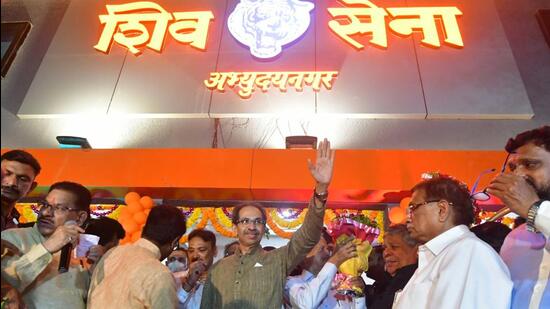
Cornered by his rival, Uddhav Thackeray has decided to start from scratch. In fact, a few days after the rebellion against him, Thackeray announced that he will not stop anyone from leaving him and will rebuild the party with those loyal to the real Shiv Sena. Over the past three weeks, he has actually begun the same. Uddhav and son Aaditya have been holding meetings with party functionaries, visiting party offices and trying to galvanise the party cadre that has remained loyal to him.
The father-son duo first concentrated on Mumbai which has been Sena’s stronghold. Out of 14 Sena MLAs in Mumbai, five have defected with Shinde while eight are still with Thackeray (one died and the seat remains vacant). Most Sena councillors have also stood by Thackeray so far. After Mumbai, the Thackerays will start touring the state to mobilise the party cadre and establish a connect with the people. Thackeray’s close aides insist that the Sena’s voters have not shifted their loyalty.
“In 2014 assembly elections, even at the height of Modi wave, we contested against BJP in a triangular fight and won 63 seats. In the 019 assembly elections, we won 55 seats in alliance with BJP. Many seats we have won in the two successive elections have a traditional Shiv Sena support base which remains loyal to the party and not the MLA. That’s why Uddhav and Aaditya are trying to connect with the people and ground-level workers. Over the next few months we will ensure that between them, the duo would visit constituencies of all 40 rebel MLAs and appeals to the voter to stand with Sena and not the turncoats,”said a key Sena leader.
In response, Shinde too is embarking on a state tour from July 30. “Over the next few months, the chief minister will be travelling across the state in phases. This will make him a familiar face across the state and also give confidence to our MLAs that we are in touch with the people. It will counter the effect of Thackeray’s move to generate sympathy among the people,” said a senior leader from the Shinde camp.
For now, both the camps are also eagerly awaiting the Supreme Court’s hearing on August 1 when the top court is expected to deal with a bunch of petitions challenging decisions and actions taken by the rival camps. The court verdict will have a major impact on the political drama in Maharashtra that began on June 20.

Stay updated with all the Breaking News and Latest News from Mumbai. Click here for comprehensive coverage of top Cities including Bengaluru, Delhi, Hyderabad, and more across India along with Stay informed on the latest happenings in World News.


