
 E-Paper



Only 18% in Mumbai Metropolitan Region are fully vaccinated
While the state government has announced to allow fully vaccinated people to travel in local trains from August 15, the percentage of people who have received both the doses stands at 3.1 million or around 18% of the 17 million targeted citizens in the Mumbai Metropolitan Region (MMR).


While the state government has announced to allow fully vaccinated people to travel in local trains from August 15, the percentage of people who have received both the doses stands at 3.1 million or around 18% of the 17 million targeted citizens in the Mumbai Metropolitan Region (MMR) — a significant number of whom use the Mumbai suburban train service.
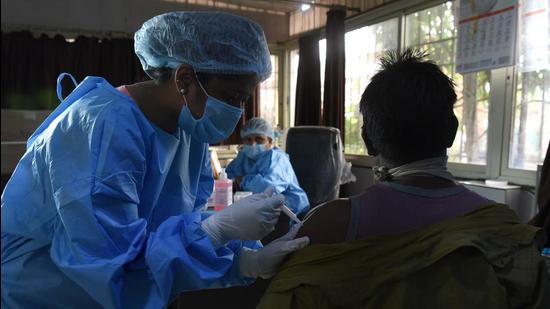
The cities in MMR are governed by nine municipal corporations and nine municipal councils and account for around 24 million citizens. Of the total population, 17 million are aged above 18 are and are eligible for vaccination.
Mumbai has vaccinated its 1.99 million citizens with both the doses against targeted population of 9 million, while in Thane, Raigad and Palghar the number stands at 766,501; 219,904 and 197,592, respectively. In cities like Thane, Mira Bhayander and Kalyan-Dombivli the percentage of fully vaccinated citizens are 11%, 15% and 16%, respectively. In smaller cities and rural parts, the number hovers between 6% and 9%.
“Unlike Mumbai, we have vaccination centres at scattered locations and the number of private facilities is also less. We hope to get more doses this month,” said Dr Manish Renge, district health officer of Thane.
Renge, added, “Until June, we had regular supply of vaccine doses — twice or sometimes thrice a week. However, nowadays we receive doses only once a week. After we distribute those doses, we have to suspend vaccination drives until we get more from the state. AS there is no fixed number of vaccine doses that we receive from the state, we are unable to plan in advance. We distribute the doses immediately to ensure everyone has access to it.”
Barring Mumbai, other cities in MMR are lagging behind in fully vaccinating citizens. “The availability of vaccine doses is the major problem before the municipal corporations in MMR. The state should have provided more doses in the cities in MMR as the mobility is more in MMR because of the high rate of urbanisation and industrial activities. On the contrary, some rural districts have been given more doses, disproportionate to their vaccination rate,” said an official from state’s relief and rehabilitation department.
An officer from the health department, however, said it was a strategic move to open up local trains in graded manner. “Before the Covid-19 outbreak, the daily footfall in locals was around 7 million, which has come down to 1.9 million currently. By allowing fully vaccinated people, 1.5 million more citizens will now be allowed from August 15 and it will be a manageable number of commuters. During the first wave, categories of commuters were added gradually to allow them to travel. But this time, we have linked permission with vaccination to make it simpler. On the other hand, it will also work as a trigger for people to rush to get vaccinated,” he said.
“It is a wise decision as the number of commuters expected to travel will not be more than 1.8 million, as 40% of 3.4 million are either senior citizens or travel in their own cars. This will also help the government give a push to the vaccination drive as many people, who were still not coming forward for vaccination, will come now. At the same time, the government should ensure that commuters follow Covid-appropriate behaviour. The state and Central governments should ensure that the vaccines doses, at least in MMR, are increased by three times more,” said Dr Avinash Bhondve, Maharashtra president of Indian Medical Association.
Thane district, which comprise of six municipal corporations and two municipal councils, has been facing a shortage of vaccines since almost a month, on many occasions the vaccination drive has been suspended due to the unavailability of vaccines. The total number of vaccines received from the state is divided across the district based on the population.
According to district health department officials, every time they receive doses, they ensure equal distribution. For example, if the total population of the district is 1 crore and a particular corporation has 2 million citizens while another taluka has 5 lakh citizens, then 20% of the received doses is given to that corporation and 5% to the taluka.
“We have the capacity to administer 21,000 doses per day, against which we get around 12,000 doses weekly. The doses we get from the state are equally distributed in rural and urban areas. There was an initial hesitancy to get the shot among tribals, but awareness drives have helped in increasing the percentage,” said Dayanand Suryawanshi, district health officer, Palghar.
Stay updated with all the Breaking News and Latest News from Mumbai. Click here for comprehensive coverage of top Cities including Bengaluru, Delhi, Hyderabad, and more across India along with Stay informed on the latest happenings in World News.


