
 E-Paper



Permanency for sanitation workers: SC summons BMC chief, officials
In 2017, the SC directed the civic body to make 2,700 contractual sanitation workers permanent. The BMC has made only 1,600 workers permanent, while the remaining 1,100 continue to work on contractual basis; they are paid approximately ₹17,000 per month and are not entitled to gratuity, provident fund, pension and other social security benefits.

 Prefer HTon Google


Mumbai: The Supreme Court has summoned the Brihanmumbai Municipal Corporation (BMC) commissioner, deputy commissioner (solid waste management) and chief engineer (solid waste management) on March 19 regarding non-compliance with a 2017 order directing the civic body to make 2,700 contractual sanitation workers permanent. The BMC has made only 1,600 workers permanent, while the remaining 1,100 continue to work on contractual basis; they are paid approximately ₹17,000 per month and are not entitled to gratuity, provident fund, pension and other social security benefits.
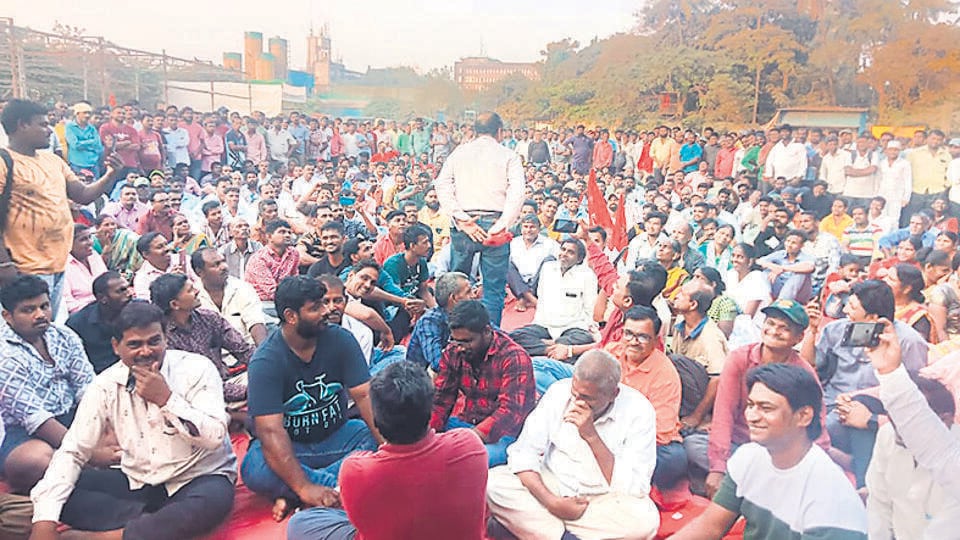
The court issued the summons on March 5, while hearing a contempt petition filed by the Kachra Vahtuk Shramik Sangh, a union of sanitation workers. On perusing the affidavit submitted by the BMC regarding implementation of the 2017 order, the court found “substantial non-compliance on the part of the officers” and noted that the 1,100 workers who continued working on contract included around 400 workers who had been verified for permanency.
“It has been almost seven years since the Supreme Court passed its order instructing the BMC to make the workers permanent. But it has not been fully implemented in a single case,” alleged Milind Ranade, general secretary of union.
The dispute dates back to 2007, when Kachra Vahtuk Shramik Sangh first approached the industrial court regarding the plight of contractual workers. It contended that 2,700 sanitation staff who began working with the BMC between 2004 and 2006 on contractual basis ought to be made permanent as rules in the state mandated that any person who had worked for 240 days continuously should be made permanent. After seven long years, in October 2014, the court ordered the BMC to make the workers permanent and pay them arrears for the entire duration of their employment barring the first 240 days.
After the Bombay high court upheld the order in 2016, the BMC appealed before the Supreme court. In April 2017, the court ordered the BMC to make all 2,700 workers permanent with just one change – instead of paying arrears for the entire period of employment barring the first 240 days, the BMC was asked to pay arrears from the date of the industrial court’s order.
Following the supreme court order, the BMC made nearly 1,600 sanitation workers permanent. The uptick in circumstances of workers who benefitted from the move was significant. For instance, Abasaheb Gaikwad’s salary jumped from around ₹17,000 to ₹54,000 per month, he got a provident fund and received arrears worth ₹2.8 lakh.
Though Gaikwad feels the amount given as arrears was an underestimation, the hike in pay and entitlements helped him move on from the slums in Sion’s Pratiksha Nagar to an apartment in Borivali, which is still under construction.
“I started out as a motor loader in 2006, and now I work as a sweeper in Dadar. It feels good to be treated with respect and to be able to give my children a better life,” he said.
But nearly 1,100 sanitation workers who were not made permanent did not receive any such benefits. They included 400 workers who were subjected to verification, said Rohini Thyagarajan, a lawyer on the case.
For instance, Tamilvanan Kaunder, who began working with the BMC in 2006 for a daily wage of ₹80, was called for verification in 2019, but was yet to receive any benefits.
“I was not present when the verification was done in 2014, and so in all the years since, I’ve been left out of all the benefits permanent employment would give me. But it’s not like I have other options; the number of workers has increased, forcing us to go without work some days,” said Kaunder, who currently receives a daily wage of ₹742 – a hike he attributed entirely to the union.
Unhappy over the sluggish progress in making the remaining 1,100 workers permanent, the Kachra Vahtuk Shramik Sangh filed a contempt petition in the supreme court in 2018. While the court has summoned the municipal commissioner and other BMC officials on March 19, little progress is visible on making the workers permanent.
Kaunder, for instance, was called last month for collection of his biometric details.
“I was told that I would get my permanent work order on March 18, but i did not get any such thing as because of mistakes in spelling. This same happened with most of the 25 other workers who were with me,” he said.
On being asked what he would do first once he was made permanent, Kaunder immediately said he would repay accumulated loans. “It’s not possible to survive in a city like Mumbai on such less pay, especially with three children,” he said.
The BMC’s chief engineer (solid waste management), Prashant Tayshete, refused to comment on the matter, while the municipal commissioner IS Chahal and deputy municipal commissioner (solid waste management) Sanjog Kabare did not respond to requests for a response.


