E-Paper



Pioneering Columbia competency test for community health workers comes to India
CHWs constitute the foundation of India's public health system. The test was developed by Janhavi Mallaiah, program director at Columbia's InTOuCH programme

 Prefer HTon Google


Mumbai: A pioneering competency test designed to formalise the role of Community Health Workers (CHWs), who constitute the foundation of India's public health system, has been developed by Janhavi Mallaiah, program director at Columbia University's InTOuCH programme.
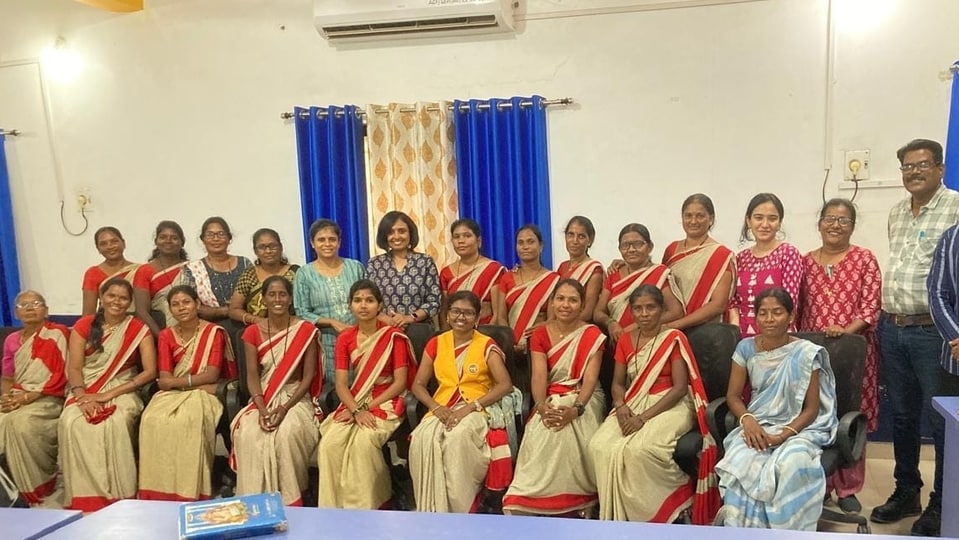
Mallaiah, who received her training in community medicine in India, established the CHW concept in New York City's Harlem district. Having developed the original test two years ago, she is now working to adapt the model culturally across India, a particularly relevant initiative given the country's mounting burden of Non-Communicable Diseases (NCDs).
"A major part of this project is the Cultural Adaptation and Validation of the Stroke Literacy Assessment Test (SLAT) for Frontline Health Workers in India," Mallaiah explained at the Columbia Global Center in Mumbai.
A joint initiative between the Columbia Center for Community Health (CCCH) and the Ambuja Foundation is currently underway to adapt and validate the SLAT for frontline health workers in Maharashtra. The test aims to assess workers' knowledge, addressing a significant gap where training knowledge often fails to translate into practical skills.
India has thus far trained nearly a million Accredited Social Health Activists (ASHAs) and 200,000 auxiliary nurse midwives (ANMs) to implement community prevention programmes.
"SLAT, originally validated in Harlem for CHWs, measures knowledge of seven key modifiable stroke and cardiovascular risk factors, high blood pressure, high blood glucose, high cholesterol, smoking, physical inactivity, unhealthy diets, and obesity," Mallaiah said.
The collaboration will unfold in two phases: cultural adaptation followed by empirical testing and validation involving approximately 200 frontline health workers from three Maharashtra villages where Ambuja Cement Foundation operates NCD prevention programmes. "This process will help identify gaps in the health workers' understanding of stroke and cardiovascular diseases, ultimately improving the effectiveness of future training programmes," Mallaiah noted.
Mallaiah's journey with CHWs began in Bengaluru after completing her education, before joining Columbia University where she introduced the CHW concept. "Since it was a completely new concept for them, we trained our first batch with 10 CHWs. We faced challenges of societal acceptance of these CHWs as it was unfamiliar. So we sought help from the churches. The churches, which had health units dedicated to raising awareness, played a crucial role in supporting the initiative."
"We faced a lot of issues, including society's reluctance to accept Black individuals as CHWs. But now, we are doing well. We've connected with 92 churches, and around 252 CHWs are working with us," she added.
Reflecting on her return to India, Mallaiah said, "I began my foundational work in India, which I then brought to Columbia University. Now, having discovered new methodologies, it feels great to bring that back to India."
The project aims to professionalise the sector. "The test gives a status to any profession. With this certification, ASHA workers or anyone in the field can work in NGOs or the private sector, which helps them improve their lifestyle," she explained.
Abhay Shukla, a senior community health expert, noted that similar examinations were conducted through SNDT Women's University approximately 25 years ago. "The curriculum for these programmes was designed by senior public health expert Shyam Ashtekar. Now, this system is no longer in place in Maharashtra," he said, adding that similar tests continue in Chhattisgarh and Jharkhand. "A major challenge remains the lack of financial support from government for these workers, creating a bottleneck in the system."
Whilst acknowledging previous Indian efforts, Mallaiah said, "Our hope is that introducing this standardised system for evaluation will change the conversation at the policy level for equitable pay for CHWs/ASHAs in India. With that goal in mind, we hope to first culturally adapt and get qualitative feedback from CHWs at Chandrapur, Maharashtra."