
 E-Paper



Powai Lake a wetland, needs to be conserved accordingly: Maharashtra forest department
The state forest department’s mangrove cell upheld the status of Powai Lake as a protected wetland, in line with previous orders of the Bombay High Court and the Supreme Court, in a letter to the Brihanmumbai Municipal Corporation (BMC) earlier this month

 Prefer HTon Google


The state forest department’s mangrove cell upheld the status of Powai Lake as a protected wetland, in line with previous orders of the Bombay High Court and the Supreme Court, in a letter to the Brihanmumbai Municipal Corporation (BMC) earlier this month. As such, the forest department voiced objections to MCGM’s proposal to build a cycle track within the boundary of the lake, which has come under fire from citizens and environmentalists.
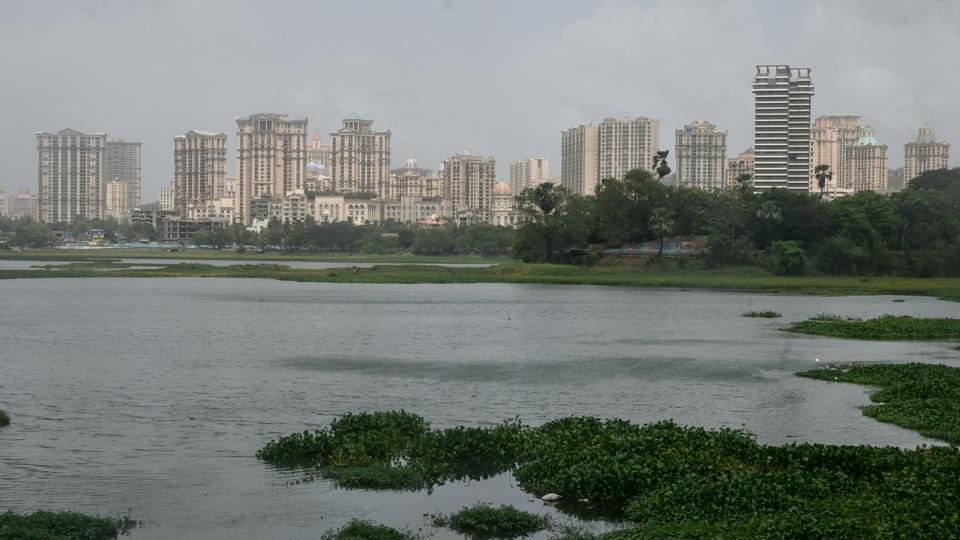
India is a party to the Ramsar Convention, an international treaty which pledges the country’s commitment to wetland conservation. The convention defines wetlands as “areas of marsh, peatland or water, whether natural or artificial, permanent or temporary, with water that is static or flowing, fresh, brackish or salt, including areas of marine water the depth of which, at low tides, does not exceed six meters”. Wetlands across India are known to be extremely diverse in terms of their origins (natural or man made), water source (freshwater or brackish) and the biodiversity they sustain.
Powai Lake itself is a man-made wetland, planned as an anti-famine measure for Mumbai and sanctioned by the Standing Committee in November 1889. It was built in 1891. Since its creation, the water in Powai Lake has been severely polluted and has remained so despite several remediation measures. The water was declared unfit for drinking purposes in 1893. The lake continues to remain polluted due to entry of raw sewage and siltation, which has led to growth of invasive water hyacinths across the water spread.
Activists said that this development is significant. “The forest department, which is entrusted with the conservation of wetlands, has confirmed on record for the first time that Powai Lake is indeed a wetland and needs to be protected as such. They have stressed on the importance of conserving its biodiversity and also said that work on the BMC’s cycle track should not proceed further,” said Stalin D, director of environment group Vanashakti, who obtained under the concerned letter (signed by Neenu Somraj, deputy conservator of forests (DCF), mangrove cell) via a Right to Information (RTI) request this week.
Somraj’s letter was written to the collector, Mumbai suburbs and the MCGM’s assistant commissioner, S Ward, pursuant to a complaint from Vanashakti regarding the proposed cycle track, which allegedly flouts MCGM’s own development control regulations, in addition to the Centre’s Wetlands (Conservation and Management) Rules, 2017, and the Indian Wildlife Act (1972), seeing as it is also the habitat of the Indian marsh crocodile, a protected species.
“According to the National Wetland Atlas of the Supreme Court, Powai Lake is an important wetland in terms of biodiversity and should be protected for the purpose of conserving wetlands,” Somraj’s letter states, translated from Marathi. “If the work is going on in this place, it should be stopped immediately,” Somraj has instructed, seeking clarity on the nature of the construction, which includes reclamation of the lake’s water spread area using a gabion structure (made of stones and not concrete).
An official with BMC’s S Ward office said that the work has presently been halted, and that a BMC committee comprising independent experts has been formed to deliberate on the feasibility of the project. Responding to public outrage over these alleged violations, BMC on October 12 issued a clarification stating that “Powai Lake reservoir is demarcated as a Natural Area (NA) in the Development Plan for Greater Mumbai (2034). The repairs, remodeling and extension works around Powai Lake are in line with part VII of Regulation 3.7 of the DPR.”
BMC has also clarified that the committee has “deliberated in detail the environmental issues of Powai Lake, assessed various technologies and upon weighing their respective pros and cons, considers the gabion wall technology as the most adaptable method of construction, one which will be least intrusive to the natural environment of the lake.”


