
 E-Paper



Railways moot division of local train corridors for more efficiency
The plan was presented primarily for Central Railway (CR), a complicated rail network, to Union railway minister Ashwini Vaishnaw last July. However, sources said that last month both CR and Western Railway (WR) were asked to review the prospects of implementing this out-of-the-box plan with the intention of adding more services and possibly easing operations

 Prefer HTon Google


The grandfather of public transport—Mumbai’s suburban railway—is taking a cue from its much younger counterpart, the metro. Like the latter, Indian Railways is looking into the possibility of isolating corridors on the suburban system.
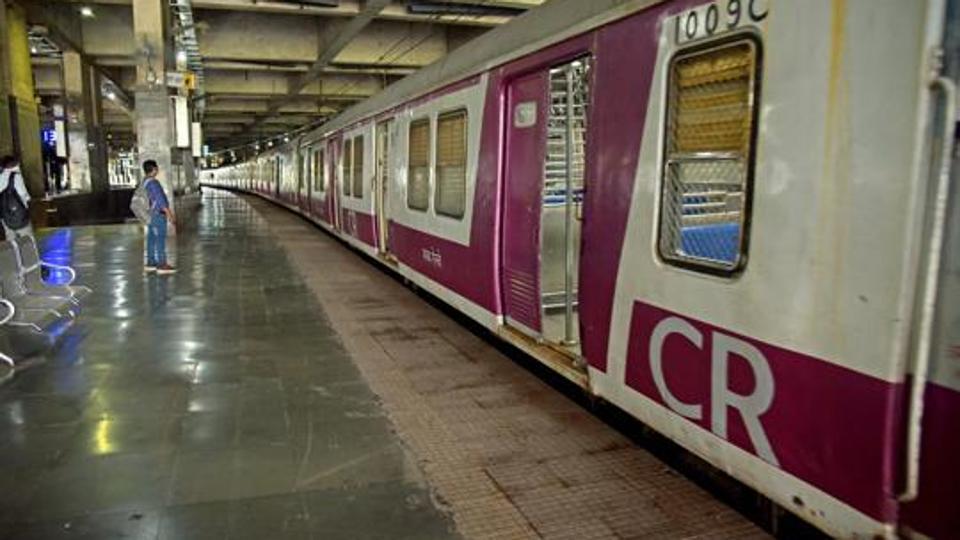
The plan was presented primarily for Central Railway (CR), a complicated rail network, to Union railway minister Ashwini Vaishnaw last July. However, sources said that last month both CR and Western Railway (WR) were asked to review the prospects of implementing this out-of-the-box plan with the intention of adding more services and possibly easing operations.
What is the plan about?
According to senior rail officials, one of the biggest reasons for the cancellation of trains is the running of end-to-end services on the entire 120-km-plus route on both CR and WR across different corridors. The sequestering of these could potentially ease the situation.
At present, CR comprises the main line (CSMT-Khopoli/Karjat/Kasara), the harbour line (CSMT-Panvel/Goregaon), the trans-harbour line running between Thane and Panvel and the fourth corridor of Nerul/Belapur-Koparkhairane. The plan is to divide it into eight suburban corridors. These could be CSMT-Thane (slow line), Thane-Kalyan (slow line), Kalyan-Kasara (slow line), Kalyan-Karjat (slow line), CSMT-Kalyan (fast line), CSMT-Panvel (slow line), Belapur-Uran (slow line) and Thane-Nerul/Vashi (slow line).
The intention behind this is to ensure that when one route, for instance Thane-Kalyan, is down due to a technical failure, it will not impact the other routes, say CSMT-Thane or Kalyan-Karjat/Kasara. The initial plan was prepared for CR, which is far more complex in nature on account of being spread across the Mumbai Metropolitan Region unlike WR which is a straight line.
“These eight corridors can work independently, with trains running and halting at only those stations in the corridor,” said a senior rail official. “The advantages are that disturbance in one corridor will not affect the others, passengers will face less confusion due to uniform services, a cyclical time-table can be used similar to the metro rail, and crew can be optimally utilised with uniform working hours. Most importantly, there will be scope to run more services at an interval of 4-6 minutes depending on the time of day.”
Indian Railways is working towards adding 300 new services on both CR and WR to the existing 3,200 plus services, for which there is a need to rationalise train timetables. New initiatives such as the introduction of air-conditioned trains, cab-based signalling to eliminate signal poles and augmentation of the rail network are already in progress.
“This system will give us a free hand to decide where we can introduce 100 percent AC services in the future,” said a CR official in the know of the presentation to Vaishnaw. “We can leave out the corridors with stations where there is opposition. Even CBTC signalling can be implemented in phases rather than taking it up all at once, which will allow us to do an impact assessment.”
The presentation, a copy of which is with Hindustan Times, states that on CR the platforms at Parel, Kurla, Dombivli, Ambernath, Titwala and Badlapur could be widened for double discharge on either side. However, some CR officials believe that this system will not work in Mumbai, as the entire system is interconnected and would cause problems.
“The existing stations are not equipped to handle so many commuters landing on the platforms at the same time from opposite directions,” said another CR official. “Stations, terminuses and roads outside will need to be overhauled or else there could be massive problems of crowd-handling if trains are delayed even for a minute. The system will also put immense pressure on select stations that serve as mid-points of these corridors.”
At present, there are also constraints at stations such as Thane, Kalyan and Wadala because of the existing network being used by both local and long-distance trains, the high frequency between two services, technical failures and trespassing accidents that delay trains. There are also the problems of trains being delayed by the level crossings at Diva and Chunabhatti, illegal slums and garbage on the rail premises.
WR officials said that since WR’s 123-km Churchgate-Dahanu corridor was in a straight line, their issues were different and could be solved by other means. “If we address the issues of completing 5-6 rail lines till Borivali and going further till Virar, and clearing illegal slums along the tracks to create space for two new rail lines till Mumbai Central, then operations can improve substantially,” said a WR official.
The presentation has stressed the need to complete projects such as the addition of 3-4 new lines on the Kalyan-Badlapur/Asangaon route, extension of the 4th line till Kasara and Karjat, doubling of the Karjat-Khopoli lines, creating 50-70 new sidings for parking trains, and redevelopment of Kalyan and Thane stations apart from completion of ongoing expansion works. “This pattern of train operations could certainly work, as the entire system would not be impacted in case of failures,” said Madhu Kotian, president, Mumbai Rail Pravasi Sangh.


Stay updated with all the Breaking News and Latest News from Mumbai. Click here for comprehensive coverage of top Cities including Bengaluru, Delhi, Hyderabad, and more across India along with Stay informed on the latest happenings in World News.


