
 E-Paper



Sea salt may be responsible for high AQI in south Mumbai: Experts
In the past two days, Colaba and Mazagaon in south Mumbai have emerged as the most polluted localities, with the air quality index (AQI) exceeding 330, indicating “very poor” air. Discrepancy between interior and coastal locations, according to experts could be a reason behind high AQI

 Prefer HTon Google


In the past two days, Colaba and Mazagaon in South Mumbai have emerged as the most polluted localities, with the air quality index (AQI) exceeding 330, indicating “very poor” air as per data from the System of Air Quality and Weather Forecasting And Research (SAFAR) network of 10 monitoring locations across the city.
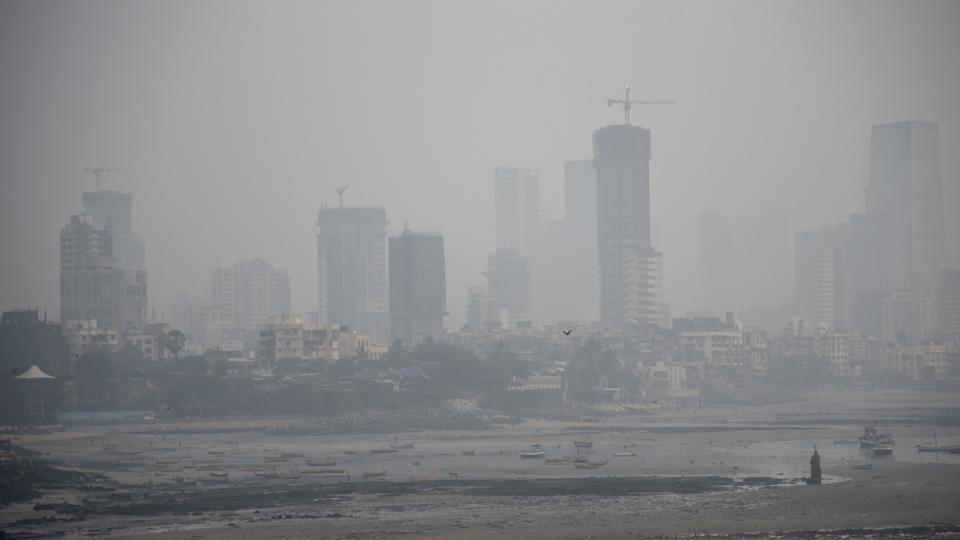
Colaba’s AQI on Tuesday evening stood at 370 while Mazagaon’s stood at 331. On the other hand, places in interior Mumbai recorded “moderate” air, for example Chembur (183), Borivli (159) and Bhandup (125).
This discrepancy between interior and coastal locations, according to experts, could be explained by higher concentrations of sea salt (or sodium chloride) that not only acts as a primary pollutant, consisting of particles that meet the criteria for PM2.5 and PM10 (small, respirable airborne particles less than 2.5 and 10 micrometers in diametre) but also reacts with other pollutants to create secondary compounds.
“It’s generally true that coastal towns are less polluted than landlocked ones. Strong winds from the sea sweep through the city and clean up the air. But there are certain conditions in the proximity to the sea can be a disadvantage,” said Sachin Panwar, an independent air quality expert certified by the Quality Council of India under the Union environment ministry.
“With Mumbai experiencing high humidity and slow, landward winds from the sea, the conditions are perfect for sea salt to become aerosolised, or airborne. Since the particles are very tiny, air quality monitors will detect them and reflect a higher AQI,” Panwar explained. Moreover, in areas like Colaba and Mazagaon, which also see a high amount of on-road and maritime traffic in ports, the presence of vehicular emissions can also amplify the role of sea salt as a pollutant.
“Sea salt is a chemical compound. In areas where there is a lot of traffic we usually see presence of other compounds like sulphur oxides and benzene, which is present in vehicular exhaust. In the presence of humidity and heat, salt will react with these other pollutants to form secondary compounds in the air. If wind speeds are slow, these secondary pollutants will accumulate and add to the pollution load,” Panwar added. He clarified, however, that this phenomenon is yet to be demonstrated in Mumbai through an empirical, scientific study.
Increasing heat and humidity have been the key drivers behind the Mumbai’s ongoing pollution spike. While an increase in air pollution typically coincides with a drop in temperature, the haze shrouding Mumbai has been accompanied by warmer conditions. Experts explained that when temperatures drop, the mixing height of airborne pollutants reduces and they settle closer to the ground. When temperatures increase on the other hand, hot air rises and carries pollutants higher up into the atmosphere.
“However, Mumbai at the moment is experiencing an unusual effect from a weak low-pressure system in the Arabian Sea, which is atypical for this time of the year. This is causing the temperature to increase only slightly, to the point where the air is becoming just humid enough to hold more particulate matter in place. And the wind speed is too slow, so there is a lot of localised accumulation of pollutants,” said Gufran Beig, project director at SAFAR.
Others experts agreed. Ronak Sutaria, founder of Respirer Living Sciences, said, “MET department data shows that wind conditions all day on Tuesday were very stagnant — which results in more localisation of pollution. This indicates that locations such as Colaba and Mazagaon are reporting more localised pollution levels, and not as much of the regional levels, in which pollutants are translocated from other areas by wind.”


