
 E-Paper



Shinde, Ajit adopted same strategy to ‘win’ parties
The hearing in the NCP MLAs' disqualification case has ended, and the assembly Speaker will study the arguments and make a verdict by February 15. The rebel factions in both the NCP and Shiv Sena cases adopted a similar line of defense, questioning the authority of the party president and arguing dissent within the party. The NCP case has no dispute over the party constitution, unlike the Shiv Sena case. The Speaker will have to decide which constitution is authentic.


The hearing in the Nationalist Congress Party (NCP) MLAs’ disqualification has ended and assembly Speaker Rahul Narwekar will have time till February 15 to study the arguments and pronounce his verdict. This would be his second such decision after declaring chief minister Eknath Shinde’s party as the real Shiv Sena in an order on January 10.
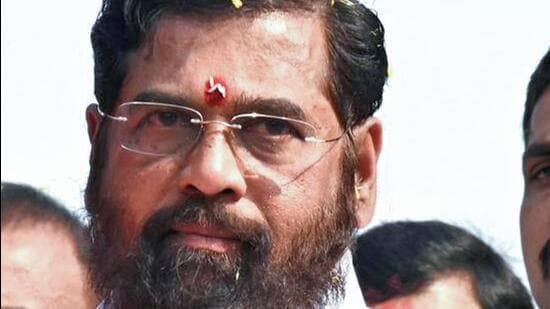
But a comparative analysis of the two cases throws up one commonality – the line of defence adopted by the rebel factions.
In a repeat of what Shinde did in June 2022, Ajit Pawar walked out with most party MLAs, exactly a year later.
When the case came up for hearing before the speaker, the strategy adopted by Ajit Pawar’s camp was a replica of the one Shinde’s group had taken — questioning the authority of the party president, insisting that a majority in the party chose to go against the party president and hence it was not a split.
To prove that their faction was the real party, the rebel groups argued upon the dissent within the party over the decision making and the ideology they followed.
The Shinde faction contended that the dissent among the legislators over the party deviating from the Hindutva ideology by joining hands with Congress and the NCP led to their decision of walking away from the leadership. To emphasise that Thackeray deviated from the party ideology, the Shinde camp pointed at the formation of the Maharasthra Vikas Aghadi government.
To counter it, the Shiv Sena (UBT) argued how Shinde faction MLAs were part of the same government and how they had no objection to the same NCP (under Ajit Pawar) joining the government under Shinde in July 2013.
Similar arguments were made by the Ajit Pawar faction which pointed out how Sharad Pawar was not averse to joining hands with the BJP and how he had agreed to go with it in 2019 and before that. “So, it would not lead to the disqualification for anti-party activities,” Pradeep Sancheti, counsel for the Ajit Pawar faction, had argued.
The Ajit Pawar faction asserted that there were no factions in the party and theirs was the party.
In the case of Sena, Narwekar ruled that mere dissent among the members of the party could not attract action under the anti-defection law, wish and will of the party chief (Uddhav Thackeray) could not be obligatory on other members of the party, and hence the party chief had no authority to expel Shinde from the party.
The rebel factions also contested the internal party structure.
The Shinde group said Thackeray was never appointed as president and the structure of the party existed at the time of emergence of the rival faction was not as per the constitution of the party. Ajit Pawar’s camp challenged the appointments of the office bearers, including Sharad Pawar as president, saying those were not in accordance with the party constitution. They said Pawar and others were not elected but appointed to the posts as there had been no elections after 2015.
One of the major differences in both cases was about the party constitution.
Sharan Jagtiani, who represented the Sharad Pawar faction, said, “Our case is different from that of the Shiv Sena. In the NCP case, there is no dispute over the party constitution and the organisation structure.”
So, the speaker will have no choice but to decide which constitution is an authentic one, he said.
Speaking to HT, Asim Sarode, who represented the Thackeray faction, said the party constitution of Shiv Sena was challenged on grounds of what authority Uddhav Thackeray had to decide on the alliance and appointments of leaders.
“Here, the NCP constitution is in place and as the president of the party, he (Sharad Pawar) could have taken the decision about the pre- and post-poll alliance. That is the reason why the speaker did not ask for a copy of the party constitution from the Election Commission of India like he did in the case of Sena,” he said.
While hearing the Sena case, Narwekar had to decide on the violation of the whip during the election of the speaker and the confidence motion moved by the Shinde government in July 2022. That question did not arise in the NCP MLAs’ disqualification hearing.


Stay updated with all the Breaking News and Latest News from Mumbai. Click here for comprehensive coverage of top Cities including Bengaluru, Delhi, Hyderabad, and more across India along with Stay informed on the latest happenings in World News.


