
 E-Paper



Sting operation: BMC swamped with requests to fix mosquito menace
Mumbai: The city is in the grip of a mosquito menace that seems to have suddenly spiralled


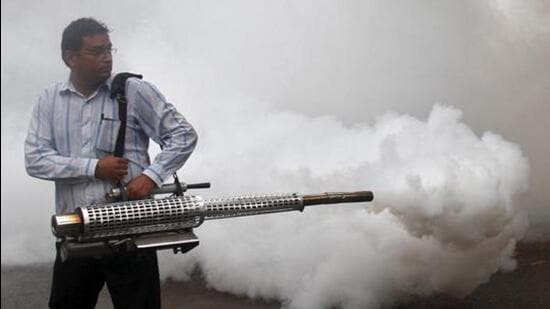
Mumbai: The city is in the grip of a mosquito menace that seems to have suddenly spiralled. While many citizens have taken to social media platforms like Twitter and tagged the BMC, pest control offices at the civic body too are inundated with requests for fumigation and other control measures.
According to officials from the BMC’s health department, the suburbs are more affected than the island city because the storm water drains (SWDs) here are open channel drains. These drains are supposed to remain dry during the non-monsoon season but get filled with water through multiple sources, mainly illegal garages, slums and hawkers. The mosquitoes then breed in the stagnant water.
An official statement from the BMC’s insecticide branch says that the mosquito responsible for causing the nuisance is the Culex mosquito “which usually breeds in dirty stagnant water such as in nullas, SWDs and choked sewage lines”. The statement adds that the spate of road, SWD and sewage construction works are also responsible since, during their construction, “the existing drains are stopped by creating bunds/coffer dams etc… which are conducive to Culex mosquito-breeding…”
Confirming this, a BMC official said that unlike the island city, where the storm water drains are covered and have a double-pipe drainage system (separate for sewage water and storm water), the suburbs have an open drainage system. “But we have started covering these up,” he said. “All over the suburbs, RCC storm water drains, levelled with the roads and covered, are being constructed. However, the newly constructed SWDs too don’t have a proper slope, on account of which they hold water.”
The official said that SWDs had become “chronic nuisance spots”. “Whenever we get mosquito complaints from the suburbs, we ask our team to first check these drains,” he said. “More than 80 percent of the time, we find breeding spots in them.”
With the mosquito menace disturbing citizens’ sleep for weeks now, Dr Sagar Mundada, psychiatrist, Healthspring, Mumbai, points out how this is potentially dangerous. “Sleep disturbances and an irregular sleeping pattern lead to many health issues,” he said. “The ability to focus deteriorates, forgetfulness increases, there is poor management of hypertension and blood sugar levels. Poor sleep exacerbates metabolic diseases such as PCOS and thyroidism. Anger explosions too are common in those whose sleep is disturbed.”
It’s not just Mumbai, the Mumbai Metropolitan Region too is inundated with mosquitoes. Abhijit Bangar, municipal commissioner of the Thane Municipal Corporation said, “The mosquito menace has increased in the city. We will start taking preventive measures well before the monsoon. We are already in the final stage of giving work orders for medicinal sprays and are identifying mosquito breeding spots. These are all measures to ensure that dengue and malaria cases don’t shoot up during monsoon.”
“In Thane, more than SWDs, open nullahs could be a major reason for the mosquito menace,” he said. “Mangroves could be another reason. Our team will check open nullahs and take the necessary measures. But it’s a bit difficult to carry out preventive activities in mangrove areas.”
Health and climate experts have said that several parts of urban Asia have been seeing an increase in mosquitoes in the last few years. “While there are no specific studies proving a link between climate crisis and the increase in mosquito-driven diseases in India, given observations from other countries in Asia, climate change is leading to an expanded geographic range of Aedes aegypti mosquitoes as well as increasing transmission suitability for dengue in many areas,” said Dr Manisha Kulkarni, associate professor at the School of Epidemiology and Public Health at the University of Ottawa and the author of a 2022 review paper on climate change effects on malaria and dengue.
Climate experts also said that extended rains and high humidity levels, which are being observed over the last decade in many cities in India, are creating a conducive breeding ground for mosquitoes, and thereby extending the period of diseases such as dengue and malaria.
Additional inputs Sajana Nambiar
Stay updated with all the Breaking News and Latest News from Mumbai. Click here for comprehensive coverage of top Cities including Bengaluru, Delhi, Hyderabad, and more across India along with Stay informed on the latest happenings in World News.


