
 E-Paper



The not-so-hidden cost of a faraway war
The human ripples of the war extend further. Women in migrant households stretch rations harder. Remittances back to villages dip when wages or work hours shrink

 Prefer HTon Google


MUMBAI: In one of the narrow bylanes of Andheri East, a restaurant has long served as an unassuming proxy for the city that keeps running on affordable meals. For over three decades now, it has fed a cross-section of the city: migrant workers who grab a quick drink and a meal after their shift; mid-level executives from nearby SEZs who outsource their domesticity to his kitchen; and weekend warriors who nurse their starters that begin with a drink. The owner, who preferred anonymity, employs workers from Mangalore. They stay on the premises and send home what they save.
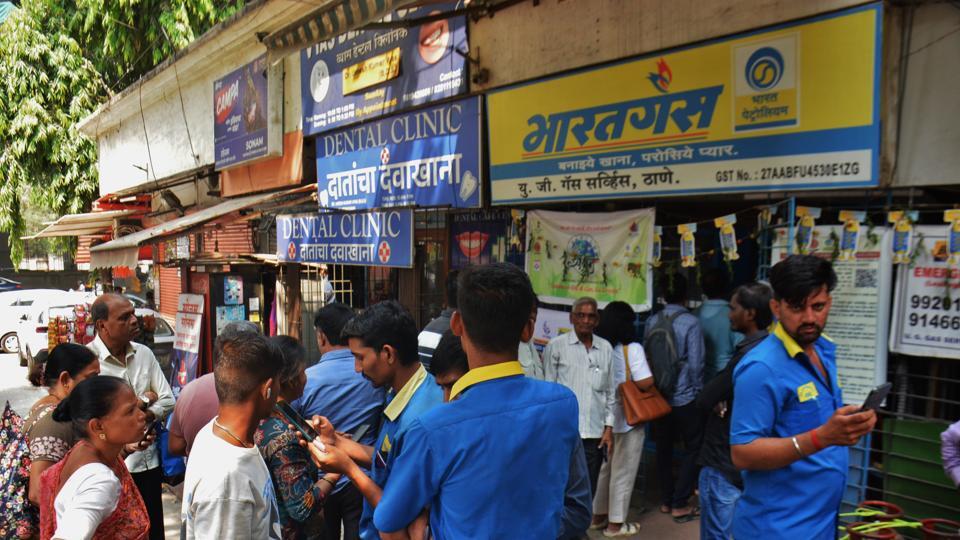
Until a few weeks ago, the kitchen ran smoothly on commercial LPG. It consumes at least three cylinders on any given day. But with supplies through the Strait of Hormuz severely disrupted, commercial allocations have been slashed. On the black market, cylinders that once cost around ₹1,800-2,000 are now changing hands at ₹4,000-6,000 or more. The restaurant’s fuel costs have spiralled by over 300 percent. The owner has to choose from tough options: reduce the number of dishes on the menu, increase prices by at least 30 percent, or shrink portion sizes.
“If I reduce the portion size of a tandoori chicken from 1 kilo to 700 grams to keep prices the same, customers will argue they’re getting ripped off.” Past experience has taught him that price rise invites sharp backlash from regulars; unless the customer is evolved and understands costs have gone up. But inflation is squeezing everyone.
It is an exasperating place to be in.
What he sees is a government now focused on protecting household supplies for its 340 million domestic connections. It shows little inclination to listen to stories of people such as him. When he passes on the costs by hiking prices, taxes rise proportionately. In turn, the consumer pays the base price plus the cascading GST. Eventually, demand erodes quietly.
People such as this eatery owner are beginning to think of this period as if it were an invisible lockdown. Only it’s more insidious. It contracts the rhythms that sustain India’s vast informal workforce and aspirational middle class.
Contrast his perspective with someone like Vikram Varma, CEO of Raw & Ruckus, a cloud kitchen in Mumbai. His business is not among those directly impacted. This is because his venture is powered by electricity and induction ovens. He has been able to maintain operations without fuel anxiety. In fact, his data even shows a modest gain: as traditional LPG-dependent outlets cut menus or hours, some customers are shifting to his stable, predictable offerings.
Varma is playing a game of electrons on a grid as opposed to the Andheri eatery owner who is hostage to molecules that must be physically transported. But Varma is watching the broader ecosystem with concern. Around him, he sees spaces where migrant workers gather for quick, fresh meals shrinking. Street carts and small stalls that once cooked on LPG are disappearing overnight. Those that continue often prepare food elsewhere and bring it to the stall.
But does their quality stand to scrutiny? Have their volumes dropped sharply? “Yes”, says the Andheri restaurateur. He is like an anthropologist watching trends on the street and Varma’s experiments at once. As of now, the result, he says, is not just inconvenience to consumers, but a spike in the demand-supply gap for blue-collar workers.
This divergence, to his mind, highlights a deeper first-principles crack in India’s growth story.
We have long assumed that strategic reserves and diversified sourcing would shield us from global storms. In reality, nearly 90 percent of India’s LPG passes through the vulnerable Strait of Hormuz. When that chokepoint tightens, the informal sector—employing close to 490 million workers—absorbs the shock first. Large chains or tech-enabled kitchens can pivot or absorb short-term pain. The small restaurant in Andheri East, feeding migrants and executives alike, cannot.
The human ripples extend further. Women in migrant households stretch rations harder. Remittances back to villages dip when wages or work hours shrink. Behavioural shifts emerge: more families experiment with wood or coal where permitted, or pool resources for community cooking. Frugality, long a rural habit, returns as urban necessity.
The owner in Andheri East is discovering how thinly buffered our routines really are. The invisible lockdown is not merely about gas cylinders. It is about the quiet realisation that resilience demands we confront interdependencies head-on.
It’s a tough place to be in.

Stay updated with all the Breaking News and Latest News from Mumbai. Click here for comprehensive coverage of top Cities including Bengaluru, Delhi, Hyderabad, and more across India along with Stay informed on the latest happenings in World News.


