
 E-Paper



Unruly drivers major reason for absent auto stands at metro stations
Four months after receiving permission, shared auto stands outside metro stations in Mumbai have yet to be set up due to concerns over traffic snarls and unruly drivers. The Mumbai Traffic Police have cited the indiscipline and indifference towards traffic rules by the drivers as the reason for not granting permission. The shared autos are meant to provide last mile connectivity for commuters.

 Prefer HTon Google


MUMBAI: Four months after a decision to set up shared auto stands outside metro railway stations on a trial basis for last mile connectivity, the experiment is yet to take off. Reason: the Mumbai Traffic Police (MTP) are reluctant to grant permission, owing to the indiscipline and indifference towards traffic rules by the drivers of shared autorickshaws.
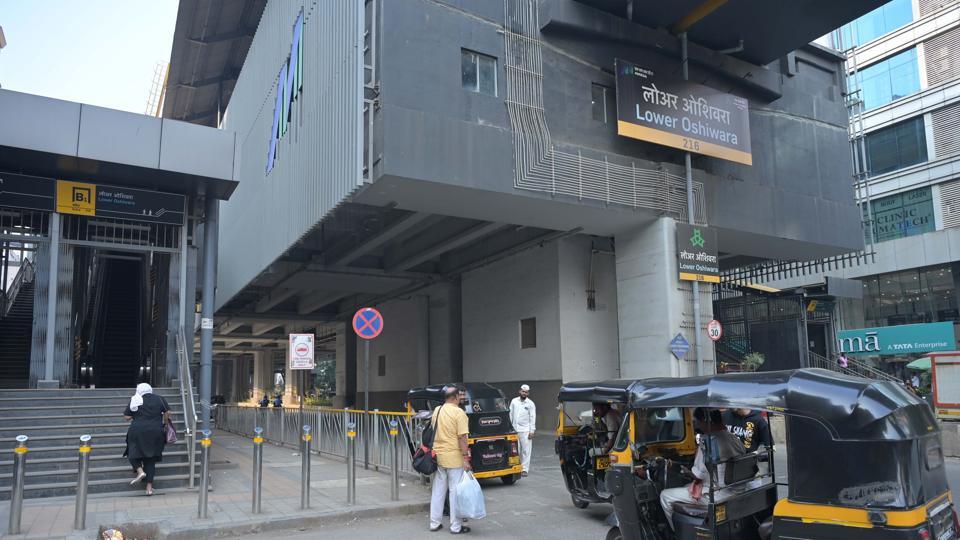
The Mumbai Metropolitan Region Transport Authority (MMRTA) had in mid-September permitted shared autorickshaws outside metro stations on Lines 1, 2A and 7. These stands were to be set up after clearance by the traffic police, as per rules. However, as sources in the Regional Transport Office (RTO) revealed, the traffic police had their concerns, as shared auto rickshaw stands could lead to traffic snarls outside metro stations located on the already congested Western Express Highway and Link Road.
When asked about clearance, Pravin Padwal, Joint CP (Traffic), cited another reason as well. “Drivers of shared autorickshaws are unruly and care little for traffic rules,” he said. “This is one of the reasons for not granting permission to shared autorickshaws. We will allow them to ply only if they first improve their behaviour and promise to adhere to traffic rules.”
It is a known fact that the drivers of shared autos are unruly, ferry more than a vehicle’s capacity and don’t wear uniforms. In addition, they overspeed, breach traffic signals, don’t go by the meter, and some drive rickety autos that have no business being on the road. Hindustan Times had carried out a series last year, highlighting the various problems faced by citizens using shared autos across the western and eastern suburbs, Thane, Kalyan and Navi Mumbai.
“These shared autos are, in fact, a disadvantage to people,” said road transport expert Jitendra Gupta. “Drivers of shared autos operating from outside most railway stations form an organised group and harass regular auto drivers who ply on regular meter fares. They also bully passengers into sitting next to them on the driver’s seat, part of their illegal overloading of rickshaws.”
In mid-September, MMRTA approved 40 different routes of shared autos running from 28 different metro stations on the Versova-Andheri-Ghatkopar Line 1, Gundavali-Dahisar (E) Line 7 and Andheri (W)-Dahisar (W) Line 2A. Each stand was to have four to six autos waiting for passengers. RTOs and other authorities were supposed to monitor the stands for six months before taking a call on whether they could be made permanent.
“We are still waiting for the authorities to do the markings below metro stations for the shared auto rickshaw stands,” said autorickshaw union leader Thampi Kurien, who is now seeking appointments with senior bureaucrats from the transport department. “Despite the scheme getting the go-ahead from MMRTA, it has not moved forward.”
The infrastructure will require a fare chart, proper demarcation of the shared auto stands below the metro stations and location-wise routes from a particular metro station among other things. Once the stands are operational, the traffic police and RTO will monitor the locations where the shared autos are causing traffic snarls. The autos are expected to connect metro stations to residential societies and office spaces.
The infrastructure at the metro stations includes wide footpaths, steel benches, and demarcated points for fire engines and ambulances. But not all will be congestion-free—while Line 7 has adequate space for auto stands, Line 2A is narrower. Line 1, which has been operational for years, also has a space crunch.
Stations earmarked for auto stands
Versova, D N Nagar, Andheri, Chakala, Goregaon, Aarey, Dindoshi, Akurli, Poisar, Magathane, Kandivali, Dahanukarwadi, Ovaripada, Dahisar East, Anand Nagar, Kandarpada, Malad (W), Rashtriya Udyan, Devipada, Mandpeshwar, Eksar, Borivli and Shimpoli.
Total stations: 28
Total auto routes: 40


