
 E-Paper



Waste not: New STPs to save millions of litres of clean water
Mumbai's seven sewage treatment plants aim to save 1,200 MLD of potable water daily, enhance marine health, and promote grey water reuse for non-potable needs.

 Prefer HTon Google


MUMBAI: The seven sewage treatment plants (STPs) being built across the city will turn grey into gold. The civic administration says the plants, at various stages of construction, will save millions of litres of potable water a day.
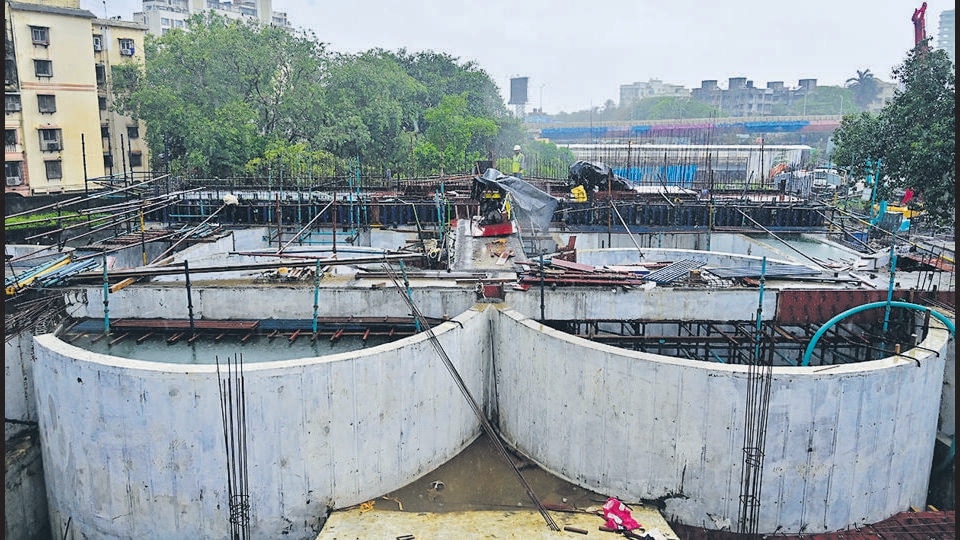
The grey water produced from sewage treatment will be used in tertiary activities, such as deep cleaning of roads and watering public gardens, thus saving potable water, which currently meets these needs. According to Rajesh Tamhane, deputy municipal commissioner (environment), the total savings would be 1,200 MLD of potable water a day from all seven plants.
Improving the quality of sewage discharged into the Arabian Sea will also enhance the health of the marine ecosystem, according to the Brihanmumbai Municipal Corporation (BMC).
The seven STPs are being constructed in Worli, Bandra, Dharavi, Versova, Malad, Bhandup and Ghatkopar, at a cost of ₹17,000 crore. They have a combined treatment capacity of 2,464 MLD.
Of the seven new STPs, the plants in Worli, Bandra and Dharavi are expected to be completed by July 2026.
The Worli facility is designed to handle 500 MLD of sewage, half of which will be treated and discharged into the sea, while the remaining 250 MLD will be regenerated for reuse in non-potable activities such as gardening and deep cleaning.
Tamhane said that earlier, sewage with high biological oxygen demand (BOD) levels is directly released into the sea. With the new facilities, the BMC aims to reduce this significantly, thereby minimising marine pollution.
“The idea is not just to clean waste water but also to reclaim it for reuse. This reclaimed water will be put to tertiary use, saving valuable potable water,” Tamhane said.
As an example of what can be achieved, the Colaba STP, which is not one of the seven being constructed, is already treating 37 MLD of sewage water, of which 3 MLD is being reused for cleaning and gardening in Navy Nagar and at the Willingdon Club. Treated water is supplied to Willingdon Club at ₹20 per kilolitre and to Navy Nagar at ₹1 per kilolitre.
The Ghatkopar STP, work on which is more than 40% complete, has received interest from BPCL and HPCL, which plan to use the treated grey water as a cooling agent for their machinery.
The Bandra STP will be the only plant to feature open public spaces, including a two-hectare garden, viewing gallery and knowledge centre.
The Dharavi STP will boast the tallest sequential batch reactor in Asia (where processing of sewage water takes place), a ground-plus-three storey building, the only multi-storey SPT.
The Malad STP was covered with mangroves and BMC took requisite permission from Bombay high court for this plant.
Ashok Mengde, deputy chief engineer, BMC, said each plant will incorporate three levels of treatment—primary, secondary, and tertiary. Additionally, biogas produced during the process will be used to generate electricity.
As part of a broader vision, the BMC is also planning to mandate that all future redevelopment and high-rise construction projects include in-built sewage treatment systems in line with the Development Control Rules. These mini-STPs within buildings will enable recycling of grey water on-site, further boosting the city’s water efficiency.


Stay updated with all the Breaking News and Latest News from Mumbai. Click here for comprehensive coverage of top Cities including Bengaluru, Delhi, Hyderabad, and more across India along with Stay informed on the latest happenings in World News.


