E-Paper



Why Mumbai went under water on Wednesday: Storm water drains, construction debris to blame
By all official accounts, it was the overall 257mm rainfall that hit the city which threw all the carefully laid plans out of gear

 Prefer HTon Google


MUMBAI: On Wednesday, torrential rains brought the city to its knees once again. Water-logged roads and train tracks, overflowing storm water drains (SWDs) and choked traffic led to a nightmarish situation despite the fact that the BMC and railways do stringent pre-monsoon checks every year. So what went wrong?
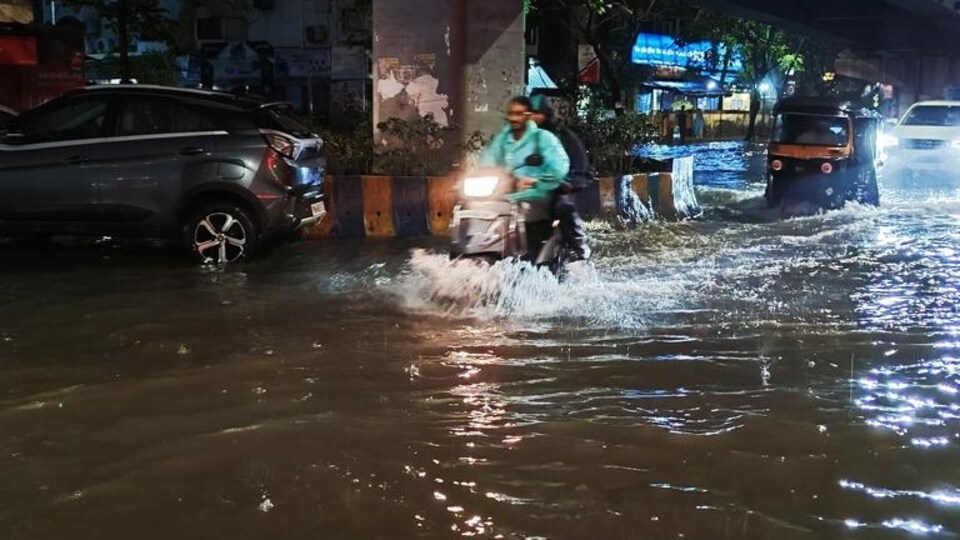
By all official accounts, it was the overall 257mm rainfall that hit the city which threw all the carefully laid plans out of gear. “Yesterday, the intensity of the rain surpassed the ‘extreme’ threshold,” said Mahesh Narvekar, director of the BMC’s disaster control cell. “The highest recorded rainfall in some locations was 274mm. From 6pm to 9pm, some locations in the eastern suburbs crossed 200mm. That is why there was waterlogging reported. But the retention period was not much.”
The intensity of the incessant rainfall was higher in the eastern suburbs of Ghatkopar, Mankhurd, Govandi, LBS Road in Vikhroli and Bhandup, which are considered chronic flooding spots. But due to timely intervention from the BMC, the waterlogging was brought under control. More than 300 dewatering pumps were operational across the city.
SWDs the biggest culprits
Narvekar said that the rainfall pattern in Mumbai had changed over the years, with the intensity of rainfall increasing. “We will have to augment our system accordingly,” he said. “When we pump the water, it has to be thrown into the SWDs. Yesterday, the nallahs and SWDs were overflowing and there was no way to dispose of excess water.”
The capacity of most SWDs is around 25mm of rain per hour during low tide. “We need to deepen or widen them to enable them to hold excess surcharge,” said Narvekar, who was with BMC commissioner Bhushan Gagrani in the emergency disaster control room, monitoring the situation till late Wednesday night.
Gagrani has asked for a report from the storm water drains department on the cause for waterlogging and the short-term and long-term measures that can be taken to mitigate waterlogging in future. Narvekar said that engineering solutions would have to be worked out to prevent the recurrence of such situations. “Among the feasible long-term measures, we could look at the construction of underground tanks, micro-tunnelling and the construction of pumping stations,” he said.
SWDs hit railways too
The shortfall in SWD capacity was also the reason for waterlogging along the railway tracks. Coupled with waterlogged roads outside the stations, Central Railway’s local services came to a grinding halt on Wednesday evening. Post 5pm, waterlogging had begun on the roads in Bhandup and Mulund following the pounding rain. Eventually, the rail lines at Kurla, Nahur and Kanjurmarg also went under water, disrupting normal rail services.
Later in the evening, when Mumbai’s rush hour commenced, the heavy downpour impacted other areas of Mumbai, paralysing the island city and extended suburbs. “In just 1.15 hours, there was over 200 mm rainfall. Any transport system would have failed with the SWDs being unable to clear the excess water,” said a railway official.
Two Central Railway officials said that the culverts and drainage system parallel to the rail lines were designed to accommodate 70 to 100 mm of water. “In case of anything in excess, there will be a spillover, resulting in inundation of railway tracks,” said one official. This is precisely what happened on Wednesday evening.
Not only were the excess rains an issue—the agreed-upon water discharge locations between the BMC and the railways were also a problem because the storm water lines outside of railway limits, where discharge pipes were put up, were also waterlogged. This meant that storm water was unable to flow downstream.
Construction chokes drains
At Bhandup, a new problem has arisen, which was observed even during the onset of this year’s monsoon. Construction of new buildings outside the railway premises has choked the storm water drains. Mud and debris have flowed into the drainage system, thereby reducing its discharge capacity and even blocking the designed water movement. Prior to the monsoon’s onset, Central Railway had installed five motor pumps to alleviate waterlogging on the tracks, but the end result was a failure.
A video posted on X showed heavy leakage at the concourse level from one pillar of the Jogeshwari (East) metro station. The accompanying text read, ‘Spirit of Mumbai? Roads are jampacked, while the metro is moving slow it’s raining inside the station too :).’ A Maha Mumbai Metro Operation Corporation Limited (MMMOCL) spokesperson said that the leakage was due to one or two storm water pipes in the building getting dislodged from their position in some areas due to excessive water pressure. The issue was immediately addressed, and repairs were completed last night, despite heavy rainfall, he added.
Underground Metro 3 remained dry
On the Aqua Line or underground Mumbai Metro 3, which will be inaugurated on October 5 by prime minister Narendra Modi, the stations and corridors remained dry.
Speaking about the engineering design, Ashwini Bhide, managing director, Mumbai Metro Rail Corporation said, “We have designed the entry and exit based on the rainfall that Mumbai receives, and they are at a height that does not permit water to flow inside. The canopies covering such points are sealed to prevent any water ingress.”
The only possibility of water ingress, that too a negligible amount, is from the ventilation shafts, but those too have been taken care off by using motors to pump the water out. Therefore, according to Bhide, flooding cannot happen on the underground 33.5 km corridor, as adequate precautions have been taken to keep it safe and dry.