
 E-Paper



17 feeder bus routes approved for RRTS stretch in Gzb
Ghaziabad: The regional transport department officials on Tuesday said that they have finalised 17 feeder bus routes for the three major stations of the Regional Rapid Transit System (RRTS) project in Ghaziabad


Ghaziabad: The regional transport department officials on Tuesday said that they have finalised 17 feeder bus routes for the three major stations of the Regional Rapid Transit System (RRTS) project in Ghaziabad.
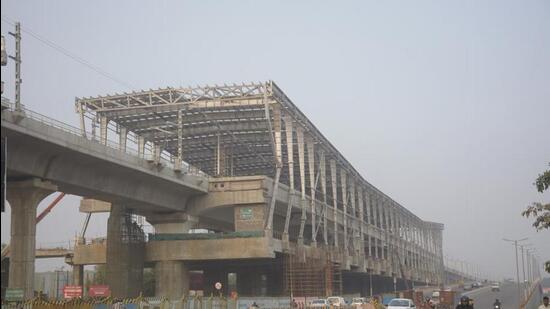
Officials said that the 17 proposed routes have been chalked out in accordance with a proposal given by the National Capital Region Transport Corporation (NCRTC), the agency developing the RRTS project, and the routes will cover a distance of about 12-13 kilometres to cater to RRTS passengers.
The 82-km-long RRTS project is under construction in Delhi, Ghaziabad and Meerut and will connect the three cities with high-speed RRTS trains by March 2025. A 17km ‘priority’ stretch in Ghaziabad district is scheduled to be operational in March 2023 and it will be the country’s first RRTS stretch to commence passenger operations.
The RRTS trains will cater to about 800,000 passengers on a daily basis once the entire 82-km route is fully commissioned.
“The NCRTC gave us a proposal for chalking out the feasibility of routes from the three RRTS stations at Sahibabad, Ghaziabad and Guldhar. The 17 proposed routes were discussed in a meeting of the regional transport authority and have been approved. We are now sending these proposed routes to the state government for a final approval,” said Arun Kumar, regional transport officer (RTO).
The proposed routes connect far flung areas of Loni, UP Gate, Noida, Govindpuram and others to the three RRTS stations. According to official sources, the nine routes from Sahibabad RRTS station require a fleet of 56 buses, while 28 buses will be required from Ghaziabad and 30 from Guldhar RRTS station.
Officials said that once approved, the permits will be opened up for the feeder buses and the number of permits will be decided accordingly.
According to the proposed routes, nine have been chalked out from Sahibabad RRTS station, while four each have been proposed for the two other stations at Ghaziabad city and Guldhar on the Delhi-Meerut Road.
“The routes have been defined in such a manner that they will be able to cater to passengers within a radius of about 12-13kms. Some routes will also touch the UP Gate border with Delhi and also Noida,” RTO Kumar added.
“More routes will be proposed as work progresses. We intend to improve the last-mile connectivity with the help of point-to-point shuttle service, provision of cab aggregators, pre-paid taxis, autos, e-rickshaws and bike taxis, besides also providing bicycles on rent, among others,” said Puneet Vats, NCRTC chief public relations officer.
The NCRTC officials said that the RRTS stations are proposed as multi-modal hubs and there will be huge inflow and outflow of passengers. They added that there is a need to provide efficient last-mile connectivity to nearby localities across the city.
“The idea is to improve last-mile connectivity and reduce the number of private vehicles on roads. This will considerably help in reducing pollution,” Vats added.
Once fully operational, officials estimate that the RRTS project will considerably reduce CO2 emissions by taking around 150,000 private vehicles off the road. They added that the entire corridor is estimated to reduce about 250,000 carbon emissions per year, which will help reduce the impact of air pollution.
The entire RRTS project will have 25 stations with 22 falling under the jurisdiction of the state of Uttar Pradesh.

Stay updated with all the Breaking News and Latest News from Mumbai. Click here for comprehensive coverage of top Cities including Bengaluru, Delhi, Hyderabad, and more across India along with Stay informed on the latest happenings in World News.


