
 E-Paper



Action plan to check pollution in Ghaziabad readied, 10 hotspots identified
According to government data, Ghaziabad is listed among 16 non-attainment cities in Uttar Pradesh with high levels of air pollution. Cities are declared non-attainment if, over a five-year period, they consistently do not meet the National Ambient Air Quality Standards for PM10 or NO2 (nitrogen dioxide)


The Uttar Pradesh Pollution Control Board (UPPCB) has chalked out an action plan for Ghaziabad to combat air pollution in the upcoming winter season and also identified 10 major hotspots affecting the air quality of the city. Officials said 18 departments have been tasked to undertake certain steps to reduce air pollution.
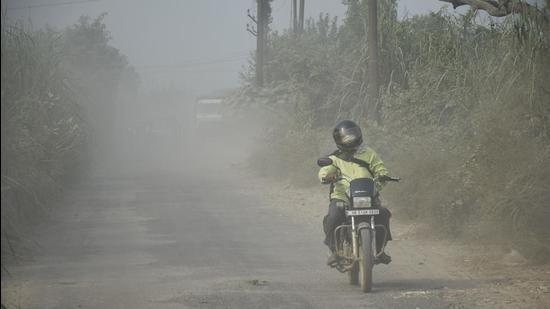
According to government data, Ghaziabad is listed among 16 non-attainment cities in Uttar Pradesh with high levels of air pollution. Cities are declared non-attainment if, over a five-year period, they consistently do not meet the National Ambient Air Quality Standards for PM10 or NO2 (nitrogen dioxide).
“In our action plan for the upcoming winter season, the district administration has roped in 18 departments and given them specific roles, which are to be completed in a time-bound manner. These roles include sprinkling water on roads, central verges, formation of quick response teams to tackle instances of garbage and crop residue burning, checking environment norms related to construction works, night patrolling, using smog guns and dust suppressants, etc,” said Utsav Sharma, regional officer of UPPCB.
The district magistrate has directed the departments to complete the tasks by October.
The UPPCB has also identified 10 major pollution hotspots across the city and zeroed in on the pollution generating sources in each of them. The 10 hotspots are Sahibabad, Kaushambi, Raj Nagar Extension, Delhi Meerut Road, Loni, Bhopra-Delhi border, South Side GT Road, Sanjay Nagar, Vasundhara, and Siddharth Vihar
“The 10 hotspots are the ones where infrastructure projects are being undertaken or are affected by high volume of traffic, road dust, industrial activities, burning of waste, dumping of construction and debris, among other issues. In 2020-21, the PM10 and PM2.5 concentrations reduced in the city. We will be closely monitoring the situation this year too,” said Sharma.
According to statistics of the pollution board, in 2019-2020, Ghaziabad recorded an annual average PM10 concentration of 218 micrograms per cubic metre (mpcm), while it reduced by 14.5% in 2020-21.
Likewise, the PM2.5 concentrations stood at an average of 53.04mpcm between April and September this year, compared to 64.20 mpcm during the same period last year. The standard limit for PM10 and PM2.5 is 100mpcm and 60mpcm, respectively.
Residents and environmentalists said that the city has been battling high levels of air pollution over the last few years, which are compounded by factors such as crop residue burning in neighbouring states.
“The action plan is a short-term measure. It must be enforced in totality and if possible, be formulated under the guidance of environmental experts. In the long term, it is advised that a detailed study of meteorological, demographic factors, constructions and green areas be taken up to understand why pollution is impacting the city so badly for the past 5-6 years now,” said Akash Vashishtha, a city-based environmentalist and a lawyer.
The list of 10 hotspots also features Kaushambi township. Members of the Kaushambi Apartments Residents’ Welfare Association (Karwa) have petitioned the National Green Tribunal (NGT) and even moved the Supreme Court to resolve different pollution-related issues affecting the township.
“They make plans every year, but results show that the city often reaches ‘severe’ air quality due to pollution in winter. We have been fighting a legal battle against the agencies since 2015 in the NGT and now, in the Supreme Court. Now, they (government agencies) have realised the seriousness of pollution-related issues and included Kaushambi in the list of hotspots,” said VK Mittal, president of Karwa.

Stay updated with all the Breaking News and Latest News from Mumbai. Click here for comprehensive coverage of top Cities including Bengaluru, Delhi, Hyderabad, and more across India along with Stay informed on the latest happenings in World News.


