
 E-Paper



GB Nagar agri dept speeds up bio-decomposer distribution to curb stubble burning
Officials said they have distributed 3,510 vials of bio-decomposers which can be mixed with water and spread over the stubble to decompose it, and the solution will turn stubble into manure within three to four weeks

 Prefer HTon Google


The agriculture department in Gautam Budh Nagar has sped up distribution of bottles of bio-decomposers among the farmers to minimise stubble burning and curb air pollution in the district, officials said on Thursday.
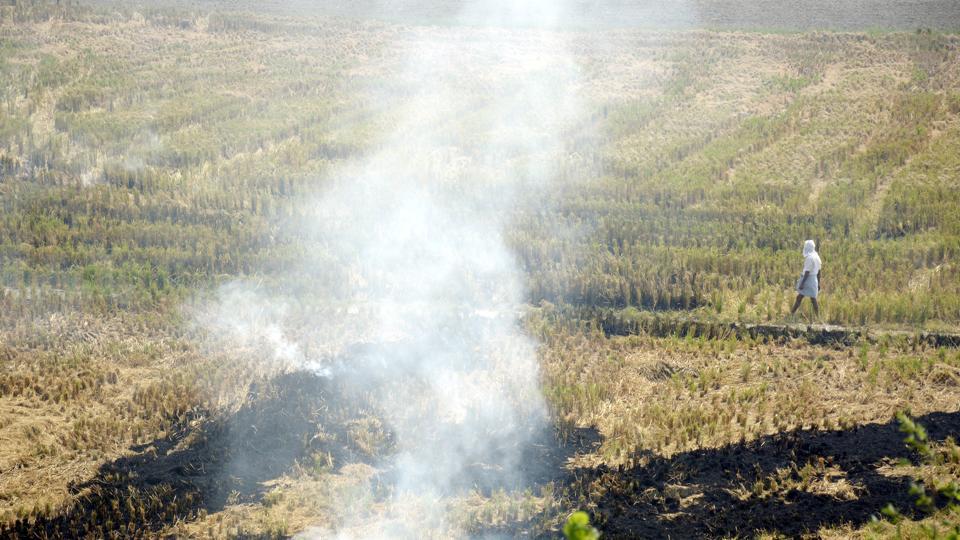
Officials said they have distributed 3,510 vials of bio-decomposers which can be mixed with water and spread over the stubble to decompose it.
“We are planning to distribute more vials of bio-decomposers to suppress the stubble burning in the district. We are holding meetings with the farmers in different villages to encourage them to use these decomposers. Each vial of decomposer can be mixed with 200 litres of water to form a solution, which can then be sprayed over stubble covering at least one acre land. The solution turns stubble into manure within three to four weeks,” said Vinod Bhargav, deputy director (acting), agriculture department in Gautam Budh Nagar.
Bhargav also said that farmers often burn stubble to meet up for a small window post-harvest, where they have to catch up for the winter crops. “Three major crops are cultivated after paddy. Of those three, mustard and potato are cut a little early, and wheat in November. Harvesting starts a little earlier in Gautam Budh Nagar because basmati rice is planted here. Due to this, most of the farmers get some time to use the decomposers,” Bhargav added.
However, many farmers think otherwise and complain that often they do not get enough time to meet the “small window” between winter and summer crops as the decomposition process is slow.
“Decomposers take almost one month to turn the stubble into manure. This is a very slow process, and everyone doesn’t always harvest early and cultivate late. Paddy is often harvested till late October and wheat cultivation begins around the first week of November,” said Umesh Kumar, a farmer based in Dadri.
Meanwhile, the district agriculture department has imposed fine on seven farmers so far, for burning stubble in Jewar and Dadri.
“Two incidents of stubble burning in Jewar and two in Dadri have been reported so far. A fine of ₹27,500 was imposed and a complaint was filed against the seven farmers,” Bhargav said.
The agriculture department in Uttar Pradesh -- which is responsible for checking stubble burning across the state, and act against the violating farmers, said that a penalty of ₹2,500 is imposed against stubble burning in a farm up to two acres, ₹5,000 for four acres, and ₹15,000 for more than four acres.


