
 E-Paper



Granulocytes transfusion: New treatment option at Child PGI in Gautam Budh Nagar
Post Graduate Institute of Child Health (PGICH) in Noida Sector 30 is now the first government facility in Gautam Budh Nagar to provide granulocyte transfusion for patients, especially for those suffering from cancer

 Prefer HTon Google


Post Graduate Institute of Child Health (PGICH) in Sector 30, Noida, is now Gautam Budh Nagar’s first government facility to provide granulocyte transfusion for patients, especially for those suffering from cancer.
According to doctors, patients who acquire a bacterial or fungal infection and are not responsive to appropriate antimicrobial treatment for over 48 hours typically require granulocyte transfusions.
“Granulocytes may be donated by normal blood donors via an apheresis machine. The donor is screened by a transfusion medicine specialist for his or her eligibility to donate granulocytes. Before the donor donates granulocytes, they are screened for infectious agents such as HIV, HBV, HCV, malaria and syphilis. The donor is assessed for his/her suitability. The donor is also given medication one night before donation so that granulocytes increase in his/her blood. The shelf life of these products after collection is 24 hours and they need to be irradiated before transfusion,” said Dr Satyam Arora, associate professor, blood transfusion department, PGICH.
An apheresis machine is also used for platelet transfusions.
“Till now, such a facility was not available at any government hospital in Gautam Budh Nagar. As a result, cancer patients who developed severe infections and required granulocyte transfusion, either had to be referred to a private hospital, or to KGMU and SGPGI in Lucknow,” said Dr Arora.
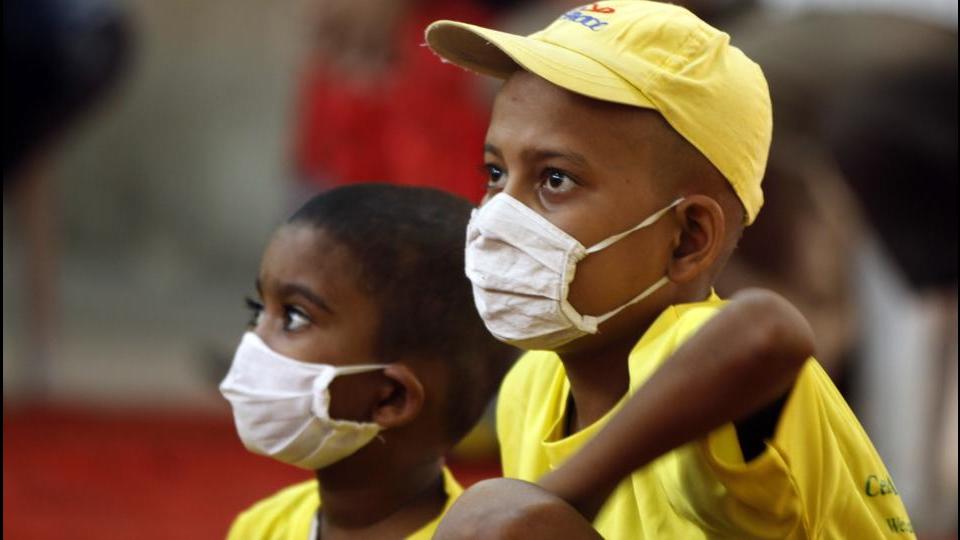
There are around 400 children from the district currently being treated for various kinds of cancers at PGICH.
Doctors say patients who suffer from neutropenia also require granulocyte transfusions.
“Neutrophils, a type of granulocytes, make up 40% to 70% of all white blood cells in humans. The main function of neutrophils is to help the body fight infections. Cancer patients, especially children, often develop bacterial or fungal infections, which are difficult to treat with regular antimicrobial drugs. Patients suffering from blood cancer can also suffer from neutropenia, wherein the neutrophil count reduces to less than 0.5x10⁹ cells per litre of blood,” said Dr Arora.
The institute started the transfusion in July this year and so far, a total of five such transfusions have taken place here. Doctors said that none of the patients have reported an adverse reaction.
Dr Arora added that the transfusion facility will help thousands of cancer patients in western Uttar Pradesh.
“In future, PGICH’s capacities will be increased and it will cater to more patients in the region,” he said.


