
 E-Paper



125 rescued child beggars left in limbo as Bal Seva Yojana languishes
In early June this year, chief minister Yogi Adityanath inaugurated the inclusion of 102 children from the Nath community who had been rescued from beggary into the Mukhyamantri Bal Seva Yojana.


LUCKNOW Despite a directive issued by the divisional commissioner in June to identify and integrate child victims of beggary into the Bal Seva Yojana, the streets of Lucknow continue to bear witness to the persistence of child beggars in the same areas as before.
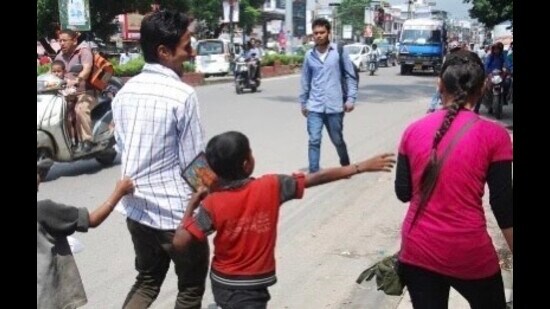
In early June this year, chief minister Yogi Adityanath inaugurated the inclusion of 102 children from the Nath community who had been rescued from beggary into the Mukhyamantri Bal Seva Yojana. Under this scheme, these children were promised a monthly amount of ₹2,500 in quarterly installments from the government. Originally designed to assist children orphaned by the pandemic, this initiative was expanded to encompass children rescued from beggary.
The Ummeed Foundation, an NGO partner in Lucknow, works closely with Mahila Kalyan and the Lucknow Municipal Corporation to support this program. The children present at the event held at the chief minister’s residence had been rescued almost two years ago and were in the process of rehabilitation and school enrollment under the Ummeed Foundation’s supervision. However, little progress has been made since then, despite the alarming presence of around 3,500 child beggars in the city, as reported by the PIB in 2021.
As per standard procedure, rescued children eligible for government schemes are presented to the Child Welfare Committee (CWC) for further verification. However, according to Ravindra Singh Jadaun, the chairperson of CWC, the committee’s role is limited to giving the final signatures on the files. “All verifications for these children are overseen by Mahila Kalyan beforehand. So far, our only role has been to sign the files and forward them,” Jadaun stated.
Disagreeing with this perspective, Shuchita Chaturvedi, a member of UPSCPCR (State Commission for Protection of Child Rights), said, “CWC should be responsible for verifications and follow-ups to determine the validity of a child’s background information and whether they qualify for scheme benefits in the first place. How can they claim not to conduct final verifications?”
100 In Process, 25 More Identified
District probation officer Vikas Singh revealed that since June, an additional hundred children from Bakshi ka Talab and Chinhat have been identified, with their applications for the Bal Seva Yojana currently under verification. “The verification process varies in duration, as some applications are processed quickly, while others require more time. Some applicants lack income documentation or Aadhaar cards, which need to be arranged before their eligibility can be confirmed for the scheme,” Singh pointed out. He also mentioned that 100 new applications are currently under process, with 25 more children identified for integration into the scheme.
Regarding application verifications, Singh noted that these are carried out at the tehsil level, with District Child Protection Officers (DCPU) identifying beneficiary families and the district administration employees conducting verifications at the respective tehsils. Following CWC’s final approval, the Mahila Kalyan releases funds at three-month intervals for the newly integrated children.
“Should the tehsil officers find that the funding is not being used for the right purposes in any household, during their follow ups, we have the power to stop their funding,” said Singh.


