E-Paper



30,113 Bangladeshis pushed back since 1985 Accord, Assam govt tells assembly
The Assam Accord was a tripartite agreement signed in 1985 between the Centre, the All Assam Students Union and the All Assam Gana Sangram Parishad.


The Assam government on Wednesday informed the state assembly that 30,113 Bangladeshis who illegally entered India through the border into Assam have been pushed back in the past 39 years since the signing of the Assam Accord.
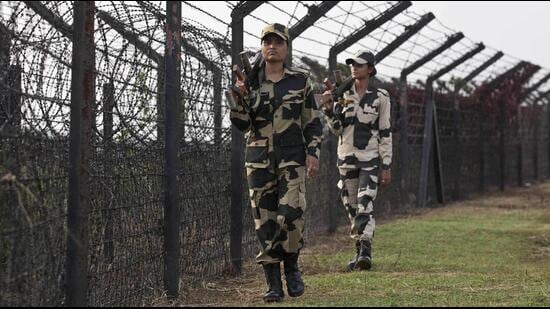
The Assam Accord was signed in 1985 following a six-year agitation against the influx of illegal settlers from Bangladesh into Assam. It had stipulated that all such persons be detected and deported and all efforts, including the sealing of the border with the neighbouring nation, must be undertaken to prevent further entry.
“Till date, since the signing of the Assam Accord, 30,113 Bangladeshis have been pushed back,” Atul Bora, minister for border area protection and development and implementation of Assam Accord, said while replying to a question on implementation of the agreement asked by Congress MLA Rekibuddin Ahmed.
Speaking on the report of the high-level committee which had submitted its recommendations on implementing Clause 6 of the Assam Accord in February 2020, the minister said that efforts will be made to hand it over to the Union home ministry soon.
“Following submission of the report, a sub-committee comprising three ministers and leaders from All Assam Students Union (AASU) was formed by Assam government to look into legal and constitutional issues in the recommendations. The committee has met five times till now. We will meet again soon and try to hand over the report to the Centre as early as possible,” Bora told the assembly.
The Assam Accord, a tripartite agreement signed in 1985 between the Centre, the All Assam Students Union (AASU) and the All Assam Gana Sangram Parishad (AAGSP), brought the six-year-long anti-foreigner movement in the state to an end.
Clause 6 of the accord states, “Constitutional, legislative and administrative safeguards, as may be appropriate, shall be provided to protect, preserve and promote the cultural, social, linguistic identity and heritage of the Assamese people”.
The implementation of Clause 6 remained in the backburner for over three decades till the BJP-government at the Centre formed a committee in January 2019 seeking recommendations. The 13-member committee, headed by Justice (Retd.) Biplab Kumar Sarma, is yet to submit the report to the Centre.