
 E-Paper



The voice that made India listen to Bihar
This article is authored by Sachida Nand Jha, assistant professor, English, Rajdhani College, University of Delhi.

 Prefer HTon Google


Before a regional tradition enters the national imagination, someone must first persuade the nation to listen. In the story of Bihar’s musical identity, contemporary audiences often begin with names that have become familiar through television, recordings and digital media. Yet before Maithili Thakur and before Sharda Sinha came to represent Bihar’s folk heritage for newer generations, there was one extraordinary artist who had already undertaken that difficult task: Persuading India to listen to Bihar. That voice belonged to Bihar Kokila, Vindhyavasini Devi.
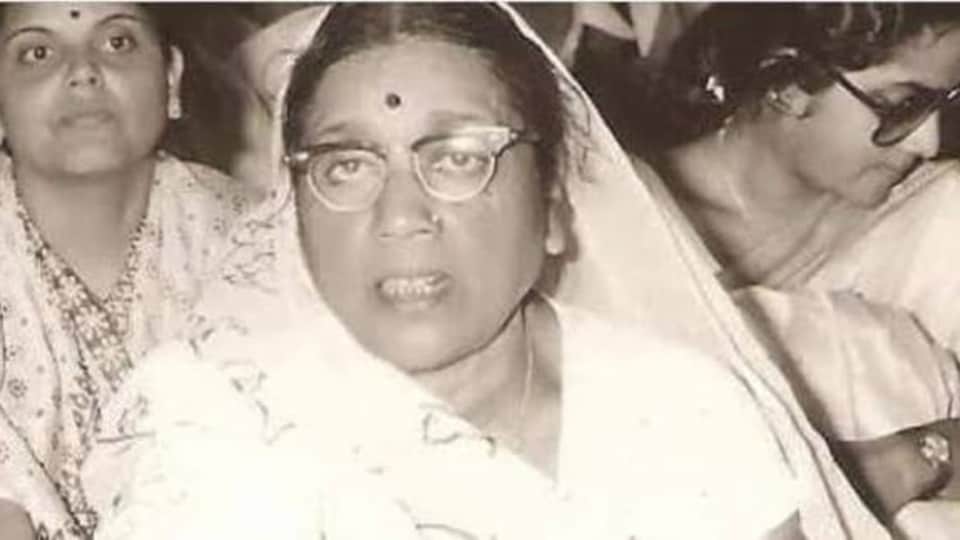
Long before regional music became nationally visible, Vindhyavasini Devi had established Maithili, Bhojpuri and Magahi folk traditions as part of India’s shared cultural soundscape. Her contribution was not merely artistic. It was civilisational in its significance. She helped transform songs rooted in local communities into a cultural inheritance that could be appreciated far beyond Bihar’s borders.
Today, when discussions about cultural diversity, linguistic identity and heritage preservation occupy an increasingly important place in public life, her legacy deserves renewed attention—not simply as an act of remembrance but as a lesson in how cultural confidence is built.
To appreciate her significance, one must recall the cultural landscape in which she emerged. For much of the 20th century, the national conversation on music was dominated by classical traditions and, increasingly, by cinema. Folk music survived and flourished in communities, but it rarely occupied the same level of institutional recognition. Regional languages and dialects often carried immense literary and musical richness, yet remained largely absent from elite cultural discourse.
This was particularly true of the folk traditions of Bihar. The songs of Maithili, Bhojpuri and Magahi were woven into the rhythms of everyday life. They accompanied births and marriages, festivals and harvests, departures and reunions. They preserved local histories, emotional worlds and collective memories. Yet these traditions were frequently dismissed as rustic, informal or peripheral to the mainstream. Vindhyavasini Devi challenged that assumption.
At a time when public performance itself remained socially restrictive for many women, she embraced folk music as a serious cultural form. Through performance, preservation and teaching, she demonstrated that these traditions possessed their own sophistication, poetic depth and artistic integrity. She neither apologised for their regional roots nor sought to dilute them for wider acceptance. Instead, she presented them with confidence and dignity. That confidence changed perceptions.
What distinguished Vindhyavasini Devi was her understanding that folk music was not simply entertainment. It was a repository of cultural knowledge. A wedding song carried social customs across generations. A seasonal song preserved ecological rhythms. A migration ballad documented aspirations, anxieties and economic realities. In these songs lived the experiences of ordinary people whose voices rarely entered official histories.
By bringing such traditions to larger audiences, she performed an act of cultural preservation long before the language of “intangible heritage” entered public policy.
Her work also illuminates an important truth about India itself. The country’s strength has never emerged from cultural uniformity. Rather, it has been sustained by an ability to accommodate multiple identities, languages and traditions within a shared national framework.
Independent India faced a complex challenge: How to forge national unity without erasing regional distinctiveness. Institutions, media and educational systems often struggled to maintain that balance. Yet artists such as Vindhyavasini Devi offered a practical answer. They demonstrated that regional traditions do not weaken national identity. They deepen it.
By carrying the folk traditions of Bihar onto radio, cultural stages and public platforms, she broadened the idea of what constituted Indian culture. Her music quietly asserted that the stories, languages and emotions of Bihar belonged not only to Bihar but to India. This achievement appears even more relevant in contemporary times.
Today, regional cultures are experiencing a renaissance. Digital platforms have democratised access. Folk music reaches listeners across continents. Diaspora communities maintain emotional connections through language and song. Younger performers reinterpret traditional forms for modern audiences. Regional content increasingly commands national attention.
This is a welcome development. Yet it also creates a temptation to view the present moment as entirely new. It is not.
The visibility enjoyed by regional traditions today rests on the efforts of earlier generations who sustained them when recognition was limited. Before folk music became commercially attractive, before algorithms amplified regional content and before cultural diversity became a widely celebrated idea, artists such as Vindhyavasini Devi were already doing the painstaking work of preservation and dissemination.
They were building audiences before there was a market. They were preserving heritage before it became policy. They were creating cultural confidence before it became a public slogan. This is why Vindhyavasini Devi deserves to be remembered not merely as a singer but as a cultural architect.
Her legacy also carries an important message for contemporary India. Rapid modernisation often creates a false choice between tradition and progress. Yet enduring cultures are not those that abandon their roots. They are those that adapt while retaining a sense of continuity.
Vindhyavasini Devi understood this instinctively. She showed that preserving folk traditions does not mean resisting change. It means ensuring that change does not erase memory.
As India continues to debate questions of identity, language and heritage, her example remains instructive. The future of Indian culture will not be secured solely through monuments, museums or official commemorations. It will also depend on whether living traditions—songs, stories, languages and oral histories—continue to find space in public life.
Before regional music from Bihar found national popularity, before newer generations became the custodians of its folk traditions, Bihar Kokila Vindhyavasini Devi had already done the difficult work of making India listen. She did not merely sing the songs of Bihar. She transformed them into part of India’s cultural conversation.
And in doing so, she left behind a legacy that extends far beyond music: A reminder that a nation’s cultural richness lies in its ability to hear, preserve and celebrate the many voices that constitute its collective soul.
(The views expressed are personal)
This article is authored by Sachida Nand Jha, assistant professor, English, Rajdhani College, University of Delhi.


