E-Paper



Activists raises concerns over Aravalli panel’s grassroot reach, consultation timeline
New Delhi: A citizens’ collective on Wednesday wrote to the Supreme Court-appointed High-Powered Committee (HPC) on the Aravallis, calling the committee’s public consultation process highly “inadequate” due to a lack of awareness in rural and affected areas and a short timeframe for submitting the report

 Prefer HTon Google


New Delhi: A citizens’ collective on Wednesday wrote to the Supreme Court-appointed High-Powered Committee (HPC) on the Aravallis, calling the committee’s public consultation process highly “inadequate” due to a lack of awareness in rural and affected areas and a short timeframe for submitting the report.
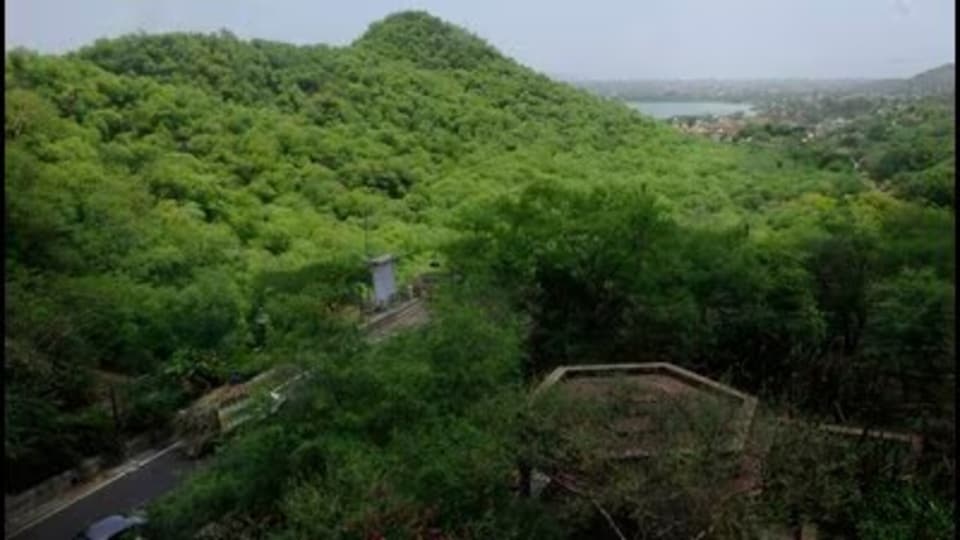
The HPC, tasked to resolve critical ambiguities regarding the definition, delineation, and conservation of Aravalli, on July 21, through a public notice issued by the environment ministry, had sought suggestions, representations and inputs from stakeholders, including states, NGOs, environmentists, farmers, mining lease holders and villagers – within 21 days.
The committee will be submitting a detailed report on the Aravalli hills and ranges – covering all its issues, including its definition – by August 31.
“The press note published by the HPC does not capture the essence of public consultation, as envisaged by the Supreme Court and has failed in reaching the rural communities and affected people on the ground in the Aravalli areas in all the 64 districts across the five states of Delhi, Haryana, Rajasthan, Uttar Pradesh and Gujarat,” the group, People for Aravallis, wrote in a letter, seen by HT.
The collective said even sarpanches and grassroots-leaders from different Aravalli districts were unaware of such a public notice.
“It is our submission that without effective consultation and getting feedback of the rural communities dependent on the Aravallis for their sustenance and who are most affected by any decision with respect to the range, it would not be prudent on the part of the HPC to formulate its report,” it adds.
The group has questioned HPC’s limited ground visits. “The field visit plan of the HPC just covers 10 districts in three states (Delhi, Haryana and Rajasthan) and does not cover the length and breadth of the Aravallis in 64 districts across the five states of Delhi, Haryana, Rajasthan, Uttar Pradesh and Gujarat,” the letter said, adding five planned days was hardly sufficient to study the Aravallis and reach out to people.
The collective also questioned the 21 days sought for collecting feedback. “It is submitted that the committee has granted only 21 days for the affected parties to send in their comments... 21 days is not enough time,” it added.
Last November, the Supreme Court had adopted a uniform recommendation from the Environment Ministry to define any Aravalli hill as any landform rising at least 100 meters above the surrounding local terrain, and grouping hills within 500 meters of each other as a “range” – a definition experts had said would omit 90% of the Aravalli hills and leave it vulnerable to mining and construction. This had led to widespread pushback from activists and experts. The SC, a month later, stayed its judgement and kept it in abeyance, pending final resolution.
HT on June 20 reported that activists and environmentalists had written to the Chief Justice of India calling for an “independent” high-level committee to be appointed to define the Aravalli hill ranges. Experts, including members of the Aravallis Virasat Jan Abhiyan, had alleged that the current committee, appointed on May 25, is weaker than the previous committee in terms of its composition, as several members are directly or indirectly reporting to the Union Environment Ministry, thus making it partial.