
 E-Paper



District administration bans ‘lathbaazi’ that was losing appeal during Moharram in Prayagraj
Incidentally, Moharram processions from Rasulpur were not being taken out for the past six years, three years due to clash of timings with Dussehra festival and for next three years due to restrictions on mass gatherings due to Covid-19 outbreak.


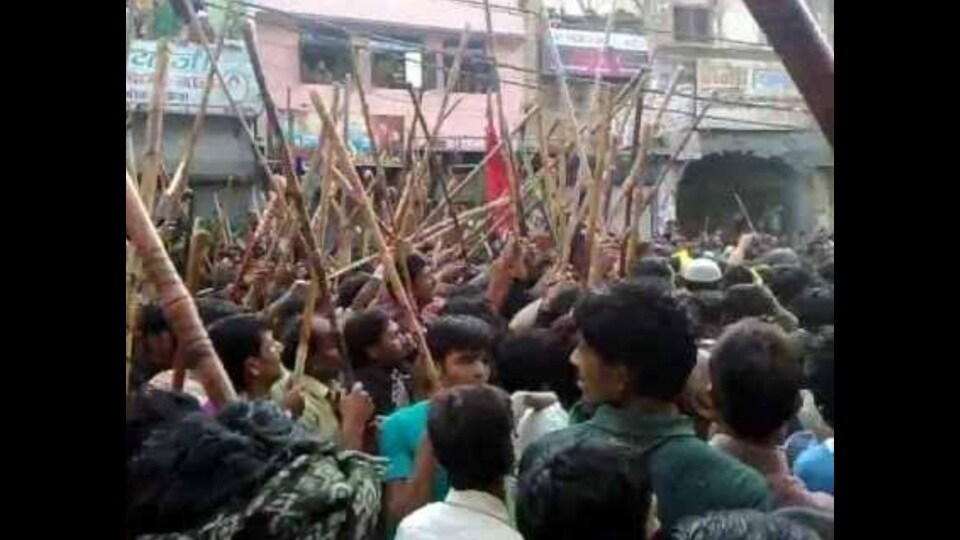
Display of ‘lathbaazi’, or the art of traditional Indian stick fighting, that was once a big attraction during Moharram processions in Prayagraj, was already losing its appeal among the youth when the district administration decided to ban the practice this year.
The move took many by surprise.
“Lathi used to be our symbol, an identity of our procession. Despite moving with ‘lathis’, the youth would never create any disturbance or harm others,” said Khan, who claimed that the ban on ‘lathis’ was not expected.
Incidentally, Moharram processions from Rasulpur were not being taken out for the past six years, three years due to clash of timings with Dussehra festival and for next three years due to restrictions on mass gatherings due to Covid-19 outbreak.
It is worth mentioning that the the traditional procession from Rasulpur was not taken out on the third day of Moharram as the police refused to allow ‘lathis’ during the procession.
Lathi or stick has for long been a symbol of Moharram procession from Rasulpur area. Unlike crowd in other Moharram processions like Bada Tazia and Buddha Tazia, participants in this procession from Rasulpur are armed with long sticks while some even carry swords and spears for the sake of tradition.
Training in the art of wielding ‘lathi’, at times up to 10 ft long, typically began a little after Eid-ul-Azha.
“Earlier we could easily spot that a Moharram procession was from Rasulpur on seeing ‘lathi’ wielding youth on GT road,” said Shamsuddin, 80, a resident of old city area.
“Bada Tazia and Buddha Tazia processions move slowly and the energy of ‘lathi’ wielding youth ensured that the processionists ahead of them picked up some pace,” he added.
Hafeez Khan, 50, a Rasulpur resident said it was only the people from the Rasulpur locality who used to display their stick fighting skills during Moharram. “Despite occassional minor injuries to people during practice combats, youth showing their ‘lathi’ tackle and display skills were a big attraction during Moharram.
The craze for ‘lathbaazi’ had begun to fade even before the administration’s decided to ban it.
“Only a handful of those who have full command over this skill are left in Rasulpur and only few would show interest in learning it too,” said Hafeez, among the few remaining practitioners of this art.
He said Rasulpur area is inhabited by clan of warlike Mewatis who had fought the British during first war of Independence in 1857. As a punishment, the surviving Mewati families were uprooted from their villages that were located in present day Chandra Shekhar Azad Park area and moved to move towards the city’s outskirts by the British.
“Despite being defeated and forced to migrate, Mewatis had continued to follow their traditions of learning martial arts at akhadas,” said Arif Khan, a young member of the community.


