
 E-Paper



Covid-19: Despite dip in caseload, state narrows focus to dense areas
Covid-19 cases in Delhi have witnessed a decline from the peak seven-day average of 25,294 new cases a day recorded in the city for the seven days ending April 23 to an average of 76 new cases a day for the week ending Sunday.


Over the last two weeks, Delhi has reported 82 new Covid-19 cases per day on an average, and a large proportion of these cases surfaced in few pockets, several of them located in Shahdara, West Delhi and South Delhi districts, a senior Delhi Disaster Management Authority (DDMA) official said, adding that most of these residential pockets are densely-populated areas.
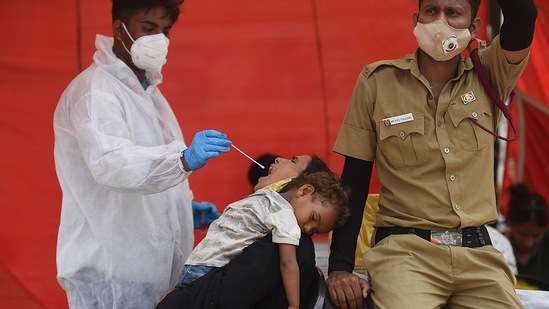
Covid-19 cases in Delhi have witnessed a decline from the peak seven-day average of 25,294 new cases a day recorded in the city for the seven days ending April 23 to an average of 76 new cases a day for the week ending Sunday. “But the number has been oscillating between 80 and 100 cases in 24 hours for quite some time now, even though we have been trying to bring it further down,” said a senior official in the DDMA who asked not to be named.
State government data shows that Delhi has been reporting an average of 82 new cases for the past 14 days.
The DDMA official said a large proportion of the new cases recorded in these 14 days have surfaced in 40 pockets, located in areas including Ambedkar Colony, Gautam Nagar, Neb Sarai, Nihal Vihar, East Babarpur, B-Block Paschim Vihar and Tahirpur.
Some other localities which have few such pockets are sectors 15&18 in Rohini, Auchandi village, Barwala, Lampur village in Narela, Vasant Gaon locality, Samalkha, Rajokari, Naraina Vihar, Dakshinpuri, area near Nanda Hospital in Chhatarpur, CRS complex Chhatarpur, C block Bhati Mines, Deoli, Khanpur transit camp, Raju Park, Prem Nagar, Madipur and East Punjabi Bagh, said the official.
Some more such pockets are in East Rohtash Nagar, J and K blocks in Dilshad Garden, the bazar area in Meet Nagar Road, B1 block in Nand Nagri, Ambedkar Basti in Maujpur, Pratap Nagar, Harsh Vihar, Shalimar Park, Rajgarh Colony, Mandoli, Sundar Nagri and Harijan Basti in Patel Vihar, the official said.
Between July 1 and 10, at least 60 containment zones were notified in these pockets, government records showed.
A district surveillance official with the revenue department, who did not wish to be identified said: “Most of these pockets have two common links. Either the vaccine coverage is low or they were not severely affected during the recent wave of the pandemic, so a large number of residents are not immune to infection yet. In some of these areas, vaccine coverage for at least one dose was lower than 20%, against Delhi’s overall current coverage of 45%. Also, at least 10 of these pockets saw no cases during the recent surge. Several hardly saw a case or two.”
Delhi’s revenue minister Kailash Gahlot said the city is out of the risk zone but the government has not let its guard down and is working to bring new daily cases to zero. “Delhi currently is out of the risk zone. However, we will still appeal to people to not let their guards down. We are working hard towards bringing new cases close to zero per day… We are also keeping an eye on possible mutations and new strains. Delhi thankfully has its own genome sequencing laboratories now. The government is taking all precautions against a potential third wave of the pandemic,” Gahlot said.
When asked about specific measures being taken in these localities where most new cases are emerging, Delhi’s chief secretary Vijay Dev said the government is taking up micro containment efforts and carrying out focused vaccination drives. “Recently, we have formulated a Graded Response Action Plan using a data-driven approach to trigger restrictions on movement as soon as epidemiological parameters breach certain predefined levels. Through this concerted approach, our target is to bring down the daily new cases in Delhi down to zero.”
Dr Jugal Kishore, head of the community medicines department in Delhi’s Safdarjung Hospital, said it was a matter of concern that the number of new cases surfacing in Delhi is oscillating between 80-100 per day for more than two weeks now. “It shows that local transmissions are taking place in certain pockets. The government has to ensure that the 80-100 new cases per day does not become the beginning of a new potential surge in the coming days.”

Stay updated with all top Cities including, Bengaluru, Delhi, Mumbai and more across India. Stay informed on the latest happenings in World News along with Delhi Election 2025 and Delhi Election Result 2025 Live, New Delhi Election Result Live, Kalkaji Election Result Live at Hindustan Times.


