
 E-Paper



Kannada superstar Puneeth Rajkumar dies: ‘He never considered himself a hero’
Puneeth never used his status as Rajkumar’s son to promote himself or his films, however, directors and producers never shied away from using the star’s dynasty


Bengaluru: It was around 2002 when I first met Puneeth Rajkumar, right before the release of his first movie in the lead role, “Appu”.
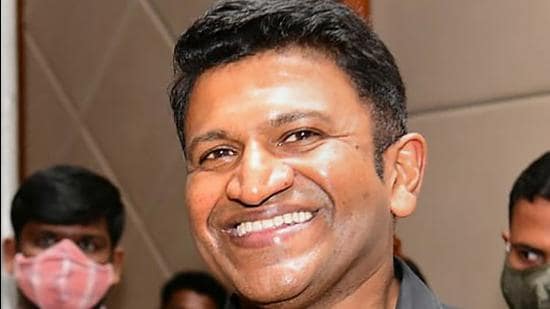
“Do not be afraid of asking anything. Ask any question no matter how controversial, I will answer and you can write the same,” he told the waiting reporters, some of whom were nervous, knowing that he was the son of the biggest name in the Kannada film industry, Dr Rajkumar.
This characteristic of the young actor made an instant impression on not just the reporters gathered to interview him, but to many whose lives he touched throughout his illustrious career.
Not many doubted his acting prowess. After all, he made his first appearance on big screen when he was only six months’ old in the movie ‘Premada Kanike’, starring his father Dr Rajkumar.
He even won the national award before his father, in 1985 for the movie ‘Bettada Hoovu’, when he was just 10 years’ old.
He was also known to promote newcomers in the industry through his production house which produced films, TV serials among other content.
Puneeth never used his status as Rajkumar’s son to promote himself or his films, however, directors and producers never shied away from using the star’s dynasty.
Though out his illustrious career, spanning over 49 films — he missed the half century as ‘Dwitwa’ and ‘James’ are still under production —his attitude towards cinema and people in general never changed over the years.
After each release, he would call me to get my opinion on his role and if there was anything he could have done differently. He would welcome criticism just the same as he would accept appreciation. I am sure he asked others for their opinions as well.
He had some big hits under his belt, including ‘Appu’, ‘Arasu’, ‘Doddamane Huduga’, ‘Rajakumara’ and ‘Yuvarathna’.
Almost all his movies focused to some degrees on social messages like rightful treatment of women, children and elders, which eventually became a sort of his signature style.
His movies ‘Prthivi’ and ‘Ranavikrama’ were about the illegal mining in Karnataka’s Ballari district, which was at its peak in real life, as he played a deputy collector, taking the empire of bad guys head-on.
Incidentally, Puneeth himself was into the granite business before his entry into cinema as the leading man.
One day, his father called him and said there was no need to sell “stone and land” for a living as there was an industry that he could call his own, prompting a debut soon after.
He had also written a book on his father (published in 2012) “the person behind the personality” and any earnings from this, he used it to fund government schools in the border districts of Karnataka.
He was also a prolific singer who never took any remuneration for them.
A significant chunk of his earnings went to old age homes and he had even adopted 45 Kannada schools.
He never considered himself a hero, was a big fitness enthusiast and a humble soul.
He would sometimes cycle to Mysuru, covering 125 km from Bengaluru.
A director’s actor, Puneeth never discriminated between juniors and seniors. He stayed honest about everything in life: a trait that became one of his many loveable and adored characteristics, earning him not just a huge fan base for his reel life, but also in real life.
(As told to Sharan Poovanna )
(Muralidhar Khajane is a veteran journalist, who has covered cinema, politics among other beats for over 40 years. He is also the writer of book, ‘Random Reflections Kaleidescopic Musings on Kannada Cinema’)


