
 E-Paper



Lakshya Zero Dumpsites: LMC officials, industry giants discuss ways to make major U.P. cities waste-free zones
On Monday, a second round of consultations was held with prominent companies such as RSPL Group, ITC, Awadh Sugar, Amul, Ultra Tech, Dalmia Cement, and Prism Johnson.


LUCKNOW In an effort to achieve ‘Lakshya Zero Dumpsites’ within the Swachh Bharat Mission 2.0 timeline (which is March 2024), major cities in Uttar Pradesh, including Lucknow, Agra, Prayagraj, and Kanpur, are poised to become waste-free zones. A significant stride towards this goal was taken during a recent meeting that brought together key stakeholders in the initiative.
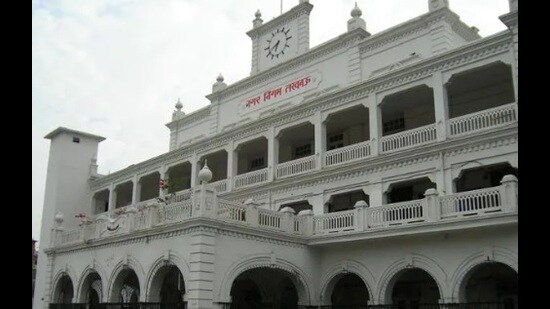
On Monday, a second round of consultations was held with prominent companies such as RSPL Group, ITC, Awadh Sugar, Amul, Ultra Tech, Dalmia Cement, and Prism Johnson. These discussions, graced by the presence of Ashish Tiwari, secretary of the Department of Environment, Forest & Climate Change, and senior Lucknow Municipal Corporation (LMC) officials, focused on the collection of waste for Refuse Derived Fuel (RDF) production and the allocation of carbon credit points to the LMC.
These companies expressed their intention to collaborate with the Lucknow Municipal Corporation, marking a pivotal step in the right direction. Municipal commissioner Inderjeet Singh announced that a final round of discussions with selected brand owners, cement industry representatives, and waste management agencies is planned for November 2023.
Singh said, “The LMC has initiated the process of issuing a Request for Proposal (RFP) to select an agency for the remediation and reclamation of dumpsites through Bio-Remediation & Bio-Mining. We have also sought knowledge support from the Department of Environment, Forest, and Climate Change for the disposal of Refuse Derived Fuel (RDF) derived from approximately 18 lakh metric tonnes of waste, by developing a techno-commercial Extended Producer Responsibility (EPR) based model.”
Ashish Tiwari, secretary of the Department of Environment, Forest & Climate Change, Government of Uttar Pradesh, emphasized the importance of responsible waste disposal in line with EPR compliance. He stressed the need to create successful circular models and foster cooperation among stakeholders to scale up the initiative. Tiwari highlighted that establishing a transparent system for efficient waste management is the collective responsibility of all stakeholders. He cited the successful EPR-based model for end-of-life RDF disposal in Prayagraj as a blueprint for building trust and professionalism within the waste management sector.
Arvind Kumar Rao, additional municipal commissioner, pointed out that, besides the reclaimed RDF from accumulated waste, approximately 1500 metric tons of fresh waste is generated daily in Lucknow. LMC is actively seeking long-term collaboration with brand owners, the cement industry, and waste management agencies to establish a sustainable model. He expressed confidence in the business-friendly environment and the enthusiasm of brand owners who are stepping up to create a clean and green Lucknow.
During this discussion, Sanjeev Pradhan, Environment Engineer from LMC, Girish Arya, Assistant Engineer at UPPCB, and technical experts Lalit Sharma and Kartik Kapoor from GIZ, were also present, further highlighting the collaborative nature of this transformative initiative.


