
 E-Paper



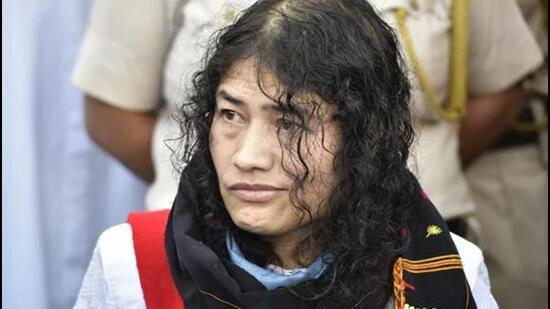
Manipur to honour Irom Sharmila for her 16 years’ anti-AFSPA movement
Manipur chief minister N Biren Singh appreciated Irom Sharmila saying that she has sacrificed half of her life staging dharna and hunger strike for 16 years as part of the anti-AFSPA movement.


IMPHAL: Hours after the Centre removed the Armed Forces Special Powers Act (AFSPA) from several parts of three northeastern states of Assam, Manipur and Nagaland, the Manipur government has decided to felicitate “Iron Lady” Irom Chanu Sharmila for her 16 years’ hunger strike as part of the anti-AFSPA movement.
Also Read | ‘This is real sign of democracy’: Irom Sharmila on Centre’s Afspa changes
“We shall definitely invite her and honour her,” Manipur chief minister N Biren Singh said. “I also appreciate the people of Manipur, mainly Shrimati Sharmila who sacrificed half of her life staging dharna and hunger strike for 16 years, “ he added.
“I would like to thank all the people for their support. At least, the AFSPA has been removed for the areas under 15 police stations of the state, “ Singh said.
Manipur’s well known human rights activist Irom chanu Sharmila was on a hunger strike from November 4 in 2000 to August 2016 demanding repeal of the AFSPA before forming the People’s Resurgence and Justice Alliance ahead of the 2017 Manipur assembly elections.
She launched her hunger strike two days after security forces killed 10 people at Malom in the outskirts of Imphal which was later known as the Malom Massacre.
Also Read | Reconciliation for peace: The government must Improve its stance on AFSPA
Sharmila, 49, who became the face of the anti-AFSPA movement in Manipur and elsewhere in the country, welcomed the Centre’s decision to remove AFSPA from several parts of Assam, Manipur and Nagaland. In an interview with HT, she described the government’s move as “a real sign of democracy”.
“The decision to repeal an outdated and colonial law seems a real sign of democracy to me... It’s a new beginning and a result of the decades-long fight. The first step has been taken, and I want Afspa to be abolished permanently from the entire North-East. The victims, who have lost their loved ones and those who have personally suffered because of this law, should be compensated,” she said.
77- year-old Tokpam Somorendra Singh, whose 19-year-old son was among the 10 victims of the then Malom massacre, also welcomed the move of the government for partly acknowledging the demand of rights activist Sharmila.
Also Read | Forces need to revise SOPs after Afspa move: Experts
AFSPA, which has been in force in the state from 1980, gives security forces the right to conduct operations and to arrest suspected insurgents without warrants. In 2004, the “Disturbed Area” tag was withdrawn from 6 Police Stations namely Imphal, Lamphel, City, Singjamei, Porompat and Heingang.
Meanwhile, Manipur-based Extrajudicial Execution Victims Families’ Association Manipur (EEVFAM) and Human Rights Alert (HRA) welcomed the revocation of the “Disturbed Areas” status under the AFSPA Act 1958 from various parts of Assam, Manipur and Nagaland and termed the Centre’s move as “a step in the right direction.”
It may be mentioned that EEVFAM and HRA had petitioned to the Supreme Court seeking justice for 1,528 documented victims of extrajudicial executions carried out “under the shadow of AFSPA” from 1979 to 2012 in Manipur.


