E-Paper



Monsoon to arrive in Delhi on June 24
According to IMD, monsoon has advanced and covered most parts of Himachal Pradesh, entire Ladakh and Kashmir, most parts of Jammu and some parts of Punjab

 Prefer HTon Google


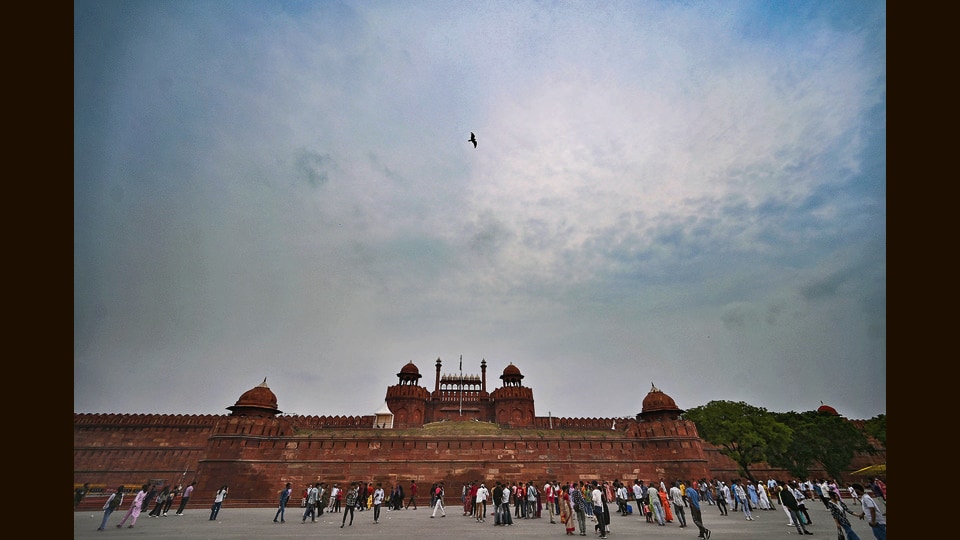
With the advancing southwest monsoon expected to hit Delhi on Tuesday, the city witnessed pleasant weather on Sunday, retaining a “satisfactory” air quality for a fifth consecutive day. The India Meteorological Department (IMD) has also issued a yellow alert for Monday and Tuesday, predicting light to moderate rain.
According to IMD, monsoon has advanced and covered most parts of Himachal Pradesh, entire Ladakh and Kashmir, most parts of Jammu and some parts of Punjab. The onset in the city is likely by Tuesday — three days ahead of the normal date of June 27. Notably, the monsoon arrived on June 28 last year, with over 228mm recorded in a single day. In 2023, it reached Delhi on June 25.
“Conditions are favourable for the southwest monsoon to advance over remaining parts of North Arabian Sea, some more parts of Rajasthan, Punjab, some parts of Haryana, Chandigarh, Delhi, remaining parts of west Uttar Pradesh, Himachal Pradesh and Jammu during next two days,” the IMD said in a statement.
Despite the overcast skies on Sunday, Delhi failed to see any rain till the evening. The maximum temperature stood at 36.2 degrees Celsius (°C), which was two degrees below normal and down from 37.3°C a day earlier.
Relative humidity remained high throughout the day – oscillating between 65% and 83%. This kept the thermal discomfort high too. IMD data showed Delhi’s heat index (HI) or “real feel” temperature at 47.5°C at 5:30pm, primarily due to a relative humidity of 70% at the time.
Heat index is a measure of how hot it actually feels to the human body when relative humidity is combined with the air temperature. Delhi’s wet-bulb temperature, another indicator of thermal discomfort, stood at 29.51°C. A wet bulb reading above 32°C or high can significantly impair the human body’s ability to cool itself, while 35°C is considered the theoretical limit for survival.
Delhi’s minimum temperature stood at 28.4°C on Sunday. The IMD has forecast a cooler day on Monday with the maximum likely hovering around 33-35°C and minimum at 26-28°C.
Cleanest spell this year
Meanwhile, isolated rain spells over the last few days have allowed pollutants in the Capital to settle. The air quality index (AQI) on Sunday — aided by overcast skies and consistent winds — stood at 92 (satisfactory) at 4pm. This was marginally higher than 85 (satisfactory) on Saturday.
The Central Pollution Control Board (CPCB) said Ozone (O3) was the lead pollutant on Sunday, as compared to both PM10 and O3 on Saturday. This is the cleanest spell Delhi is enjoying so far this year. Delhi has only recorded seven satisfactory air days so far this year, five of which have occurred during this spell.
The CPCB classifies AQI between 0 and 50 as “good”, between 51 and 100 as “satisfactory”, between 101 and 200 as “moderate”, between 201 and 300 as “poor”, between 301 and 400 as “very poor”, and over 400 as “severe”.
Last year, Delhi recorded 27 consecutive “satisfactory” air days between June 28 and August 23, making it the longest streak of satisfactory days in the city since 2020, when a record streak of 51 “satisfactory” days was seen between July 16 and September 4.
Punjabi Bagh emerged as the cleanest hot spot in the city on Sunday, logging an AQI of 62 — the lowest among all major locations.
Meanwhile, Delhi environment minister Manjinder Singh Sirsa lauded the efforts of the Delhi government to fight air pollution. “This progress is the result of continuous, on-ground action and strict enforcement. In the last 48 hours alone, 218 end-of-life vehicles were impounded and 11,157 pollution challans issued across the city. These are part of Delhi’s zero-tolerance approach to air polluters,” Sirsa said.