
 E-Paper



Muzaffarpur: Nine more patients’ eyes removed after botched cataract surgery
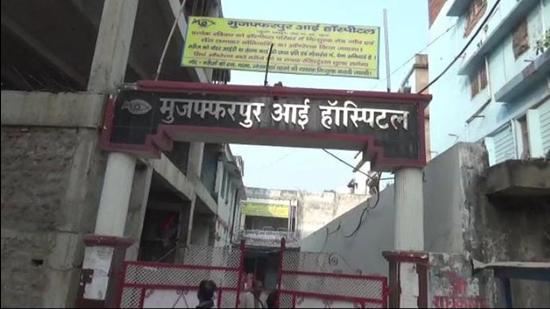
With this, the number of patients’ whose one eye had to be removed owing to panophthalmitis (severe eye infection) after they underwent the cataract surgery at Muzaffarpur Eye Hospital, located in Juran Chhapra area of Muzaffarpur, has reached 15.


Doctors at Shri Krishna Medical College & Hospital (SKMCH) here on Wednesday removed eyes of as many as nine patients following severe infections allegedly caused after they underwent surgery for cataract at a free camp organized at an eye hospital in the city on November 22, district health officials said.
Also Read | Seven lose vision in one eye after cataract surgery in Bihar’s Muzaffarpur
With this, the number of patients’ whose one eye had to be removed owing to panophthalmitis (severe eye infection) after they underwent the cataract surgery at Muzaffarpur Eye Hospital, located in Juran Chhapra area of Muzaffarpur, has reached 15.
Muzaffarpur ‘s civil surgeon Dr Vinay Kumar Sharma said, “In all, 11 people’s eyes have been removed at the SKMCH, nine of them on Wednesday. Four patients’ eyes were removed at Muzaffarpur Eye Hospital,” he said on Wednesday, adding that two more patients are admitted at the SKMCH.
Sharma said he has sought the list of all patients operated upon at the eye hospital on November 22. “We will contact each of these patients to take stock of health status. We have also sought information about the doctors who performed the operations,” he said, while vowing stern action against those found guilty.
Prima facie, the incident seems to have occurred owing to factors like poor sterilisation and hygiene, among others, he said. “Things would be clear after medical investigation (culture) report arrives,” he said.
Preliminary investigation has revealed that as many as 65 patients underwent surgery at the hospital on November 22 itself.
Muzaffarpur’s district magistrate Pranav Kumar said, “We have ordered to stop any more operations at the hospital. We will also recommend cancellation of its registration if any doctor is found guilty.”
Dr Rajeev Kumar Singh, head of department of eye at the SKMCH, said the patients were critically afflicted with panophthalmitis (severe eye infections). “They all would be under our observation for next few days,” he said.
Sanjay Kumar Sah, manager at the SKMCH, said 14 patients were admitted in the hospital with severe eye infection but three of them left the hospital against medical advice.
One such patient, Jaitoon Khatoon, in her late 60s, said, “There isn’t any male member in my family to look after me. So, we had no other option but to leave the hospital.” Khatoon, a resident of Bhatauna Kani village in Muzaffarpur district and a daily wage earner, said the vision in her eye is gone.
One of her relative, Maroon Khatoon, said she accompanied her to SKMCH where she was advised removal of her infected eye as the last option. “After that, she refused to stay there,” she said.
Khatoon is not the lone case of this kind. HT came across patients who, despite suffering from severe eye infections, preferred not to undergo treatment for one reason or other. “It will cost me ₹ 600 again to visit a hospital at Muzaffarpur. Where will this money come from?” asked Jumarati Miyan.
“Panophthalmitis can have potentially serious complications and can be fatal if left untreated,” said Dr Sumit Kumar, assistant professor at the Government Medical College and Hospital (GMCH) at Bettiah.
Meanwhile, Muzaffarpur Eye Hospital wore a deserted look on Wednesday. “We have stopped entertaining patients even in our OPD,” said an employee.
A four-member team constituted to probe the matter found that as many as 65 patients, mostly daily wage earners, had undergone surgery for cataract at Muzaffarpur Eye Hospital on November 22.
“We came about the camp through announcements made in our villages,” said Shahela Khatoon.owever, Rohit Kumar, grandson of Kaushlya Devi whose eye had to be removed, said, “Patients’ poor personal hygiene and ignorance of instruments sterilisation were quite obvious during the free camp.”


