
 E-Paper



One severe adverse impact in Delhi: Person is stable, AIIMS says
“An AIIMS security guard has developed an allergic reaction after receiving Covid-19 vaccination here today. He is kept under observation of doctors at the hospital,” an AIIMS official said. In all, Delhi reported 51 minor reactions such as rashes, swelling at the site of injection, or fever.

 Prefer HTon Google


A 20-year-old man had a severe allergic reaction, or anaphylaxis, after receiving a Covid-19 vaccine at the All India Institute of Medical Sciences (AIIMS), the only severe reaction reported in Delhi on the first day of the national vaccine roll-out. Anaphylaxis causes skin rash, nausea, vomiting, difficulty breathing, and shock, if not treated promptly.
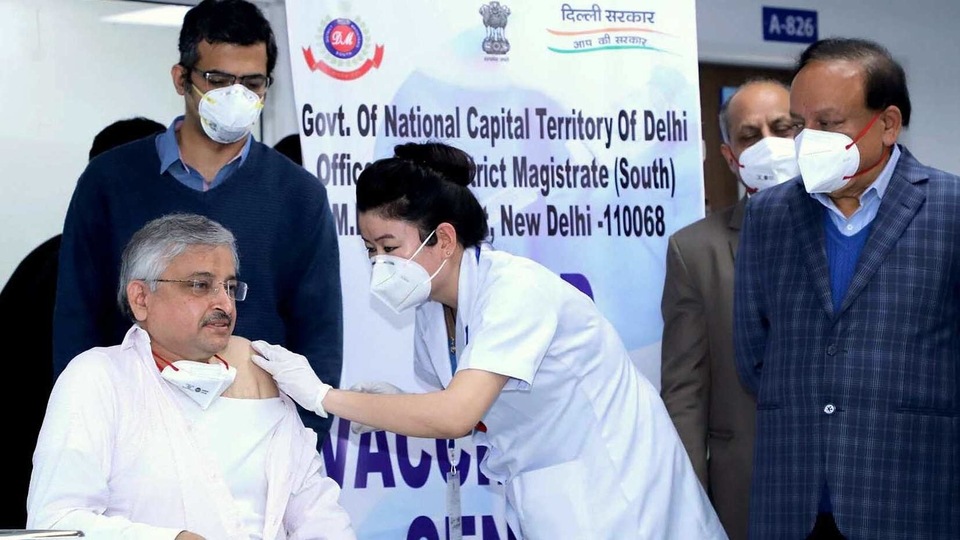
The hospital had been administering Bharat Biotech’s Covaxin.
“An AIIMS security guard has developed an allergic reaction after receiving Covid-19 vaccination here today. He is kept under observation of doctors at the hospital,” an AIIMS official said.
In all, Delhi reported 51 minor reactions such as rashes, swelling at the site of injection, or fever.
A senior NDMC official, who asked not to be named, said two cases of mild AEFI (adverse effects following immunisation) symptoms were reported at Charak Palika Hospital. Two of the hospital’s health care workers who took the Covid-19 vaccine in the afternoon, reported slight tightness in the chest during the observation period.
“They were immediately attended to by the AEFI team and kept under observation. They felt normal within half-an-hour and were discharged. There is nothing to be worried about AEFI cases, as such symptoms are normal to occur after any vaccination,” the official said.
Hospitals across the city said they were equipped to deal with any adverse events.
At Lok Nayak, two consultation rooms in the observation area were converted to high-dependence units with all emergency medications and oxygen support available.
“The rooms are like mini emergency centres in themselves and can handle any adverse events that may take place during vaccination. The patient will not even have to be moved from the vaccination site,” said Dr Suresh Kumar, the hospital’s medical director.
At GTB hospital, intensive care unit beds were kept ready just above the vaccination site on the first floor of the emergency building. And at Ram Manohar Lohia hospital, a resuscitation centre was set up – similar to the one in Lok Nayak – at the vaccination site, which was also close to the ICU facility at the hospital.


