E-Paper



Possible blood clotting in Mukhtar Ansari's heart: Autopsy
Medical summary given by Punjab prison authorities at the time of his transfer to UP also showed he was battling heart disease

 Prefer HTon Google


Doctors identified a 1.9 x1.5 cm “yellow area” in the heart, suggesting a possible clotting, according to details of the post-mortem, accessed by HT, on gangster-turned-politician Mukhtar Ansari’s body.
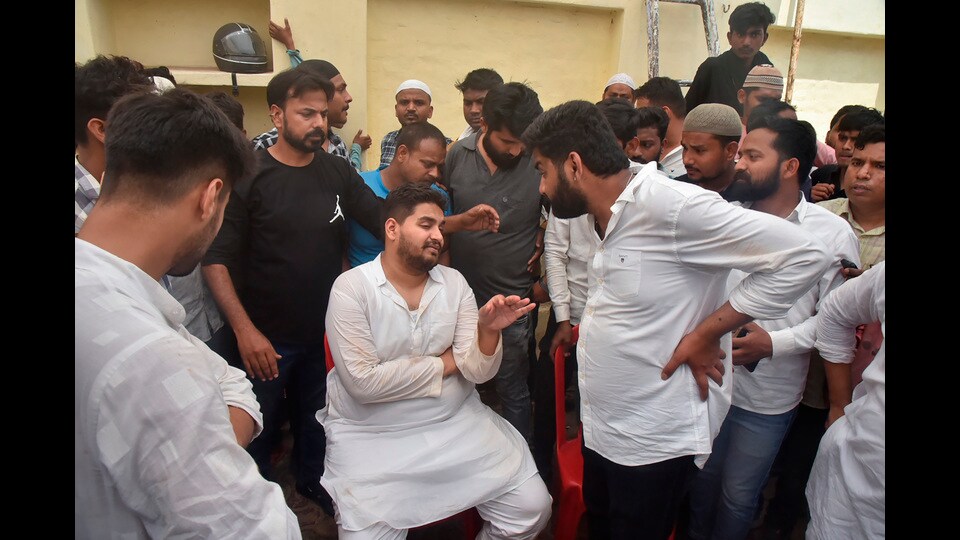
The post-mortem was conducted by a panel of five doctors on Friday, a day after Ansari’s death.
The doctors put 10 cuts in the heart to determine the area of clotting further in the presence of Ansari’s family members, said people aware of the details.
Another document with HT – the medical summary provided by the Ropar prison authorities at the time of Ansari’s transfer from Punjab to Banda in 2021 -- shows that the gangster-turned politician was battling heart disease and other ailments, including depression and skin allergies.
Mukhtar Ansari died on March 28 at Rani Durgawati Medical College in Banda after he was shifted there from jail. He was found unconscious in his high-security barrack of Banda division jail.
Also read: Mukhtar underwent health checks 84 times since 2021
The family alleged that Mukhtar was being poisoned inside the jail for which he had moved court seeking its intervention to provide him security and proper treatment. Ansari’s lawyer filed a formal complaint in Barabanki court on March 21, saying he was poisoned on March 19. After this allegation in the court, a jailor and two deputy jailors of Banda jail were suspended. The UP prisons department has not disclosed the reason for the action against them.
Also, the family demanded a judicial inquiry into this death that was billed as unnatural by his son Umar Ansari and brother and MP Afzal Ansari.
The findings of the post-mortem conducted on March 29 categorically said that Ansari died of heart attack/myocardial infarction.
“There were clear signs of blood clotting in the heart; the portion measuring 1.9 x1.5 cm was yellow. The heart was cut open at 10 points to look for further clots during the process,” medical college sources said.
That Ansari was battling health issues was mentioned by Dr Aunish Nadda, medical officer, Rupnagar (Ropar) jail in Punjab, in his medical summary provided to UP police on April 6, 2021.
The summary listing the medication Ansari was being administered gave an exhaustive view of his health issues.
It mentioned that he was diabetic, having coronary artery disease and under depression.
At the time of the transfer, Dr SD Tripathi, who was also on the post mortem panel of five doctors, was given a number of documents, including X rays, MRI and prescriptions also by the medical officer. Mukhtar was transferred to Uttar Pradesh on directions of the Supreme Court.