E-Paper



Prayagraj anti-land mafia drive - daylight murders, attacks: Fingers point to Atiq’s gang
Violent incidents linked to the IS-227 gang in Prayagraj highlight ongoing organized land crime, raising concerns over police inaction and mafia influence.

 Prefer HTon Google


Making a mockery of official efforts, a spate of violent incidents allegedly involving members and associates of the IS-227 gang and slain don Atiq Ahmed has exposed the continuing grip of organised land crime in Sangam city.
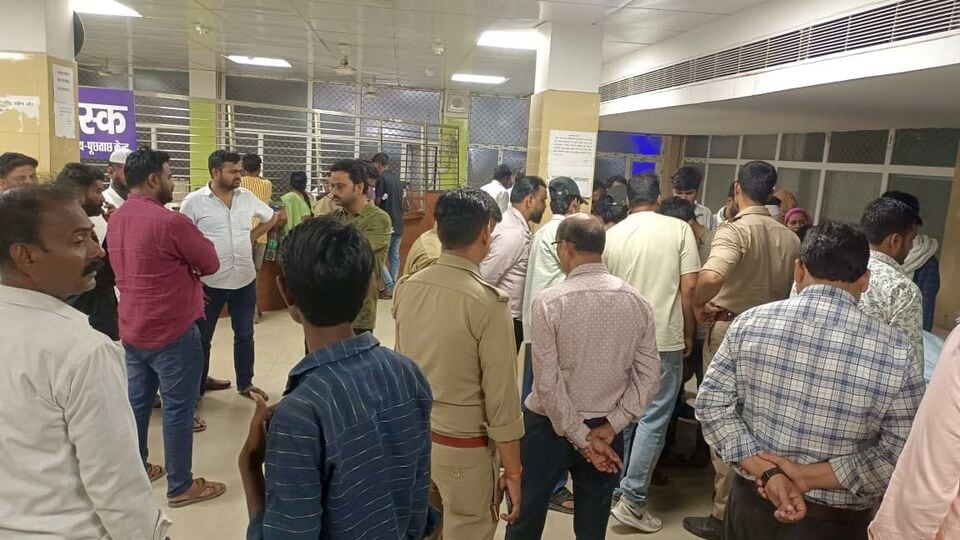
On Wednesday evening, 47-year-old property dealer, Mohammad Irfan, was shot dead in broad daylight in the Kareli police station area. A resident of Enuddinpur Gauspur, Irfan was seated at a roadside tea stall at around 6.30 pm when six masked men arrived on three motorcycles, opened fire with chilling nonchalance and escaped within minutes. The manner of the killing revived fears that contract shooters linked to old mafia networks are still operating freely in the district.
The murder was not an isolated incident. Just days earlier, a Kareli area property owner was chased in his four-wheeler, intercepted and assaulted with sticks by a group of armed men. A video of the incident had gone viral on social media forcing police to register a case against four people, including a relative of Atiq Ahmed, further strengthening suspicions that old syndicates remain active.
Another disturbing case dates back to November 1, 2025, when city-based builder Dr Zeeshanul Haq was beaten and almost kidnapped in the posh Civil Lines locality. Haq has alleged that the attackers were connected to the IS-227 gang and targeted him over non-payment of extortion. Though local residents intervened and saved him, he claims his ordeal continued long after the assault.
Haq says he approached the Civil Lines police station the same night, but no FIR was registered for over five months. During this period, he alleges, the accused openly threatened him and pressured him to withdraw his complaint, while police officials repeatedly suggested a compromise. Fearing for his life, Haq eventually moved to Lucknow.
District magistrate Manish Verma had earlier constituted an anti-land mafia task force, which identified 12 individuals as land mafiosi across Prayagraj and nearby districts. However, despite the identification, none of them have been arrested so far.
Sadar SDM Abhishek Kumar Singh said the task force meets every month, shortlists notorious elements based on complaints and forwards names to the police. “Our job is identification. Action rests with the police,” he said.
The wider picture remains grim. Last year, land sharks had encroached upon government land belonging to the ATS and the Election Office near Bamrauli Airport. After eviction, many of those named as mafiosi were found to be relatives or close aides of Atiq Ahmed. Police records indicate that the IS-227 gang still has over 120 active members and dozens of associates, including some prominent businessmen.
The Haq story
Frustrated and having moved to Lucknow, he moved court on March 12, 2026, seeking directions for an FIR. However, police submitted a report claiming that the accused only wanted to recover money allegedly owed by the complainant, and that the latter had lodged a false complaint to avoid repayment. Haq has strongly denied the claim.
“I have land and business interests in Kareli locality, where many IS-227 members and associates are based. Iqbal Ahmed, Zubair, Sultan Ahmed, Umair and around 20 unidentified men assaulted me mercilessly and tried to force me into their vehicle. They attempted to snatch my phone and ₹13,000. I survived only because locals intervened in time,” Haq alleged.
He also claimed that even after meeting the commissioner of police, his complaint was marked to the same station officer who had been pushing for a compromise.
“I even met the ACP Civil Lines. Again, I was told to contact the same SHO. The attackers have openly demanded extortion money to let me do business in Kareli. What option do I have?” he asked.
According to Haq, pressure over land ownership is not new. When Atiq Ahmed was alive, he alleged, police in Kareli acted in cahoots with gang members to force him to vacate a commercially valuable plot. “The police itself is hand in glove with these people. I approached the court for an FIR, but ultimately the same police has submitted a false investigation report, favouring the attackers,” he said.
Officially, the administration maintains that action is being taken.