
 E-Paper



Punjab to emulate Haryana model of farmland record integration
The departments will integrate a database of an estimated 10 lakh farmers and cultivators in the next one-and-half months, for paddy procurement set to start from October

 Prefer HTon Google


Punjab has decided to go with the Haryana model of farmland record integration for paddy procurement under its new system, which will come into place from October.
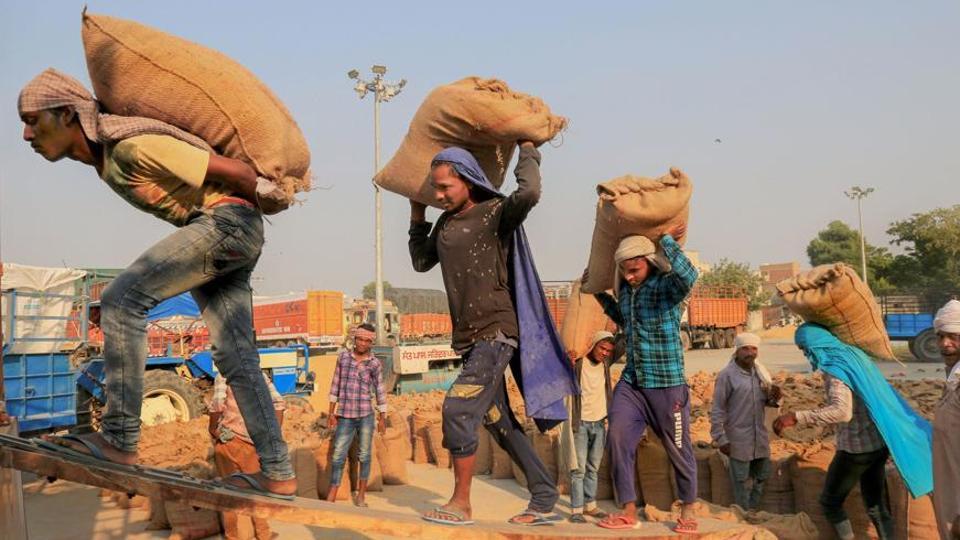
Mandi board secretary Ravi Bhagat said that three state departments: revenue, food and civil supplies and mandi board will work together on a common digital platform.
The departments will integrate a database of an estimated 10 lakh farmers and cultivators in the next one-and-half months.
“On examining various models, the one adopted by the Haryana government was found to be the most impressive. As per central government’s instructions, payment mode for this year’s major kharif crop –paddy-- will be through the land integrated system,” he added.
Master trainers from mandi board department have been given practical training on the new software and field teams will start the exercise of compiling data from the next week.
Allaying speculations, the official clarified that the new system has specific columns for landowners and cultivators. He also denied claims that government agencies have asked farmers to submit ‘farad’ or land records.
“We do not require any land ownership documentation. Revenue department has digitised land details whereas the mandi board has details of ‘J’ forms obtained by farmers at the respective crop procurement centres. These details will be integrated for the food and supplies department (that is mandated for crop procurement) for direct payment to paddy growers,” said Bhagat.
Unlike Haryana, Punjab has not planned satellite mapping of crops at this stage.
“But the adopted system is sufficient to build data of acreage of crops in the state. In view of Punjab’s different dynamics where sizeable agriculture land is given on lease informally by NRIs, interests of farmers cultivating land on lease have been well protected in it,” added the mandi board secretary.
Sources privy to the forthcoming system say field teams of different agencies may be engaged for fields inspections in suspected data cases.
“Punjab has around 28,000 registered arhtiyas, who further have 20 to 200 farmers associated with them. Details with arthiyas can be cross-checked with the state’s land detail registry for confirmation,” says the official.
Official sources said the step of integrating land records with food grain procurement will make the purchase system transparent. They added that the government intends to ensure that crop cultivated by farmers is procured as per policy with no scope for malpractices.
“In the traditional open-ended purchase system, it is a known fact that huge quantities of paddy are purchased by unscrupulous traders, in connivance with officials, at lower prices from others states, and later sold to government agencies at MSP (minimum support price). With the integrated system in place, the agencies have prior information about farmers and cultivators and the estimated quantity of paddy or wheat they can produce, thus excess arrival of paddy can be spotted easily,” said a government functionary.


