
 E-Paper



Quintals of dead fish found in Subarnarekha; sparks concern
Over 400 kg of dead fish found in Jharkhand's Subarnarekha river raises health concerns; investigations ongoing into pollution and oxygen levels.

 Prefer HTon Google


At least four quintals of dead fish were found floating in river Subarnarekha - lifeline of Jharkhand - in Bhuiyandih and Agrico on Tuesday, which were sold by the nearby slum dwellers to fish traders, sparking river pollution concerns and health risks to the citizens of Jamshedpur, people familiar with the matter said on Wednesday.
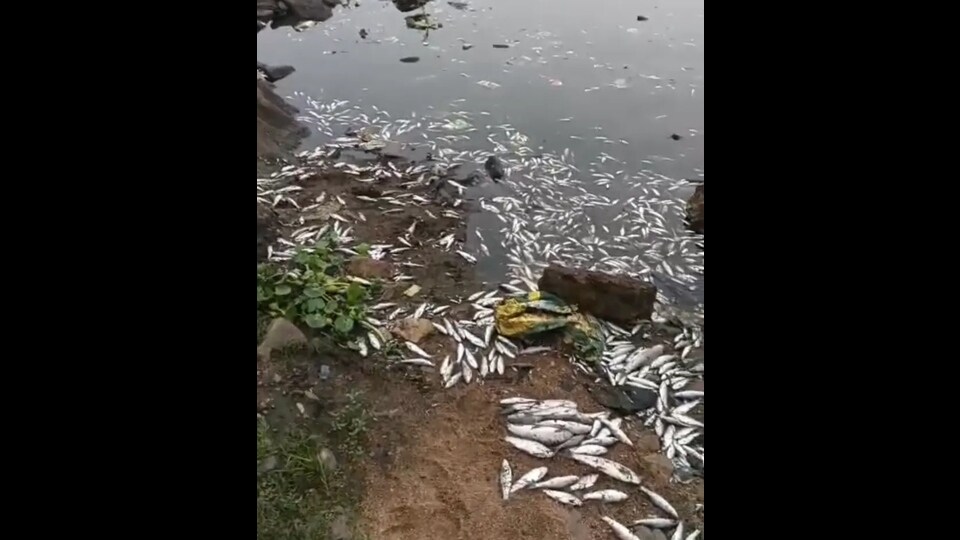
“It needs to be investigated as to if such high number of fishes died due to lack of oxygen in the water or or chemical poisoning or due to pollution of other kinds. If the fishes died due to lack of oxygen, consuming those in low quantity won’t do much harm health-wise but if these fishes died due to chemical or industrial effluents, consumption of such fishes may pose serious health risks,” Alka Panna, district fisheries officer (DFO), told the media on Wednesday.
Subarnarekha Multi-purpose Project (SMP) chief engineer Ram Niwas Prasad said the water in the river was already much polluted.
“Water released from Chandil Dam falls into river Kharkai after flowing for 30 kms and before its confluence into the Subarnarekha, industrial discharges and effluents are discharged into the water from Adityapur Industrial Area and Jamshedpur. This further pollutes the water,” Prasad told the media.
“Another problem is the water hyacinths covering vast tracts of river Subarnarekha alongside Jamshedpur - near XLRI, water pump house area - blocking sunlight from the river surface, reducing the level of dissolved oxygen in the water and creating a conducive atmosphere for mosquito breeding,” Umesh Das, an environmentalist, said.
Das further said industrial pollutants and effluents had been directly getting discharged without treatment into the rivers through drains.
“Domestic contaminated water is also getting discharged into the rivers leading to increased organic pollution. The water hyacinths covering the water surface, reducing oxygen circulation and with temperature rising in the summer the oxygen level further drops. The water hyacinths also intake oxygen in the nighttime, further reducing availability of oxygen for the fishes and other marine species,” added Das.
East Singhbhum deputy development commissioner (DDC) Nagendra Paswan said that the administration has taken serious cognizance of the matter and decided to collect water samples from the rivers in the areas concerned.
“We appeal to the people not to eat dead fishes. Efforts are ongoing and some projects are in the pipeline for setting up effluent treatment plants (ETPs) and completely stop discharge of untreated water into the rivers,” Paswan said.


