
 E-Paper



Explained: Why these Chhattisgarh tribal communities have been added to ST list
The Constitution (Scheduled Tribes) Order (Fifth Amendment) Bill, 2022, which also seeks to formalise Bhuinya, Bhuiyan and Bhuyan as synonyms of the Bharia Bhumia community


The Rajya Sabha on Tuesday passed a bill to include tribal communities in the list of Scheduled Tribes (ST) in Chhattisgarh.
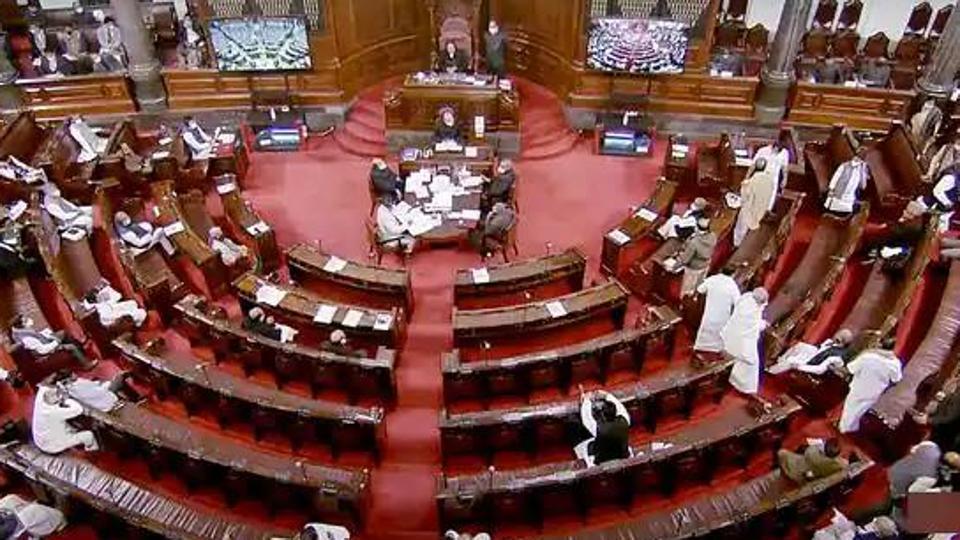
The Constitution (Scheduled Tribes) Order (Fifth Amendment) Bill, 2022 seeks to formalise Bhuinya, Bhuiyan and Bhuyan as synonyms of the Bharia Bhumia community and includes three Devanagari versions of the name of the Pando community.
The legislation was passed in the Lok Sabha in December 2022 through a voice note.
The phonetic variations of the 11 tribal communities included in the list are Bharia-Bhumia, Bhuniya, Bhuiyan, Bhuyan, Bharia, Dhanwar , Saunra and Saonra, Dhanuhar Dhanuwar, Gadba-Gadaba, Gond with Gondh-Kondh, and Kond (Kodhaku with Kodaku Nagesia-kisan synonym and Dhangad) while one new tribal community Binjhia was also included.
The tribal community comprises around 30% of total population in Chhattisgarh and is concentrated mostly in Bastar and Surguja region of the state.
Also Read: Chhattisgarh tribals protest against fresh PESA rule, seek 32% quota
“The total 11 communities which were already scheduled in 1950 are on the SC/ST list but due to some phonetic variations in local language they are not given ST status. The central government through this bill has included these variations and added one new community to the list that is “Binjhia”. Earlier, we had 42 communities and now we have 43 tribal communities in the ST list of Chhattisgarh,” said Fanindra Bhoi, state coordinator, Adhikar Vanchit Adivasi Sangharh Samiti, who has been at the forefront championing for rights of these tribal groups since 2003.
The only new community included in “Binjhia”, is mainly found in Surguga region and has a population of around 50,000.
Where are these tribal communities found and population?
According to HK Singh Uike, former secretary of SC/ST Commission Chhattisgarh said that Dhanuhar Dhanuwar and Dhanwar communities are found in Jangiir Champa and Bilaspur districts of Chhattisgarh while Kisan are found Surguja region mainly in Jashpur and Ambikapur district.
“Saunra and Saonra mainly found in Janjgir Champa and Mahasamund districts of the state,” said Uike.
Bharia-Bhumia, Bhuniya, Bhuiyan, Bhuyan, Bharia, Dhanwar are found in all parts of Chhattisgarh while Gadba-Gadaba and Gond with Gondh-Kondh are mainly found in Bastar and Durg region, Uike added.
Kond (Kodhaku with Kodaku Nagesia-kisan synonym and Dhangad) are mostly found in the Bilaspur region.
“Around 7.5 lakh people will benefit due to this inclusion of phonetic variation,” said Bhoi.
Political implications
Political analysts feel that this is an attempt by the Bharatiya Janata Party (BJP) to appease the tribal groups ahead of the upcoming assembly polls in the state.
“This is an attempt by BJP to allure tribal groups months ahead of assembly elections in Chhattisgarh. Recently, a senior BJP leader during his visit to Raipur called up a few local tribal leaders for a brief meeting. I believe that BJP has sidelined the tribal leaders in Chhattisgarh due to the dominance of OBC communities which are around 50% and this is attempt to cover up the mistake they have done,” said political analyst BK Manish.
“So far as the new amendment is concerned, most of the changes have been necessitated due to spelling changes in ST names over the past seven decades,” said Manish.
Explaining about the communities while recalling about their history, he said that Saonra and Saunra, with a distinct ‘N’ sound is different from the existing entry of Saura-Saora.
“Local residents of Mahasamund district belonging to the Gond community sheepishly claim that rituals of these communities are not at all similar to neighboring tribal communities. These communities were consciously left out by Britishers when they first issued a list of Scheduled Tribes during 1937-39. It’s a politically assertive group and has staged protests blocking national highways with nearly one lakh people,” said Manish.
Political commentators also believe that electorally, the bill might have marginal effect on voting as these caste organisations have been demanding their inclusion in the ST list for the past many years.
“I believe that both the state government and Centre will claim credit for this bill. The problem of spelling or pronunciation difference in the presidential order for SC-ST is common and very old. In 2004, in one such case of Tamil nadu for Maleru or Maaleru Tribe-- the SC referred the matter to NCST Commission. For Chhattisgarh, these Dhanuhar, Dhanuwar, Kisan, Saunra, Saonra and Binjhia castes too were facing similar problems,” said Sudiep Shrivastva , a political commentator based in Chhattisgarh.
He said that around two lakh people were facing problems to get ST certificates despite similar names existing in ST lists.
However, Bhoi claimed that BJP will certainly be benefited by the move.
“In around 25 seats of Chhattisgarh, tribals are a direct or indirect deciding factor in assembly elections. This is the biggest move of the BJP government to woo tribal voters in Chhattisgarh,” said Bhoi.
-kW0H-U20214218012MgB-250x250%40HT-Web.jpg)


