
 E-Paper



Raksha Bandhan: Prayagraj women’s SHGs churn out eco-friendly rakhis
The women have also ensured that no chemicals or materials that harm the skin are used in making the rakhis

 Prefer HTon Google


More than one lakh eco-friendly rakhis handmade by women associated with self-help groups (SHGs) linked to the District Urban Development Agency (DUDA) are set to adorn the wrists of brothers in Prayagraj this Raksha Bandhan.
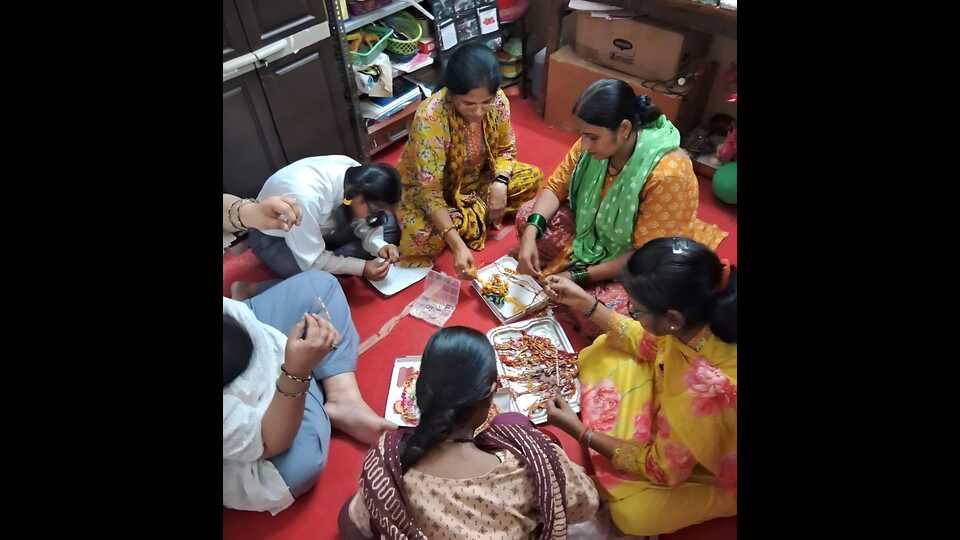
The rakhis, made from cotton yarn and coloured using natural dyes extracted from flowers and leaves, are being promoted as an alternative to those made from plastic, synthetic and other non-biodegradable materials. The women have also ensured that no chemicals or materials that harm the skin are used in making the rakhis, officials said.
Poonam Singh, a member of the Bhavini self-help group associated with DUDA, said all women in her group were preparing rakhis for Raksha Bandhan. “We are making the rakhis entirely from cotton yarn and using natural colours so that they are environment-friendly and safe for the skin,” she said.
Members of the Grihani Mahila Self-Help Group are also busy preparing the rakhis. Tanu Saroj, a member of the group, said more than a dozen homemakers had been making cotton-yarn rakhis daily since Independence Day following orders from local markets.
Interestingly, all women involved in making rakhis in one of the groups are persons with disabilities, providing them an opportunity to earn through their skills.
The initiative is part of DUDA’s efforts to promote livelihoods among women through SHGs. DUDA project officer Pratibha Srivastava said 298 women SHGs were currently operating in the urban areas of Prayagraj, with more than 3,000 women associated with them.
DUDA has provided training to women making rakhis and is also facilitating their marketing through canopies. Apart from the Grihani Mahila SHG, several other groups are preparing rakhis based on local demand, she said.
The women had earlier prepared more than 3.5 lakh Tricolours for Independence Day, earning ₹20 per flag and collectively generating around ₹70 lakh through the initiative.
This time, their handmade rakhis have attracted orders from local markets, public representatives and several social organisations, giving the women another seasonal opportunity to supplement their household incomes.
DUDA officials said the agency was being used not merely for implementing schemes but also as a platform to link housing, livelihoods and social security while improving the living standards of women and urban poor families.


