
 E-Paper



Rhino census in Dudhwa to start soon
Amid ongoing estimation of tiger, elephant and ungulate (hoofed animal) population, the Dudhwa Tiger Reserve (DTR) has now geared up to start the count of one-horned rhinos in the protected area

 Prefer HTon Google


Amid ongoing estimation of tiger, elephant and ungulate (hoofed animal) population, the Dudhwa Tiger Reserve (DTR) has now geared up to start the count of one-horned rhinos in the protected area.
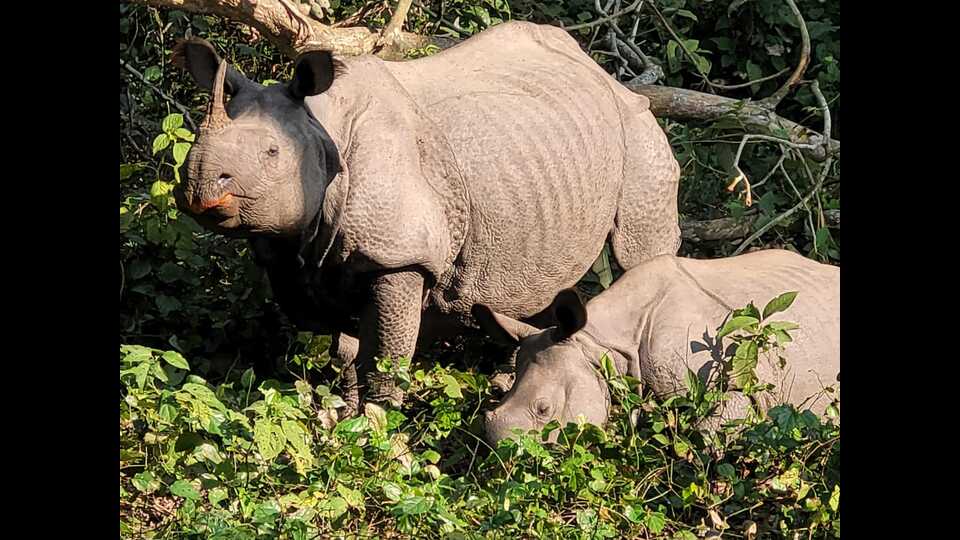
The counting of one-horned rhinos in Dudhwa is to start in the next few days.
According to the last count, held over a couple of years back, Dudhwa has 42 one-horned rhinos.
Among these, 38 rhinos are populated in rhino rehabilitation area (RRA) Phase 1 at Kakarha Tal in Sonaripur range and four in RRA 2 in Belrayan range.
Rhino population will be estimated by field staff through elephant patrolling, said Sanjay Kumar Pathak, field director, DTR.
He added “apart from counting, samples of rhino skates (droppings) will also be collected for deoxyribonucleic acid (DNA) analysis to study the gene diversity among them and their behaviour.”
Pathak said, “The estimation of the tiger population through camera trap in block one including Pilibhit Tiger Reserve, Kishanpur, Bhira and Mailani ranges of Dudhwa buffer zone, Gola and Mailani ranges of south Kheri forest division has concluded and data compilation work is in progress. It will be forwarded to the Wildlife Institute of India (WWI) for further analysis and ascertaining the number of tigers.
“The estimation work in areas of the remaining block including Dudhwa, rest of buffer zone and Katarniaghat is still on with around 1,300 cameras and it is expected to end by April 20.
“The number of elephants in Dudhwa has also been estimated simultaneously this year,” said Pathak.
Interestingly, Dudhwa, on its own, has no native population of wild elephants barring the domestic elephants kept in Dudhwa for patrolling, man-animal conflict handling, tourism and other park-related activities.
However, for decades, migratory elephants from neighbouring Nepal have been visiting Dudhwa and its buffer zone through Katarniaghat and for the past several years, they have established Dudhwa as their home.
“At present, around 149 wild tuskers are estimated to have stayed in Dudhwa,” Pathak said.
“In view of the prolonged stay of wild elephants, a decision to carry out DNA analysis of the wild elephants through their droppings, has been taken,” Pathak said, adding “dropping samples of 72 wild elephants have been collected to be sent to WII for DNA analysis for comprehensive study.”
- Deo Kant Pandey


