
 E-Paper



Stalin meets guv seeking nod for 21 Bills
The amendment to the Cooperative Societies Act is among the 21 bills that have been pending in the Raj Bhavan for several months.


Tamil Nadu chief minister MK Stalin led his ministers on Thursday to call on Governor RN Ravi and urged him to give his nod for 21 legislations passed by the assembly including a bill that seeks to clip the powers of the governor in appointing vice-chancellors to state funded universities.
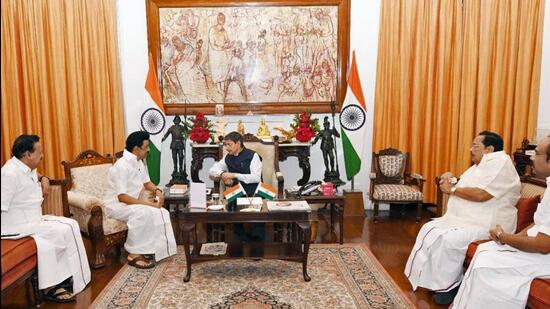
The amendment to the Cooperative Societies Act is among the 21 bills that have been pending in the Raj Bhavan for several months.
While Stalin thanked the governor for forwarding the anti-NEET bill to President Ram Nath Kovind for his assent, the chief minister urged him to give his approval to 21 bills to uphold the Constitution and respect the sentiment of the people of Tamil Nadu, read a statement from the state government.
The chief minister also requested the governor to give his assent to the bill passed in the assembly to establish Siddha Medical University at the earliest since admissions of students will start soon.
Water resources minister Durai Murugan, higher education minister K Ponmudy and industries minister Thangam Thennarasu had accompanied the chief minister.
On January 8, the government passed a bill to amend the Tamil Nadu Cooperative Societies Act, 1983 to reduce the term of office of the board of directors of the cooperative societies from five years to three years.
The government, citing large scale financial irregularities and fraud in cooperative societies, passed the bill. Once the governor gives his approval to the amendment. it would end the tenure of around two lakh elected members of the societies.
“The chief minister requested the governor to uphold the Constitution and to fulfil the wishes of the people of Tamil Nadu,” the statement said.
The relationship between the state government and the governor had soured over his delay in forwarding the anti-NEET Bill, sending it back to the House. The assembly passed it for the second time and the governor had delayed forwarding the bill again.
Stalin had in April criticised the governor saying his job was only that of a postman to forward the bills. In May, the governor finally sent the anti-NEET Bill for the President’s consideration.


