E-Paper



Tiger, leopard hides seized, smuggler held in Odisha
The seizure came three weeks after a tiger hide was seized from the buffer zone of Odisha’s Similipal Tiger Reserve


Odisha Police’s Special Task Force (STF) has seized tiger and leopard hides from an alleged smuggler in the Boudh district, a police officer said and added this was the second such seizure within a month.
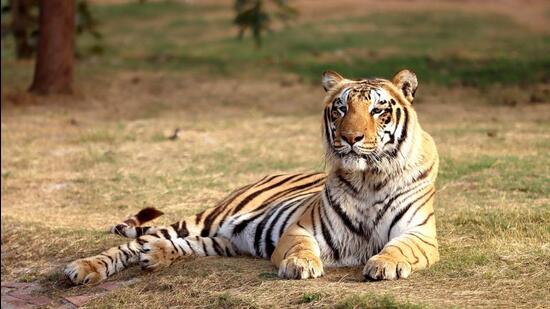
Inspector general (STF) Jai Narayan Pankaj said Himalaya Dash was allegedly negotiating a ₹10 lakh deal to sell the tiger hide when the police arrested him. The arrest led to the seizure of leopard hide from Sonepur.
The seizure came three weeks after the STF seized another tiger hide from Similipal Tiger Reserve’s buffer zone and arrested two people. Poachers shot dead the tiger inside Similipal, which had 16 tigers as per a 2018 census.
Investigators said an organised gang of poachers was active in Odisha. “Many are involved...We will arrest everyone involved...,” said an investigator, requesting anonymity.
The STF seized 14 leopard and two royal Bengal tiger hides last year. A 9-feet-long skin of royal Bengal tiger was also seized in Keonjhar in April last year.
Poachers have killed at least 12 leopards since April 2020. The seizure of 67 leopard skins during the same period indicated Odisha has become a transit state for smuggling wildlife body parts.
Wildlife conservationists said the state has lost over 110 male elephants aged over 15, of which 80% were poached, since the last elephant census was held in Odisha in 2017.
“Poaching is now the biggest threat to elephants and tigers in Odisha. Lax patrolling and lack of convictions in the last two decades have boosted the morale of the poachers. Except for a few cases here and there, poachers have ensured that the ivory, as well as tiger and leopard hides, are safely transported outside the state where it fetches a bigger price,” said Biswajit Mohanty, a wildlife conservationist.
Wildlife Crime Control Bureau officials said wildlife derivatives such as tiger, and leopard skins as well as ivory from Odisha are finding their way to Nepal and Bhutan and finally to China.
“We are not too sure if there is a well-organised gang of poachers active throughout the state, but there may be a small number catering to the demand of smugglers. The poachers are most likely supplying to the smugglers outside the state as per demand. We are keeping a close watch on this,” said Agni Mitra, the Bureau’s eastern region deputy director.