
 E-Paper



Towering protests: Prayagraj admn to take action against water tank climbers
While officials are exploring measures to prevent a repeat of such dramatic protests, they are also contemplating legal action against them

 Prefer HTon Google


The district administration has taken a stern view of tower and overhead water tank climbers to press for their demands. While officials are exploring measures to prevent a repeat of such dramatic protests, they are also contemplating legal action against them.
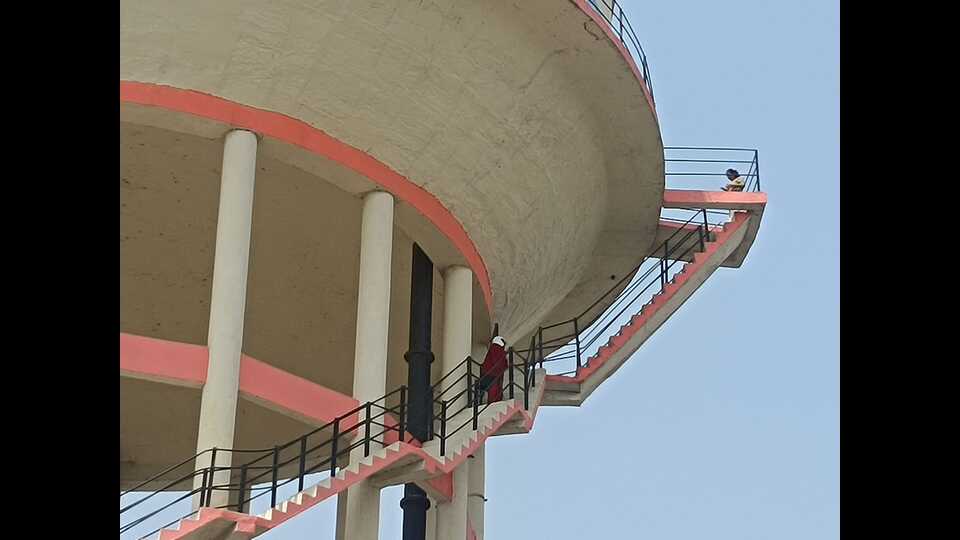
Manish Shandilya, deputy commissioner of police (City), said that the police had noticed a clear rise in such cases in recent months. He added that authorities were analysing the causes and may soon lodge cases in some incidents, noting that climbing towers or water tanks disrupts public life and diverts police and fire services without valid reason.
Nearly a dozen such incidents have been reported from the Prayagraj division over the past two months, most of them in Prayagraj district itself. In almost every case, the climbers were residents under severe stress, protesting issues ranging from marital disputes and alleged police apathy to disciplinary action and emotional conflicts involving minors.
The most recent incident occurred late on May 3, when a married woman climbed an overhead water tank near Buxi Bandh under Colonelganj police station limits of Prayagraj. She alleged harassment by her in-laws over dowry demands and refused to descend until action was assured. Police eventually convinced her to climb down after promising a probe into her complaint.
A day earlier, on May 2, another young woman scaled a water tank near the Phaphamau bypass in Prayagraj demanding registration of an FIR against four people, including her live-in partner. She alleged theft and assault and accused the police of inaction. The protest triggered a massive traffic jam that lasted for hours, inconveniencing countless commuters, before she was persuaded to come down.
On April 30, a suspended junior engineer of the electricity department climbed a nearly 30-foot-high tower in the Georgetown area of Prayagraj, protesting his suspension following the death of a lineman in Jhunsi a day earlier. The tense situation drew police and department officials, who spent hours negotiating his safe descent.
In another dramatic episode on April 27, a Class 11minor girl climbed a mobile tower in Bagdaha Hawasabad village under Phulpur Kotwali of Prayagraj, insisting she be allowed to marry a youth she had befriended on Instagram. After nearly three hours of persuasion by police, villagers and family members, she finally came down.
On the same day, panic spread at Cheoki railway station when a young man climbed a mobile tower, threatening to jump unless his wife was brought to the spot. Train operations and station activity were disrupted until the woman arrived, following which he descended.
Similar incidents have also been reported from neighbouring Pratapgarh and Kaushambi districts.
Eminent psychologist and head of the psychology department at Allahabad University, prof Chandranshu Sinha, attributed the trend to a mix of social and psychological factors. He said rising impatience, lack of communication and fragile emotional coping mechanisms were pushing people to adopt extreme methods to be heard. “Threatening becomes the weapon of the weak. In most cases, it is not suicide but a way to force attention,” he explained.


