
 E-Paper



Words written on the wind
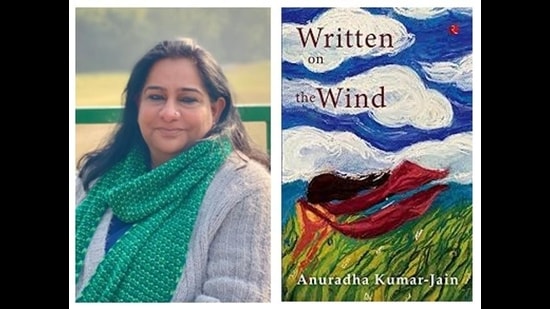
Chandigarh’s Anuradha Kumar Jain gathers tales of love and longing from pre-Partition Lahore in her debut novel


Lahore never left the minds and hearts of people who were forced to leave it with the drawing of the Radcliffe Line with the Partition of 1947. So was the case with Anuradha Kumar Jain, who grew up hearing the Lahore lore from her extended family for whom it had been home.
Older to this writer by a decade or more, this is how one grew up listening to the tales of grandeur of the capital of undivided Punjab that was once hailed as the ‘Paris of the East’.
It was the cosmopolitan cultural capital where people of different faiths, caste and creed co-existed in harmony. It was the city of poets, writers, artists, actors and singers who built their lives the Sufi way, humming the verses of Lahore’s patron Sufi poet Shah Hussain.
What makes Anuradha’s novel ‘Written on the Wind’ singular is that it captures the times that perhaps seem to belong to some fairytale. Equally significant is her way of weaving the stories of women of those times, more so those who came of age in the period of India’s freedom struggle.
Thus the telling tales are of two girls who blossom into youth in this coveted city. One protagonist is Harjeet from a landlord Sikh family married to a lawyer of an elite Hindu family searching for her dreams of passion with a Muslim lover. While the second protagonist is Amiya, born out of wedlock to a Brahmin girl and a British army officer, who rejected and scorned, struggles to become a writer. Amiya finds support from a warm and liberal Parsi family living in Lahore.
“I grew up listening to legends of Lahore from my large extended family which was a merry mix of Hindus and Sikhs. The Lahore lore that I was raised on lived with me and finally took the shape of this novel even though geography and not literature was my subject of higher studies,” says Anuradha.
Well, this is perhaps the reason for her etching out so beautifully the social geography of the city where the drama of human relationships is played out. The glimpses of cultural life and vignettes of freedom struggle with martyr Bhagat Singh’s trial as a point of reference enhances the narrative.
The author has done copious research and one waits for more stories from her in times to come.


