
 E-Paper



Yamuna covered in pink froth, activists urge government to check dyeing units
Pink froth in Delhi's Yamuna River signals severe pollution from untreated industrial waste, raising health and environmental concerns.

 Prefer HTon Google


The Kalindi Kunj to Okhla barrage section of the Yamuna in southeast Delhi is covered with iceberg-like pink coloured floating froth, which, experts say, indicates the fusion of untreated dyes and waste from neighbouring illegal industries.
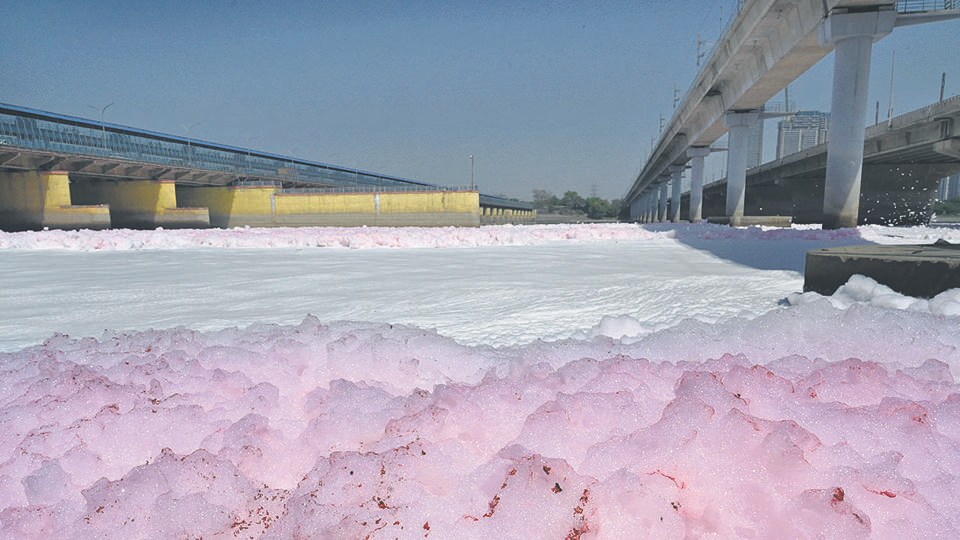
Yamuna froth, a common sight indicating very high pollution levels as the river leaves Delhi, has recently turned pink over the last three days, raising alarm about the river’s chemical pollution load.
ALSO READ | ‘Hope vigilance to protect environment continues’: SC closes plea on Delhi pollution after 40 years
Yamuna activist Pankaj Kumar from the NGO Earthwarrior said that pink froth blanketing the Yamuna downstream of Okhla barrage is a glaring sign of untreated industrial waste and toxic effluents being dumped into it. “This isn’t snow—it’s chemical foam laced with dyes, phosphates, surfactants, and other pollutants from industries and untreated sewage. It harms aquatic life, poses health risks (skin/respiratory issues), and shows how decades of unchecked dumping continues to choke the river,” he said.
Kumar added that what was once mostly foam bubbles now has turned bubblegum pink from industrial waste. “This isn’t cute; it’s dangerous pollution that’s been poisoning Delhi’s lifeline for years. Billions spent on ‘clean Yamuna’ plans, yet here we are in 2026. When will the pink washing of pollution actually stop?”
Officials explained that the froth is caused by soap-like surfactant molecules present in polluted water. When water falls from a height at the Okhla barrage, the churning action increases the frothing. Lower temperatures make these bubbles more stable, intensifying the visible foam.
Sources of surfactants include detergents from untreated domestic sewage, industrial pollutants, wastewater from dhobi ghats, and organic material released by decomposing water hyacinth trapped near the barrage,
Activists and experts have urged the government to probe the presence of pink froth and sources of dyes. Bhim Singh Rawat, a Yamuna activist, and member of the South Asia Network on Dams, Rivers and People (SANDRP) said that though there is no conclusive study for the situation so far, untreated effluents from dye, textile or colouring industrial units could be a reason behind pink tints. “In Yamuna, it is probably due to untreated effluents from dyeing or colouring industrial units operating illegally. In the Delhi stretch of Yamuna, similar froth incidents were reported in March 2023 and 2016 downstream of Wazirabad barrage,” he said.
Rawat said similar phenomenon was seen in the Upper Odai river water in Tamil Nadu in January 2023. It was found that the pink froth in the river was due to untreated waste from seafood processing units. “In August 2017, the Kasadi river water turned blue in Taloja industrial area of Navi Mumbai due to dumping of untreated industrial dye in it. The Indrayani river in Pune has also been affected by pink froth several times in the past,” he added.
Last year, a study, carried out by The Energy and Resources Institute (TERI), and commissioned by the Delhi government to identify the reasons and sources behind high froth formation in the river, had also flagged poor working of the city’s sewage treatment plants (STPs) and common effluent treatment plants (CETPs). The report flagged hotspots at Akshardham, Khichdipur, and the Railway Colony dhobi ghats – which were found, discharging white, turbid and untreated wastewater directly into Yamuna through Ganesh Nagar drain, Shahdara drain, and 12A drain, respectively.
On being asked, Delhi Jal Board (DJB) spokesperson did not respond. However, a DJB official said that DPCC may be able to ascertain the reason behind pink froth. “Some dye or iron rich pollutant can cause it,” official said.


Stay updated with all top Cities including, Bengaluru, Delhi, Mumbai and more across India. Stay informed on the latest happenings in World News along with Delhi Election 2025 and Delhi Election Result 2025 Live, New Delhi Election Result Live, Kalkaji Election Result Live at Hindustan Times.


