
 E-Paper



Bihar stares at platelets crisis as dengue cases surge
Though the Bihar state health department has steadfastly denied any platelet shortage, it seemed apparent for negative blood group, as per the government’s platelet stock inventory Friday evening


Bihar stares at a shortage of platelets amid a surge in dengue cases, the highest in recent times, and underutilisation of machines for platelet apheresis, a process to separate blood into different components — platelets, red blood cells (RBCs) and plasma— , said people familiar with the development.
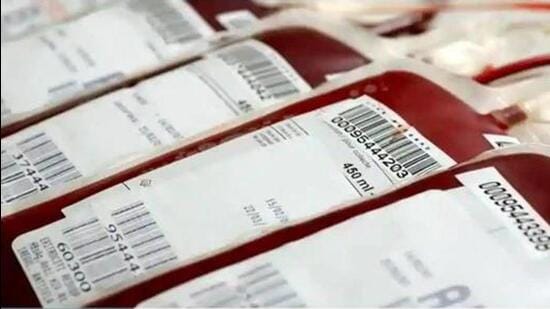
Though the state health department has steadfastly denied any platelet shortage, the shortage seemed apparent for negative blood group, as per the government’s platelet stock inventory Friday evening.
The Bihar state blood bank at the Patna Medical College Hospital (PMCH), Bihar’s oldest health hub, did not have a single unit (60-75 ml) of AB-negative random donor platelet (RDP). It had only one unit each of A-negative and B-negative and three units of O-negative RDP.
The RDP is a platelet transfusion method in which platelets are prepared from donated blood within 4 to 6 hours of collection by centrifuging the whole blood collected from four to five donors and pooling the platelets. It contains 5.5 x 10¹⁰ platelets (approx). However, one unit of 250 ml single donor platelets (SDP), prepared from a single donor by a platelet apheresis machine, is more potent and equivalent to 5 to 10 units (each unit of 60-75 ml) of RDP.
The model blood bank at Jaiprabha hospital, also a government centre, in Patna’s Kankerbagh did not have any stock of B-negative RDP, while it had a single unit of RDP each of A-negative, O-negative and AB-negative blood group.
The Indira Gandhi Institute of Medical Sciences (IGIMS), an autonomous medical college under the Bihar government, did not have any stock of A-negative RDP, while it had one unit each of B-negative, O-negative and AB-negative RDP, said government officials.
There was no stock of B-negative AB-negative and O-negative RDP at the Jawaharlal Nehru Medical College Hospital (JLNMCH), Bhagalpur. It had only one unit of A-negative RDP available on Friday.
Similarly, the All-India Institute of Medical Sciences (AIIMS) did not have any stock of A-negative and AB-negative, while it had only one unit of B-negative RDP, said officials.
Among the big private hospitals in Patna, the Paras HMRI hospital and the Netaji Subhas Medical College and Hospital, Bihta, did not have any RDP of the negative A, B, AB and O blood groups. Availability of negative blood group RDP was only a shade better at the Ruban Memorial Hospital, which had one unit of AB-negative while the remaining three were out of stock.
Underutilisation of apheresis machine
Underutilisation of platelets apheresis equipment for SDP, which helps increase the platelet count by 40,000-50,000 per microlitre of blood, is another concern at the government facilities.
The platelet apheresis machine at the PMCH, for instance, has been lying idle for over the last one year, awaiting installation. The hospital does not have an operating licence for the equipment as it does not fulfil certain blood transfusion safety parameters, which the Central Drugs Standard Control Organisation (CDSCO) East Zone, Kolkata, had pointed out during its inspection last December. The PMCH is yet to fulfil the preconditions.
“The CDSCO had objected to shortage of space for platelet apheresis, besides pointing out sanitation and hygiene issues, as there was a toilet between the donor collection room and blood cross-matching room. Even the donor refreshment room was not as per the prescribed specification at the PMCH,” said an official.
“The Bihar Medical Services Infrastructure Corporation Limited (BMSICL) has taken up the construction modification work, after the health department took cognizance of our request. The BMSICL is likely to finish the job soon. We will then re-apply for licence,” said Dr IS Thakur, medical superintendent of the PMCH.
A perusal of platelets transfusion data showed that the government facilities were lax in doing SDP, as compared to their private counterparts, primarily due to shortage of manpower.
The JLNMCH, Bhagalpur, for instance, had done only 17 SDPs since the apheresis equipment was installed there in 2020. Of them, 11 SDPs were done this year. It did not do any this month.
The model blood bank at Patna’s Jaiprabha Hospital had done 23 SDPs since the installation of apheresis equipment in 2021. Of them, 13 were done this year, including two this month.
The AIIMS had had done 147 SDP transfusions since it got the apheresis machine in 2019. Thirty-three SDPs had been done this year, including two this month.
The IGIMS had done 74 platelet apheresis since November 2018 of which seven were done this year, including two this month.
On the other hand, private centres like the Paras HMRI hospital, a NABH-accredited facility, had outperformed all apheresis centres. It had done 1,900 (approx) SDP transfusion since 2019 of which 406 have been done this year, including seven this month (till October 15), said officials.
The Ruban Memorial Hospital, also a NABH-accredited private facility, which began platelet apheresis this year, had done 82 SDPs of which 31 were done this month (till October 15).
A relatively new Prathama Blood Centre had performed 275 SDPs since 2021 of which 148 were done this year, including 27 this month.
The Mahavir Cancer Sansthan had done 94 SDPs since 2020, of which 28 were done this year, including seven in October.
Patna’s Maa Blood Centre, inaugurated on February 27 this year, has so far done 19 SDPs of which 11 have been done this month (till October 21).
“The availability of random donor platelet, which increases the count by 5,000 (approx) platelets per microlitre of blood, is dynamic in nature, and likely to change with every blood donation by the hour,” said a senior officer of the health department, requesting anonymity, as he brushed aside reports of any platelet scarcity.
“Only 2%-3% population have negative blood group. Of them, the percentage of people affected by dengue, and requiring platelet transfusion is even less. So, there is nothing to panic,” he added.
Bihar’s dengue burden
Bihar has been in the grip of dengue since mid-August. The requirement of platelet has increased by the day, prompting the Centre to send a four-member team on October 18 to visit hotspots in Patna and Nalanda districts, and assist the state government by providing technical guidance, including public health measures, for managing the ongoing upsurge of dengue.
The state has reported around 7,155 cases and four deaths of dengue this year till October 20, the highest in the last five years. Patna accounts for three deaths and 5,519 dengue cases, the highest so far. Nalanda, with one death and 309 dengue cases, comes second, followed by Munger with 280 cases.
Prior to this, Bihar reported the highest 6,667 cases of dengue in 2019, of which 4,905 were from Patna.
Bihar reported 1,787 dengue cases in 2017. The number went up to 2,122 cases in 2018, before peaking in 2019 to 6,667 and then declining to 493 in 2020. It reported 624 cases last year before surpassing all previous records this year.
As many as 237 dengue patients had so far been hospitalised in different facilities of Bihar this year. Patna accounted for 177 of these hospitalisations, Nawada 15, Bhagalpur 13, and Darbhanga and Nalanda 12 each, as per government data.
The platelets crisis, said officials, was artificial, and alleged that some private hospitals had created it.
“Contrary to medical journals, which do not recommend platelet transfusion below 10,000, some private hospitals have done transfusion at a count of 35,000 platelets per microlitre of blood, when the patient was not bleeding. The normal platelet count range is from 150,000 to 450,000. Some private hospitals are even sending us requisition for 4-6 units of RDP or up to two units of SDP. They are the ones who are creating fears about a platelet crisis,” said Mukesh Hissaria, founder of Maa Vaishnodevi Sewa Samiti, which manages the state-of-the-art Maa Blood Centre.
“A dengue patient, if not bleeding, can be managed conservatively in hospital even with a platelet count of 10,000. Platelet needs to be transfused only when the patient begins to bleed,” said a doctor at AIIMS, requesting anonymity, as he was not authorised to speak to the media.
Efforts to reach Sanjay Singh, executive director, State Health Society, proved futile as he did not respond to phone calls or text message on Friday.

Stay updated Bihar Lok Sabha Result and with all the Breaking News and Latest News from Bengaluru. Click here for comprehensive coverage of top cities including Delhi, Mumbai, Hyderabad, and more across India . Stay informed on the latest happenings in World News.


