
 E-Paper



From education in US to Vidhan Sabha: Journey of an IISc scientist from Bihar
He worked as adjunct professor in the University of Texas, from where he did his mechanical engineering and PhD, worked with HP Labs and has several peer-reviewed research papers in international journals.

 Prefer HTon Google


While many highly educated candidates fell by the wayside in the rough and tumble of Bihar politics, there were a few who made it in the Bihar Assembly election.
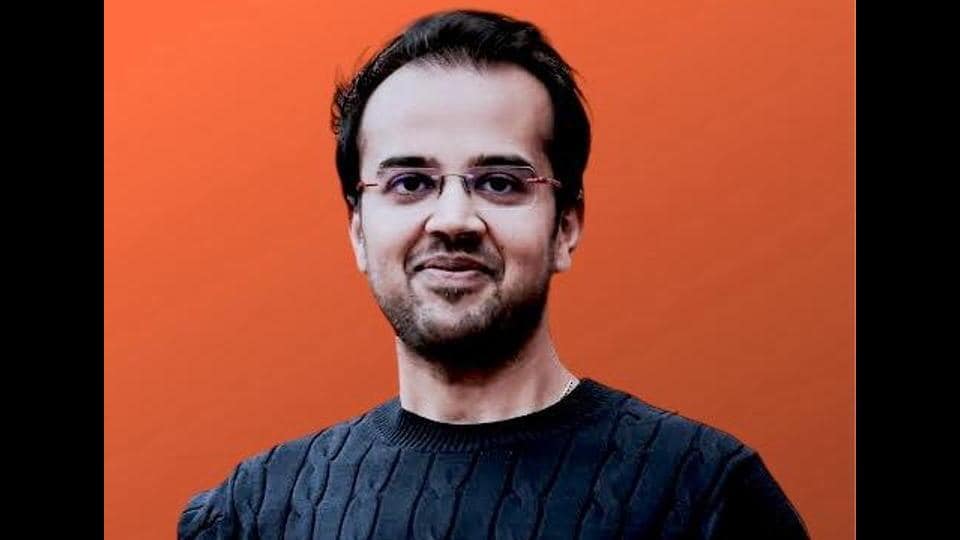
One of them is Manjarik Mrinal, a scientist at the Indian Institute of Science (Bangalore) and involved in research related to semiconductor technology, including a study on defect-free lithography, to pave the way for semiconductor and chip manufacturing. He won his debut election from Warisnagar seat.
He worked as adjunct professor in the University of Texas, from where he did his mechanical engineering and PhD, worked with HP Labs and has several peer-reviewed research papers in international journals. He talked to HT on his transition from science to politics and how he intends to contribute. Edited excerpts:
How do you see the road ahead for Bihar on unemployment and migration, with your background?
Today’s Bihar is not the Bihar of 15-20 years ago. Under the leadership of Nitish Kumar ji and the NDA government, we have restored law and order, expanded roads, electricity, schools, hospitals, and laid the foundation for industry. As an elected representative and with a background in advanced manufacturing and indigenous technology development, I see Bihar entering a new phase, where we shift from a labour-supplying state to a job-creating state.
From a scientist to politics, what prompted the transition?
My scientific career taught me how to solve problems, build systems, and deliver results. Under Nitish Kumar ji’s leadership, Bihar witnessed stability and various governance reforms. Throughout my career, I learned how to solve problems, build systems, and deliver results. I realised that this was the right environment to bring technology, industry, skill development, and modern solutions into the system. I entered politics because I knew I could contribute to a new model of development. In science, we innovate, in politics, we implement, and I want to do both for my people, as their representative.
Tell us something about your background.
I am a B.Tech., MS, and PhD holder in mechanical engineering. I have worked as a Scientist at the Indian Institute of Science (IISc), Bangalore, where I played a leading role in developing India’s first indigenous lithography system, a critical technology for semiconductor and precision manufacturing. Before that, I worked with HP Labs in the United States, taught as an adjunct faculty at the University of Texas, and contributed to research that has direct industrial and national impact. I now bring this scientific, problem-solving mindset into public service as an MLA.
The Prime Minister spoke about the semiconductor industry in Bihar during his election rallies. How do you see the prospect?
Prime Minister’s statement is both visionary and realistic. Many people think semiconductors only mean multi-billion-dollar fabrication facilities, but the semiconductor ecosystem is much broader, and Bihar can absolutely participate in it in a meaningful way.
As someone who has been closely associated with this field and worked on lithography, micro and nano-fabrication technologies, I can confidently say that the semiconductor industry is a chain of interconnected industries. Bihar can enter this chain in a phased, strategic manner, and become a major hub for packaging, assembly, component & ancillary units manufacturing, and talent development in the semiconductor ecosystem.
The PM called for investment in Bihar soon after the election. You have been a professor in the US. Which areas can attract investments?
Having worked as a professor and researcher in the United States and collaborated with global industry partners, I can say with confidence that Bihar is now positioned to attract investment in several high-growth sectors. The Prime Minister’s call for investment is timely because investors today look for three things: stability, manpower, and scalability, and Bihar offers all three. From technical and economic perspective, I see these major opportunity zones: manufacturing and component industries, agri-tech and food processing, semiconductor-adjacent industries, and skill development and research parks.
Being highly educated with vast research and teaching experience, what do you think are Bihar’s big issues to take it among the front-ranking states?
My research and academic journey, from Bihar to the US and IISc, has given me a clear perspective. Bihar has enormous potential, but we must focus on a few critical issues with strategic precision. These issues are not new, but the solutions today are very different because technology, industry needs, and the economy have evolved. Bihar’s biggest issues are job creation, industry presence, skill alignment, and agricultural value addition. None of these are impossible; they simply require focused execution and the infusion of scientific, modern thinking into policy and governance.
How do you see the narrative around dynastic politics, as your father won the seat thrice in succession since 2010?
I believe voters today are far more aware and discerning than ever before. People don’t elect surnames, they elect vision, credibility, and work. Yes, my father served the constituency three times, and he did so with dedication. And anyone who has seen his tenure closely knows that his hard work on the ground speaks for itself. He earned the love and respect of the constituency through consistent development work. His record is public, visible, and acknowledged by the people he served. My own journey has been completely independent. I built my career as a scientist, researcher, professor, and technologist before stepping into public life. I have spent years abroad and in top Indian institutions solving real problems in manufacturing, technology, and innovation. What brought me into politics was not lineage, but a commitment to service and a belief that
Bihar can move forward with modern ideas, job creation, and youth-centric development. A family legacy may open a door, but it cannot win people’s trust; it has to be earned individually.


Stay updated Bihar Lok Sabha Result and with all the Breaking News and Latest News from Bengaluru. Click here for comprehensive coverage of top cities including Delhi, Mumbai, Hyderabad, and more across India . Stay informed on the latest happenings in World News.


