
 E-Paper



Climate change and its impact on health needs to be addressed: Rajesh Tope
PUNE With the heat wave continuing to take a toll on lives and reduce human productivity, health minister Rajesh Tope on Wednesday said that all concerned departments which deal with health and the environment must work together


PUNE With the heat wave continuing to take a toll on lives and reduce human productivity, health minister Rajesh Tope on Wednesday said that all concerned departments which deal with health and the environment must work together. A special department named ‘environmental health’ was launched for the same.
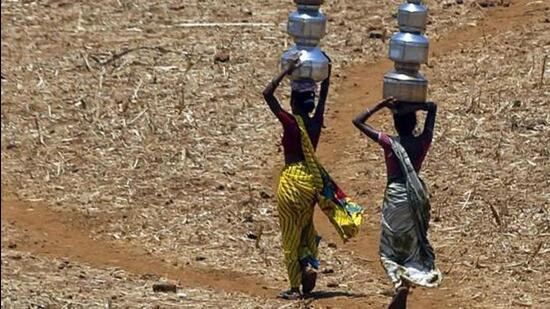
“Climate change has adverse effects on human health and is recognised by all experts around the world. Against this backdrop, climate change needs to be taken very seriously and drastic steps need to be taken along with important strategic decisions to curb these negative changes,” said Tope. He was speaking at the meeting of the state-level governing body of the National Climate Change and Human Health Programme as well as task force.
Environmental degradation and increasing greenhouse gas emissions are accelerating climate change. Climate change is having an adverse effect on human health. With climate change and global warming, the planet will soon be uninhabitable. To address all these issues, the central government has launched the National Climate Change and Human Health Programme.
During the meeting with the state task force, state surveillance/nodal officer Dr Pradeep Awate said that in regions with high temperatures, heat waves are leading to deaths and in cities with high pollution, respiratory ailments are on the rise. “Under this programme, an environmental health cell has been set up in the state and a survey is being conducted on heat-related disorders as well as respiratory infections in the most polluted cities in the state. In connection with the Climate Change and Human Health programme, various workshops will be organised to create awareness among the general public and the health department officials and staff.”
“This programme is aimed to find the relation between climate change and human health and so we would be surveying for acute respiratory infections in highly polluted cities and also heat-related cases and deaths in areas with high temperatures. Also, this would help train policy makers, healthcare workers and the general population on the direct impact of climate change on health. We would also draft a state action plan to mitigate the adverse impact of climate change and fill in the knowledge gap on health and climate change impact and so we have a tie-up with the Indian Meteorological Department as well so that monsoon predictions could help with diseases like dengue and malaria and better eco-friendly decisions could be taken,” Dr Awate said.
Efforts will also be made to make health facilities in the public health department of the state, environment-friendly and efficient. Experts at the meeting also expressed the need to formulate some policies for the entire state to make the energy and water use policy in each health institution more environmentally-friendly. It is also important for the public health department vehicles to choose a fuel-efficient or non-conventional source that will reduce pollution.
Many important issues were discussed, such as the survey of heat-related disorders, the need for a heat action plan, and the establishment of a robust health system to cope with climate change. Dr Hosolikar of the Indian Meteorological Department expressed his urgency to work in coordination with the state’s climate and public health department in that regard.
The environment, meteorological department, groundwater survey, agriculture, public works department, pollution control board, disaster management department all need to come together and work on a single platform to effectively combat climate change, said Tope.


