
 E-Paper



Taste of Life: Confectioner Cornaglia gives Pune its first taste of European cuisine
It’s unclear whether F Cornaglia in Poona initially started as Peliti’s. All we know is it was the first European restaurant in Poona, says Damle


Justice MC Chagla, in his autobiography “Roses in December”, narrates a rather amusing incident. MA Jinnah was contesting the Bombay municipal elections. While Chagla and Jinnah were at the Town Hall on the day of the polling, Mrs Jinnah drove up to them with lunch. The said lunch being “lovely ham sandwiches”. Since Jinnah obviously could not be seen in public enjoying those sandwiches, he and Chagla went to Cornaglia’s, a very famous Bombay restaurant. There they ordered two cups of coffee, a plate of pastry and a plate of pork sausages. While they were having lunch, in came an old, bearded Muslim gentleman with a young boy of ten. Tea and soft drink were ordered for them. The boy picked up one of the sausages and ate it with much relish. Chagla and Jinnah watched this uneasily. After the gentleman and the boy left, Jinnah was furious. He wanted to know why Chagla had not stopped the boy from consuming the forbidden meat. Chagla replied – “The question was: should I let Jinnah lose his election or should I let the boy go to eternal damnation? And I decided in your favour.”
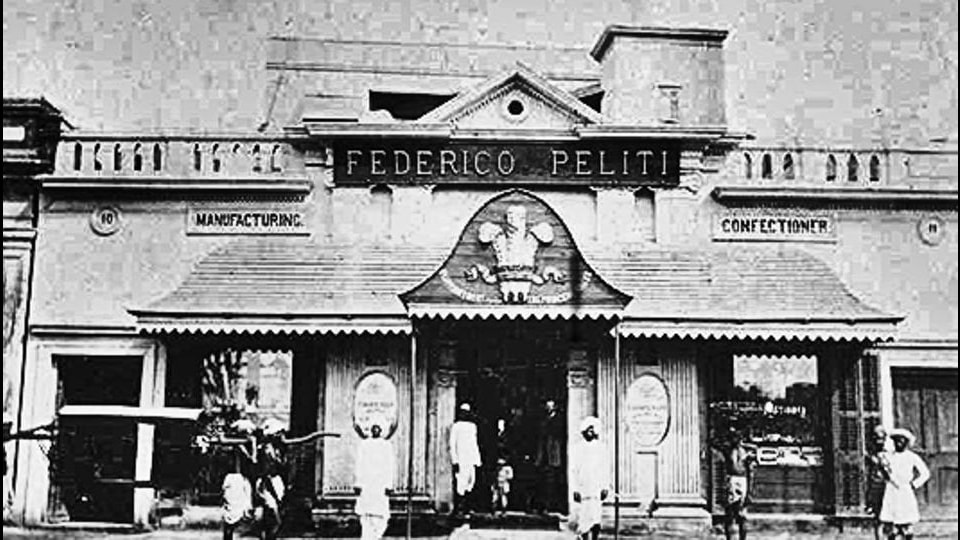
The eating habits of Indians have often been linked to religious prohibitions that prevent the consumption of certain foods, like, beef for Hindus or pork for Muslims. They are also linked to the spread of vegetarianism which excludes from diet almost all animal-derived foods. European, especially Italian, restaurants and cafes in the nineteenth and twentieth century India were the saviours of Europeans and Europeanised Indian elites who wanted to enjoy European fare without being bothered by taboos surrounding food.
The first Italian restaurants in India, Peliti’s in Calcutta (Kolkata) and Shimla, F Cornaglia in Bombay (Mumbai) and Poona (Pune) were appreciated for their cooking and service and became milestones of the social life in these cities.
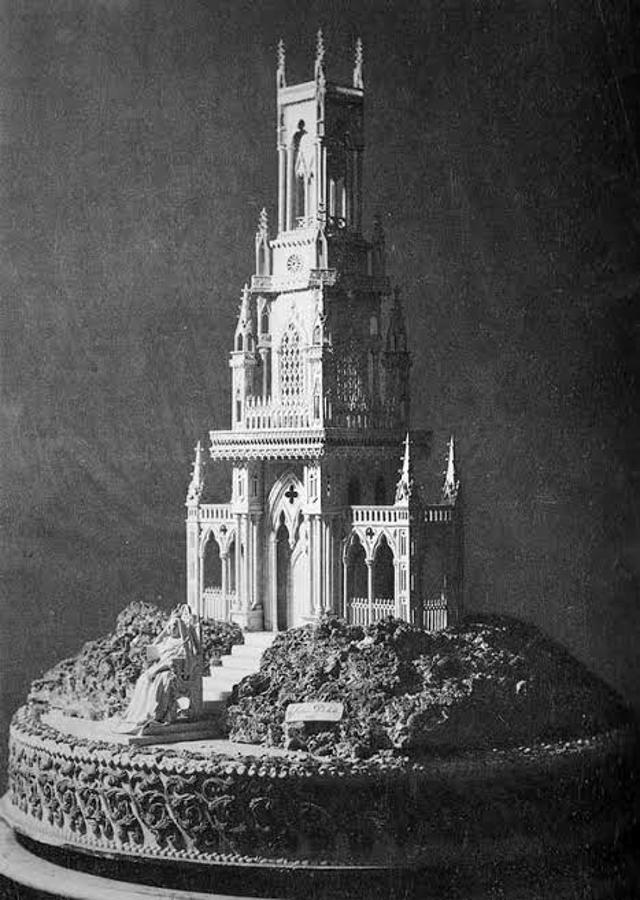
Federico Peliti introduced macaroni to India. He had studied sculpture under Vincenzo Vela in Carignano and took part in the Third War of Italian Independence as a light cavalryman. In 1867, he decided to become a confectioner, a profession which was in great demand at that time. Two years later, he won a confectionary competition in Turin (it is said he baked an elaborate cake adorned with a figure of Queen Victoria and the backdrop was of a tall spire). Lord Mayo, the Viceroy of India, got to know of this, hired Peliti to be his chief confectioner and brought him to India. After Lord Mayo’s assassination, Peliti opened his first restaurant in Calcutta.
This was a bold step, involving serious difficulties, as luxuries such as Peliti wished to place before the public were absolutely unknown in India, and further, there were no chances of him obtaining skilled confectioners in the whole of the country. He persevered, however, practically single-handed for a couple of years, and eventually he was compelled by the increasing size of his business to obtain qualified assistants from Italy. The first batch of his recruits included Felice Cornaglia, his cousin.
Born in Carignano, F Cornaglia too had trained in Turin and sophisticated “architectural cakes” with finely crafted Gothic structures were his speciality. While Peliti expanded his restaurants to Shimla and Nainital, Cornaglia worked at the restaurant in Calcutta. Around 1880, Peliti established a branch in Bombay. Finding these restaurants too difficult to manage, he eventually presented the Bombay business to Cornaglia.
On December 22, 1891, a notice appeared on page 4 of The Bombay Gazette announcing that “F Cornaglia was the successor to Federico Peliti, the latter having nothing to do with the Bombay and the Poona business.” It was signed by F Cornaglia of 83 Medows Street, Fort, Bombay and 1, Main Street, Camp, Poona.
It’s unclear whether F Cornaglia in Poona initially started as Peliti’s. All we know is it was the first European restaurant in Poona and was initially situated on 1, Main Street, from where it moved to East Street in 1894, and then to 6, Arsenal Road (presently Moledina Road) around 1905. Hotel Ramakrishna, opposite Westend Theatre, occupies the Victorian bungalow today, where F Cornaglia was located till it shut down in the 1940s.
(Concluding part on F Cornaglia will appear next week)
Chinmay Damle is a research scientist and food enthusiast. He writes here on Pune’s food culture. He can be contacted at chinmay.damle@gmail.com


