
 E-Paper



Deccan Traps at Mahabaleshwar & Panchgani make it to UNESCO ‘tentative list for world heritage status’
The development was confirmed in an official press release issued by the ministry of culture on September 18

 Prefer HTon Google


In what is a matter of pride for Maharashtra, the Deccan Traps at Panchgani and Mahabaleshwar have been included in UNESCO’s ‘tentative list for world heritage status’. The development was confirmed in an official press release issued by the ministry of culture on September 18. The proposal, submitted by India’s permanent delegation to UNESCO on August 27, 2025, highlights the global significance of the region’s volcanic formations and ecological richness.
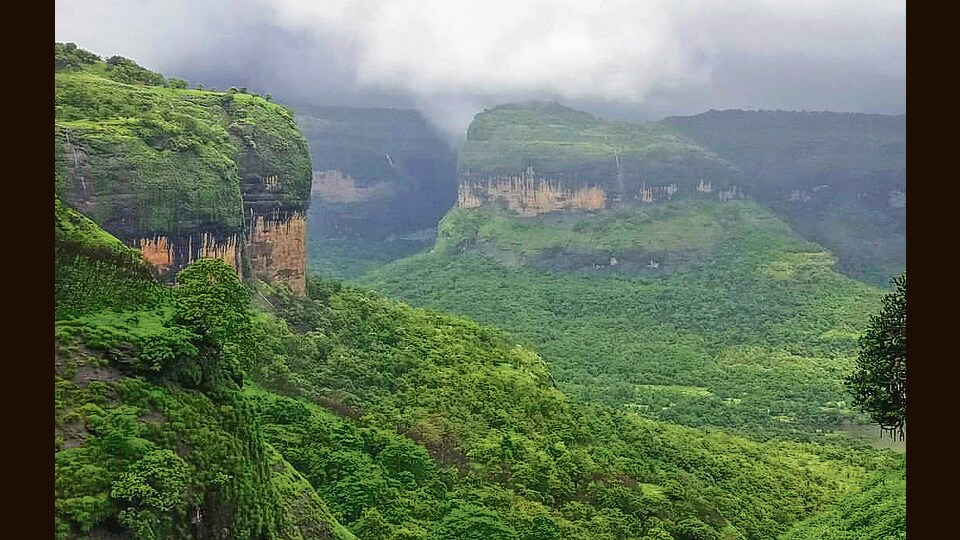
In its official citation, UNESCO noted: “The Deccan Traps at Mahabaleshwar and Panchgani represent one of the best-studied areas in the Deccan Trap region, which is one of the largest single continuous volcanic features on Earth. Mahabaleshwar’s Deccan Traps also have global stratigraphic significance due to the preservation of more than 2,000 m of lava flows (Subbarao et al., 2000), visible across the dramatic landscape of the Mahabaleshwar hills. The flows are dominated by multiple reddish weathered layers, known as red boles, which generally define individual flow boundaries in volcanic events. The Deccan Traps of the Mahabaleshwar plateau are also part of the Koyna Wildlife Sanctuary within the Western Ghats biosphere reserve, a UNESCO world heritage site.”
The Deccan Traps are located within the Western Ghats that are internationally recognised as a biodiversity hotspot and host numerous endemic species and several threatened species listed on the IUCN Red List. The forests here are part of the Koyna Wildlife Sanctuary and are designated as both key biodiversity areas and important bird areas. The Western Ghats were declared an eco-sensitive zone under India’s Environmental Protection Act in 2001, and identified as a geo-heritage site by the Geological Survey of India (GSI).
Globally, the Deccan Traps are often compared with other large igneous provinces such as the Siberian Traps in Russia and the Columbia River Basalt Group in the United States. Panchgani and Mahabaleshwar stand out for the accessibility and excellent preservation of their layered volcanic sequences, which are crucial for understanding Earth’s geological processes and their links to environmental changes over millions of years.
Along with the Deccan Traps, six other natural properties have also been included in the tentative list namely the geological heritage of St Mary’s Island Cluster (Udupi, Karnataka); Meghalayan Age Caves (East Khasi Hills, Meghalaya); Naga Hill Ophiolite (Kiphire, Nagaland); Erra Matti Dibbalu (Red Sand Hills, Andhra Pradesh); natural heritage of Tirumala Hills (Andhra Pradesh); and Varkala Cliffs (Kerala).
With the inclusion of the Deccan Traps, the total number of Indian properties in the tentative list has risen to 69 with 49 properties under the cultural category, three under the mixed category, and 17 under the natural category.


